Camping in the Black Forest
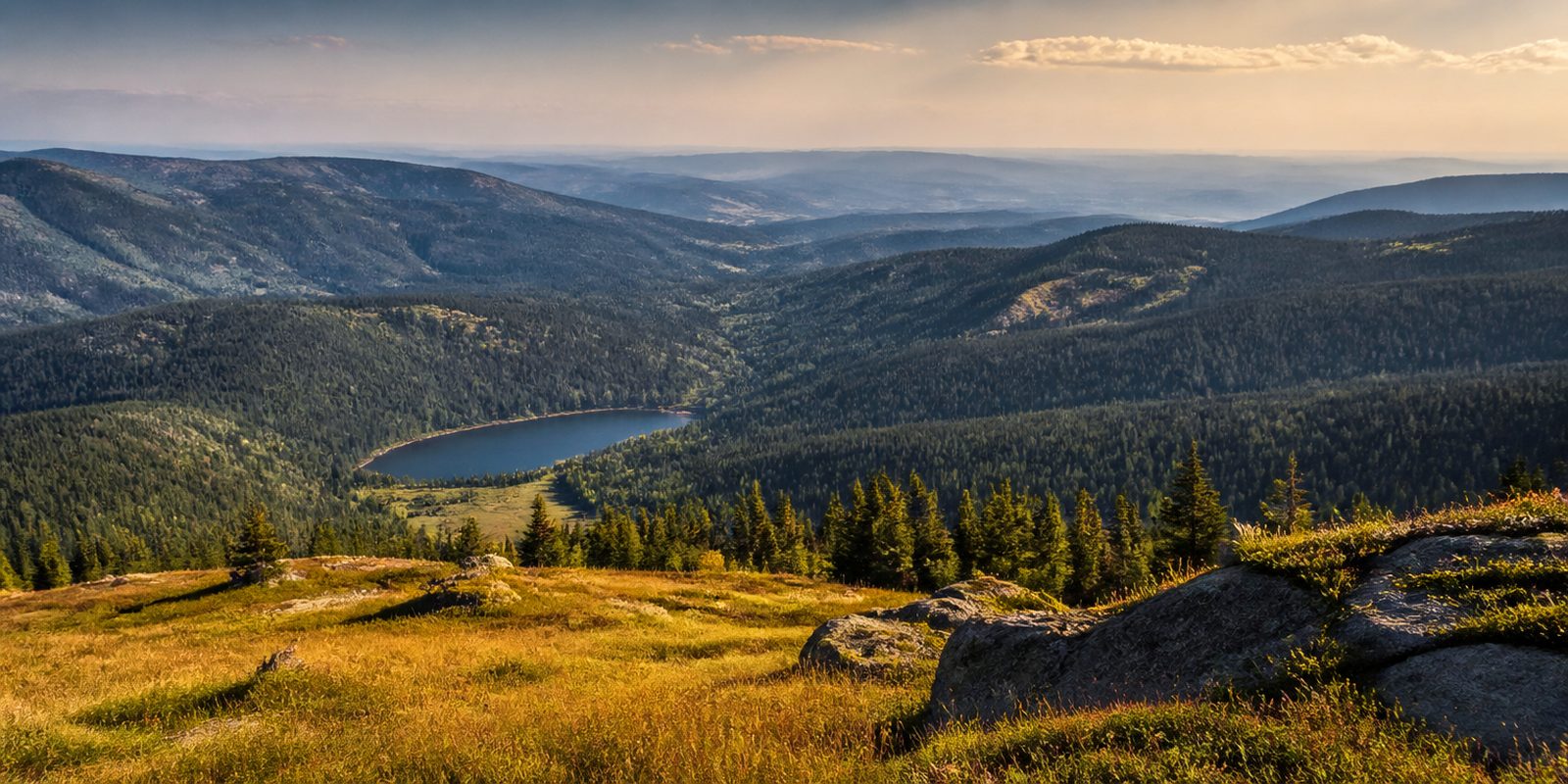
The Schwarzwald is Germany's largest continuous low mountain range. Its Feldberg rises to 1,493 metres, the highest summit in the country outside the Alps. Up on the heights lie cirque lakes left by the ice age and raised bogs, and between them the treeless Grinden, which occur nowhere else in Baden-Württemberg. Altitude sets the tone here, and the thermometer shows it: Freiburg at the foot of the range averages 11.0 degrees, the Feldberg only 4.3. Snow lies up there on roughly 166 days a year. Nationalpark Schwarzwald, the only national park in Baden-Württemberg, is here as well.
The year in this region
September: Northern Black Forest deer rut
According to the Deutsche Wildtier Stiftung, the red deer rut begins in early September and lasts five to six weeks, as the dominant stags roar and gouge the ground with their antlers. In Baden-Württemberg, red deer are legally permitted to live only in five designated deer districts covering four percent of the state's area; the northern Black Forest is one of them, and the national park includes red deer in its wildlife management. On September 12, 2026, the Schliffkopfaktion, an annual effort since 1966 to maintain the Grinden, also takes place.
In the middle of the month the sun rises at 7:03 AM and sets at 7:42 PM. That leaves 12 hours and 38 minutes of daylight.
What nature does this month
- Apple picking starts around September 28 (usually between September 18 and October 5)
Water and air: Open-Meteo, measured averages. How busy: share of school holidays 2027 across all sixteen federal states. Nature dates: German Weather Service, phenological observations 2014 to 2026 at 195 stations in the region, typical day.
Tours in this region
Marked tours that fit into a day from a site, and one multi day tour per kind.
- Hiking
Westweg
Pforzheim at the start, Basel at the end. In the north the way crosses red sandstone, over the Hornisgrinde and past the Mummelsee, while further south gneiss and granite come to the surface and the trail takes in Feldberg, Belchen and Blauen. Between 237 metres at Hausach and 1493 metres on the Feldberg lies the full range of the massif.
285 kmMulti day tour
- Hiking
Schluchtensteig
Section 1
The first stage of the Schluchtensteig runs from Stühlingen on the Swiss border to Blumberg. It keeps to the bank of the Wutach as far as Weizen, then come the Wutachflühen, a three kilometre wall of shell limestone with rock towers above the river. From the Buchberg at 876 metres the view reaches back into the gorge, and at the end of the stage the Schleifenbach falls drop over the ledges at Blumberg. Down in the gorge it is damp and shaded.
18.2 km
- Hiking
Zweitälersteig
Waldkirch is start and finish of this round between the Elz valley and the Simonswald valley. A good half of it runs on natural paths, asphalt is rare, and the climb to the Kandel at 1241 metres is the longest pull of the route. The Zweribach falls come down over bare rock.
107.3 kmMulti day tour
- Hiking
Genießerpfad - Feldbergsteig
The round starts at Feldberg-Ort and goes over the Seebuck with its Bismarck monument to the summit of the Feldberg, at 1493 metres the highest German mountain outside the Alps. On the way back lies the Feldsee, a cirque lake at 1109 metres ringed by walls up to three hundred metres high. The summit is treeless and the view opens.
12.3 km508 m ascentLoop tour
- Cycling
Südschwarzwald-Radweg
A big loop through the southern Black Forest, mostly on asphalt. It runs through the Wutach valley, along the High Rhine, touches Swiss and French ground and comes back through the Markgräflerland, the Dreisam valley and the Höllental. Cars are a rare sight on it.
276.2 km1326 m ascentMulti day tour
- Cycling
Schwarzwald Panorama-Radweg
From Pforzheim to Waldshut-Tiengen, straight across the range. By way of Freudenstadt, Villingen and the Titisee the route takes in the open plateaus rather than only the valleys, and collects about 2400 metres of climbing on the way. Sections of the Enz valley and Kinzig valley cycle routes are built into it.
284.2 km2939 m ascentMulti day tour
- Mountain biking
MTB X-ing Schwarzwald
The route crosses the Black Forest end to end, from Pforzheim to the High Rhine at Bad Säckingen. More than twelve thousand metres of climbing add up, spread over eight daily stages. The surface is mostly forest track and gravel.
480.2 km11180 m ascentMulti day tour
- Cross country skiing
Fernskiwanderweg Hinterzarten-Schluchsee
Hinterzarten at 890 metres stands at the start, Seebrugg at the southeast end of the Schluchsee at the finish. In between the track climbs over the Feldberg pass to 1250 metres, past the Raimartihof and the Äulemer Kreuz. It is set for classic technique.
30.3 km
Tours: © OpenStreetMap contributors, ODbL. Lengths computed from the mapped course, as of September 12, 2026.
Animals you can meet here
 all year
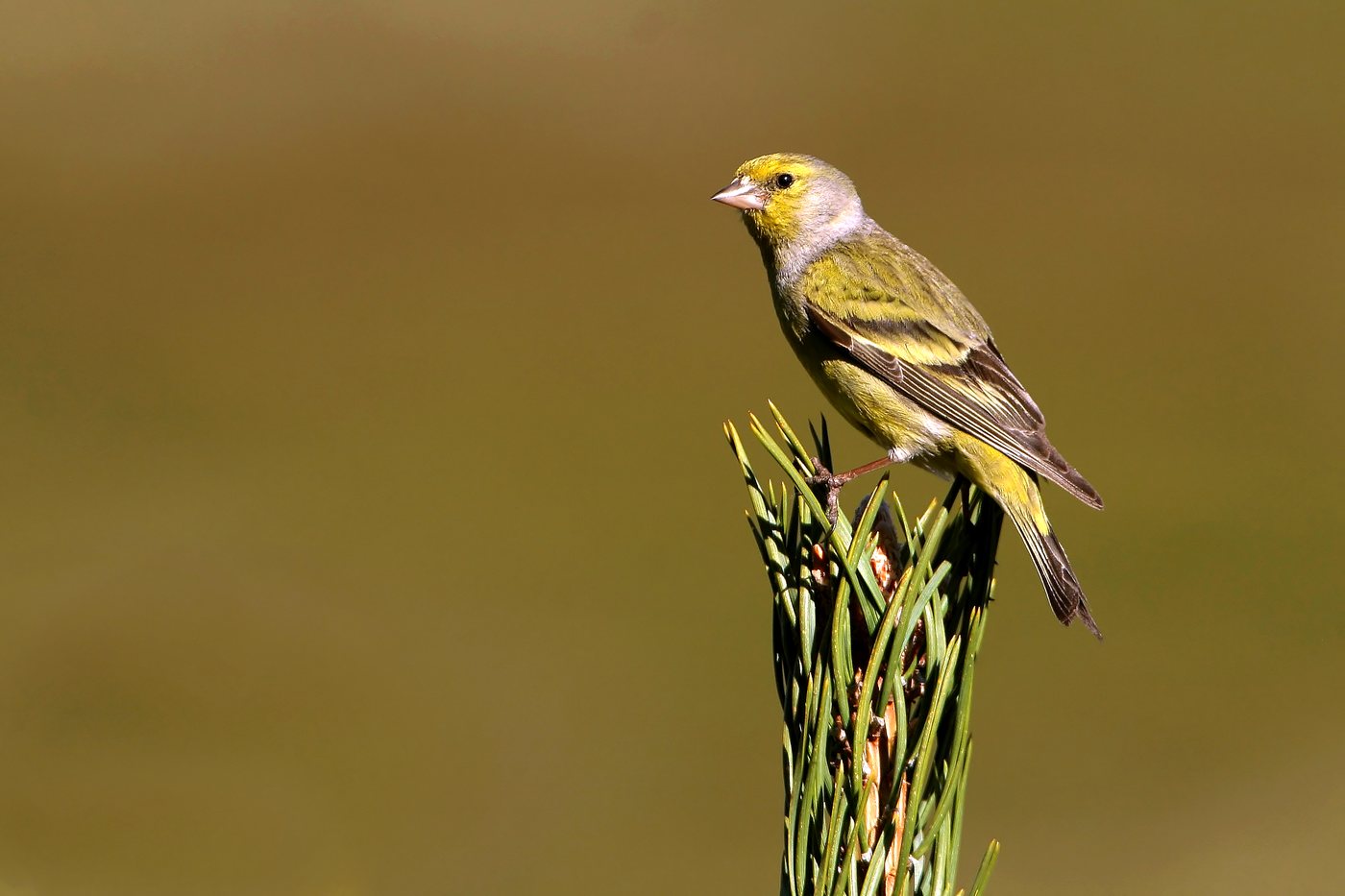
Citril Finch
The citril finch breeds at the Feldberg and on the Grinden of the Nationalpark Schwarzwald, and nowhere else in Germany except the Bavarian Alps. It lives in mountain forests with fir trees and forages in the adjoining meadows and clearings. As a resident bird it stays in the area all year and only moves to lower forest elevations in winter.
 all year
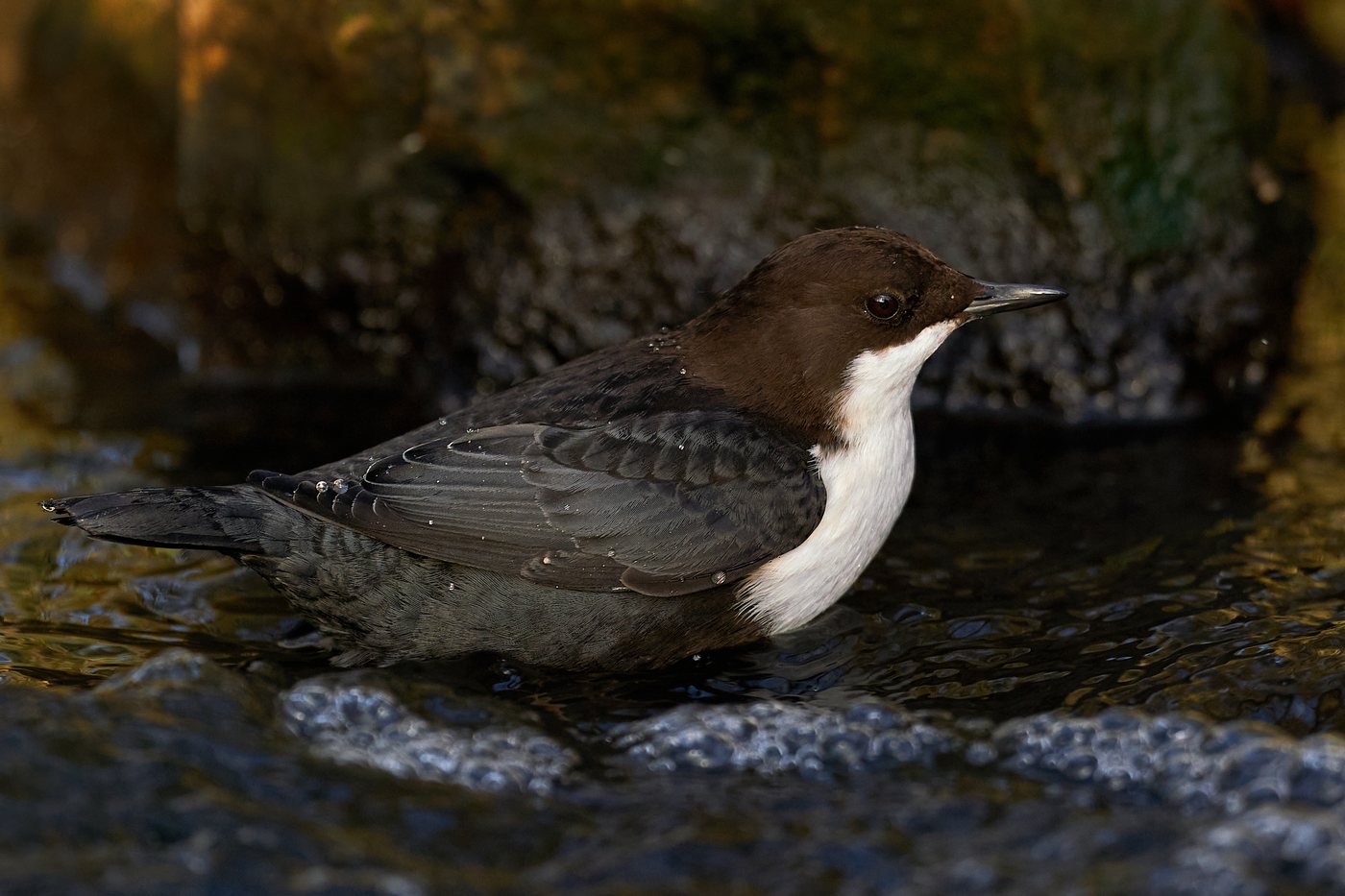
White-throated dipper
The white-throated dipper lives along the boulder-strewn streams of the Schwarzwald, documented specifically for the Wutachschlucht. Its white throat patch makes it easy to spot on the rocks in the water, and as the only native songbird that dives and swims, it hunts for food there. Even in winter it can be observed well along the ice-free stretches of the streams.
 all year
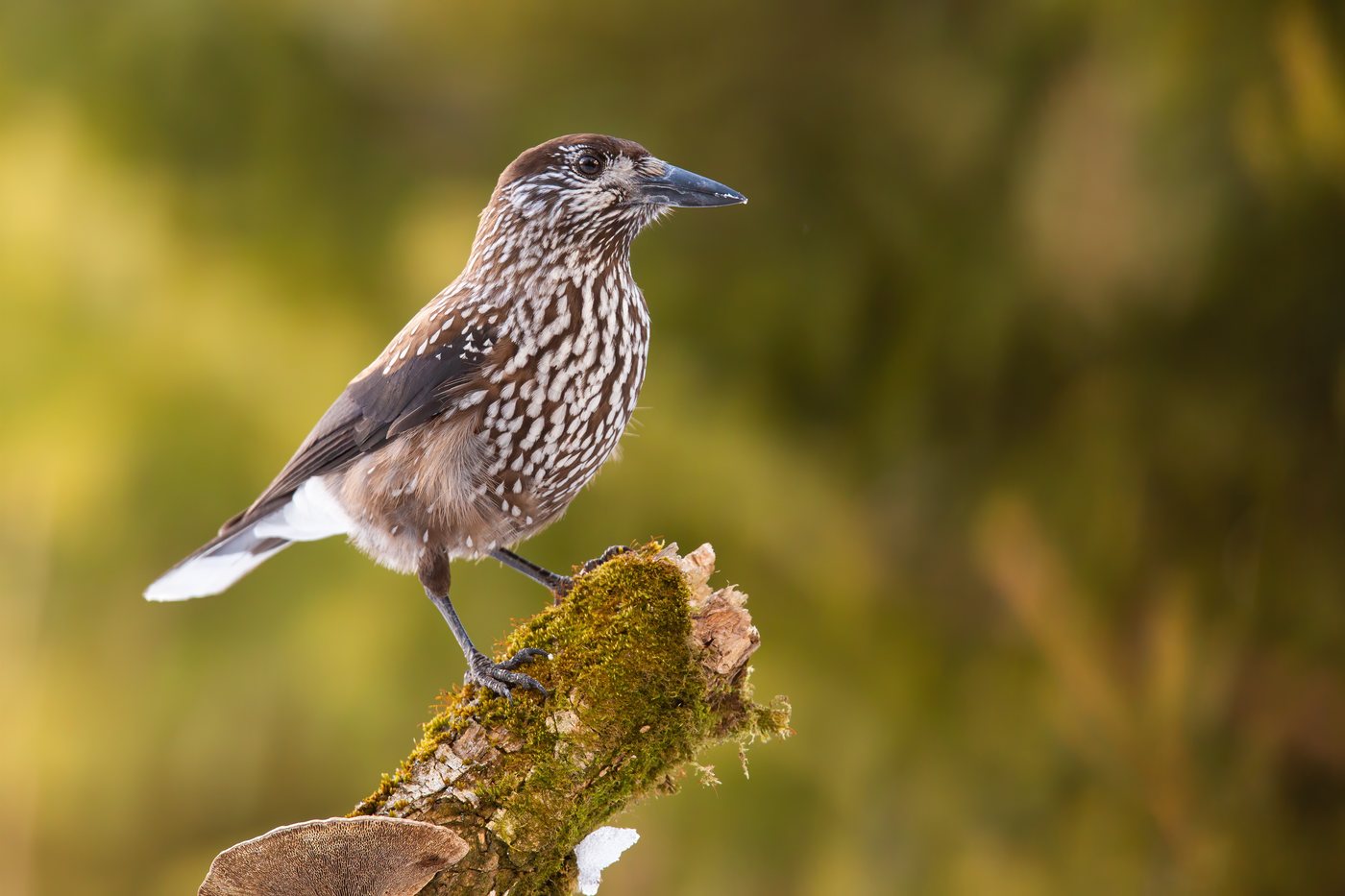
Spotted Nutcracker
In the conifer-rich mountain forests of the Nationalpark Schwarzwald, the spotted nutcracker is a resident breeding bird, seen there year round. From late summer it caches up to 6,000 seed stores and finds about 80 percent of them again on its own, even under snow.
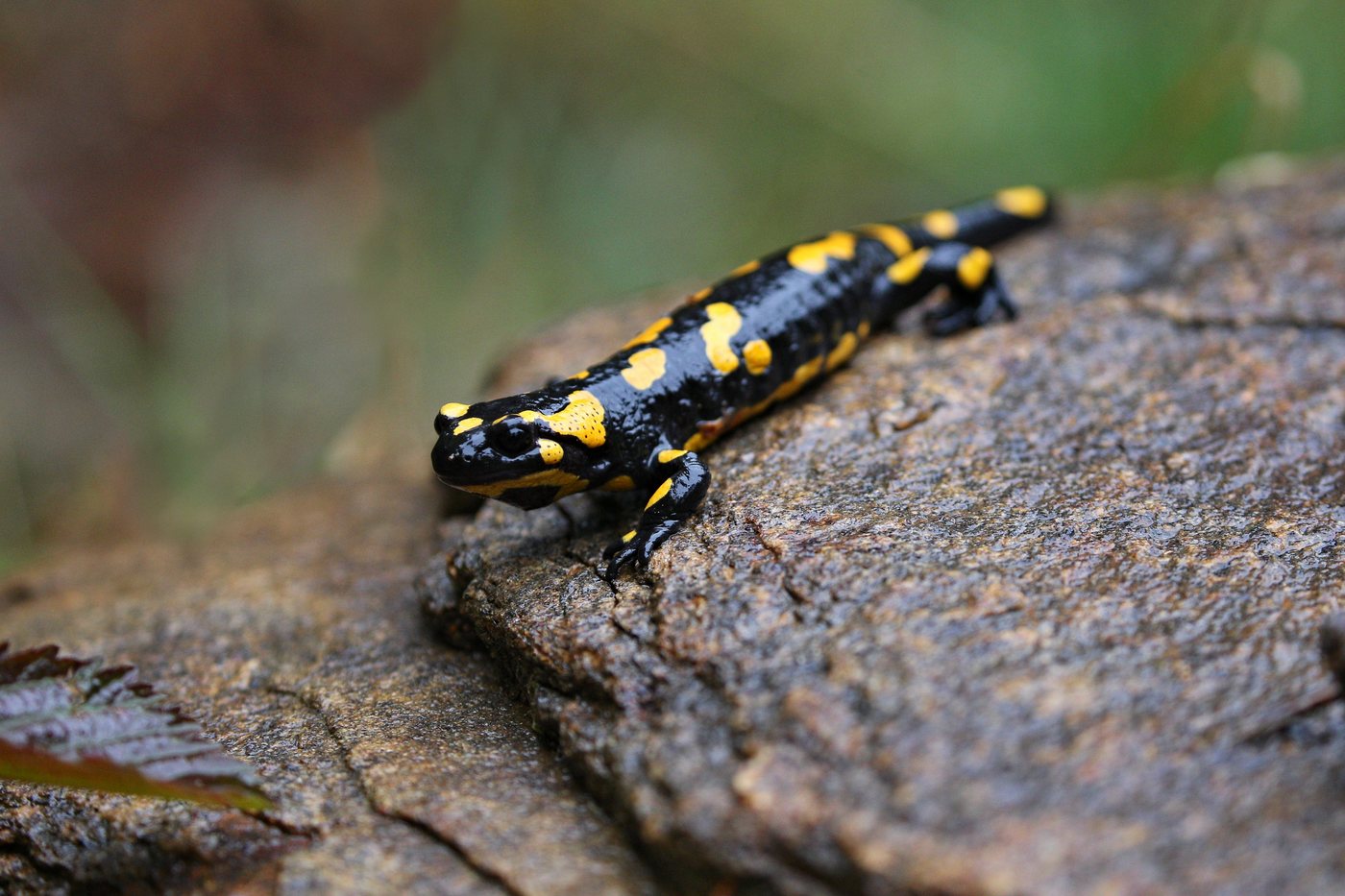 April to October
Fire salamander
The fire salamander lives in the damp mixed deciduous forests and stream valleys of the Schwarzwald, documented specifically for the Wutachschlucht. It shows itself at dusk and at night in mild temperatures and high humidity, most often after rain. In spring the females release their larvae into cool spring-fed streams, and afterward it stays active on the forest floor into autumn.
Pictures: Freepik
Getting there
- 1 h 00 minFreiburg im Breisgau
- 2 h 45 minFrankfurt am Main
- 4 h 00 minMünchen
- 4 h 15 minKöln
- 7 h 15 minHamburg
- 8 h 00 minBerlin
Good to know
Dogs on a leash in the protected areas
In the Nationalpark Schwarzwald, the rule is: dogs must be kept on a leash inside a protected area. The same applies under the rules for visitors to the Feldberg nature reserve and the Wutachschlucht nature reserve. Elsewhere in Baden-Württemberg's forests, ForstBW considers reliable obedience sufficient, with a leash required near other visitors and whenever game is in sight.
Wildlife refuge zones in winter
From December 27 to mid-March, the national park closes certain trails; the current picture is shown on a map updated daily. Wildlife refuge zones of at least 100 hectares surround the capercaillie's display grounds. At the Feldberg, the areas marked red on the winter map may be neither entered on foot nor skied across.
Fires only at designated spots
In the Feldberg nature reserve, lighting a fire is allowed only at designated fire pits, and in the national park fires and smoking are banned entirely. Elsewhere in Baden-Württemberg's forests, ForstBW imposes a smoking ban from March 1 to October 31; open fire must be kept at least 100 meters from the forest and is otherwise permitted only at designated barbecue sites.
Overnight stays only at designated sites
Overnight stays are not permitted anywhere in the national park, whether in a tent or not; in the Feldberg nature reserve, camping and overnight stops are allowed only at the sites set aside for it, and in the Wutachschlucht nature reserve not at all. Under ForstBW rules, motor vehicles may not enter the forest. Anyone who wants to sleep outdoors can use one of the Black Forest's 24 trekking camps, bookable from May to October for 15 euros per tent per night, each with its own fire pit.
Where swimming is allowed
At 5.17 square kilometers, the Schluchsee is the Black Forest's largest lake: 7.5 kilometers long, up to 61.7 meters deep, and sitting at 930 meters elevation, with lakeside beaches and canoe and stand-up-paddleboard rental; the trail around it measures about 18 kilometers. In the Wutachschlucht nature reserve, by contrast, swimming is not permitted.
KONUS: bus and train at no extra cost
Anyone staying overnight in one of the roughly 150 KONUS towns rides bus and train free of charge with their guest card across nine transit networks, from Pforzheim to Basel and from Karlsruhe to Waldshut, with the exception of ICE, IC, EC trains and mountain railways. Four bus lines run to the Ruhestein national park center from Baden-Baden, Achern, Baiersbronn, and Freudenstadt. The Wutachschlucht's four hiking bus lines are also free with KONUS from April 11 to early October.
Protected landscapes
- National park
- Schwarzwald
- Biosphere reserve
- Biosphärengebiet Schwarzwald
- Nature park
- Schwarzwald Mitte/NordSüdschwarzwald
Names and boundaries: © OpenStreetMap contributors.
About this region
The Black Forest is Germany's largest contiguous low mountain range, with the Feldberg as the highest peak outside the Alps and the Nationalpark Schwarzwald as the only national park in Baden-Württemberg. Hosts offer pitches on meadows and farms as well as campsites by lakes and in the valleys.
It is busiest in high summer and during the snow months through March. When a site is open is shown in each listing's calendar.
