Vacation Homes on the Baltic Sea
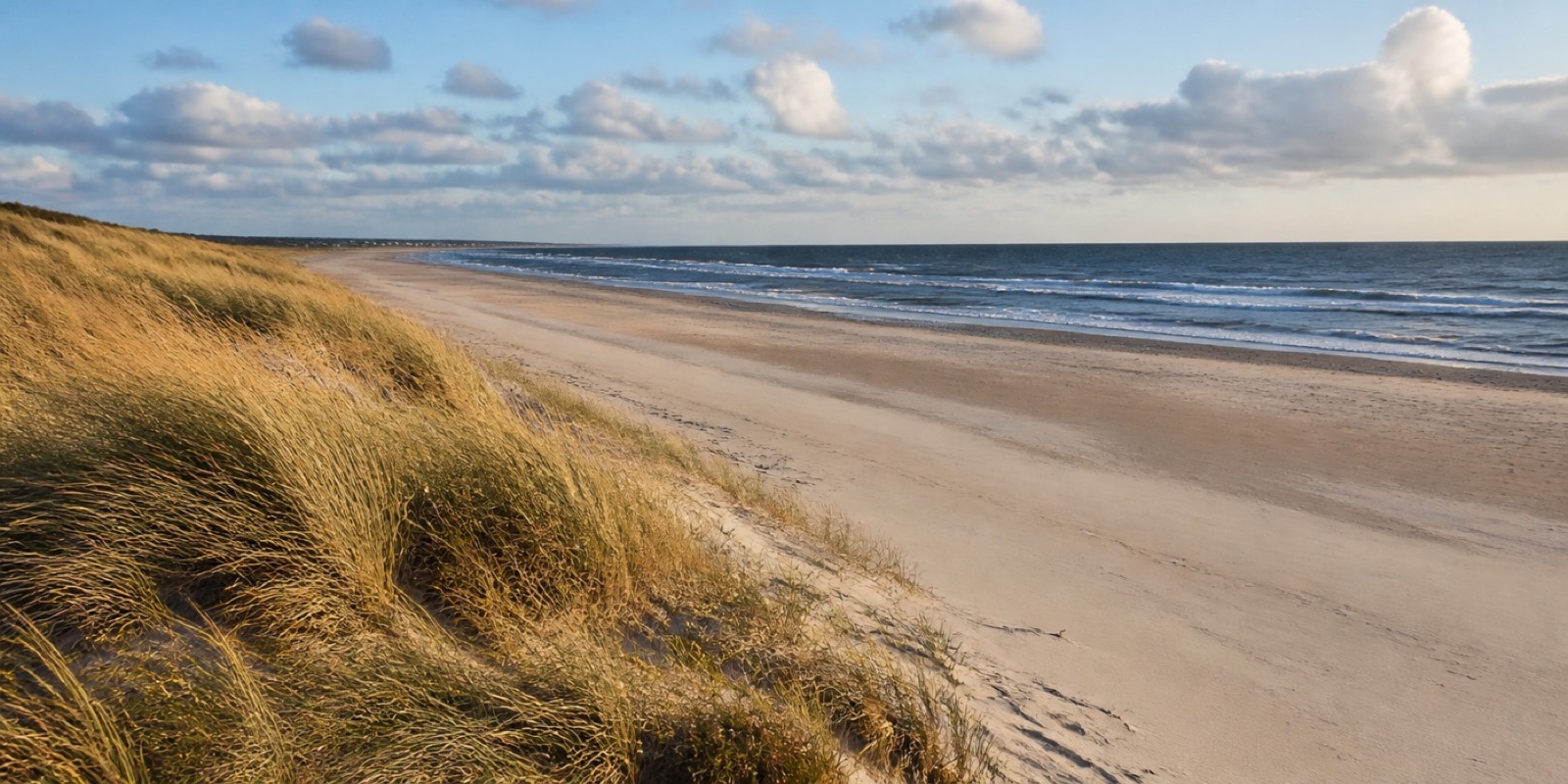
In the Baltic seaside resorts, the front row belongs to the white villas and hotels of the resort era. Vacation homes usually sit a little behind that, in the old fishing and farming villages, where the way to the beach runs across sand instead of along a promenade. The wind on this coast comes mostly from the west, and the sheltered side of the house is where you still sit outside in the evening. Dinner gets picked up along the way, at a smokehouse by the harbor or a farm shop out on the country road.
The year in this region
September: Stags Bellow in the Darßwald
From mid September the red deer rut in the Darßer Wald, and the calls carry far across the dunes. Some walk right down to the beach. The paths around the Buchhorster Maase are closed from September 1 to the end of October. At Darßer Ort there are platforms to watch from.
In the middle of the month the sun rises at 6:39 AM and sets at 7:26 PM. That leaves 12 hours and 47 minutes of daylight.
Water and air: Open-Meteo, measured averages. How busy: share of school holidays 2027 across all sixteen federal states. Nature dates: German Weather Service, phenological observations 2014 to 2026 at 318 stations in the region, typical day.
Tours in this region
Marked tours that fit into a day from a site, and one multi day tour per kind.
- Hiking
Ostseeküstenweg
The trail follows the coast from the bay of Lübeck at Travemünde to Usedom and changes ground the whole way: clay cliffs, flat sand, dyke paths along the lagoons. Flint lies along the crumbling edges, and sometimes amber. The water is in sight almost all the time.
384.9 kmMulti day tour
- Hiking
Hochuferweg Sassnitz–Lohme
Eleven kilometres along the top of Rügen's chalk coast, through the national park's beech forest, which is world heritage. Between the trunks the view opens again and again onto the water, from a good hundred metres up at the Stubbenkammer. The path is narrow and rooty, and it is best early in the morning.
11.2 km
- Cycling
Ostseeküsten-Radweg
The longest coastal route in Germany, from the Danish border to Poland, mostly flat, with short steep climbs at the cliff coasts. It runs sometimes on the dyke, sometimes through old tree-lined avenues, sometimes right along the promenade. Ferries break the stages, so the timetable is part of the planning.
1,075 kmMulti day tour
- Cycling
Rügen-Rundweg
A loop around Germany's largest island that shows all of its faces: chalk cliffs in the east, shallow lagoons in the west, seaside resorts with white villas in between. The going is mostly flat. On Jasmund the route climbs onto the moraine hills above the chalk cliffs, and the climb near Sassnitz continues for several kilometres. With time to spare, take the detour to Hiddensee.
264.1 kmLoop tourMulti day tour
- Cycling
Mönchsweg von Glückstadt nach Puttgarden
The route follows the monks who travelled from Bremen into Slavic eastern Holstein in the twelfth century. It links more than a hundred churches, chapels and monasteries of fieldstone and brick, many of them accessible in daytime during the summer half of the year, and runs mostly through flat inland country before reaching the coast in eastern Holstein. It rides pleasantly, with long stretches on quiet, mostly paved back roads.
341.3 kmMulti day tour
- Canoeing
Wasserwanderweg Schwentine
The Schwentine links the lakes of Holstein Switzerland with the Kiel fjord, and you paddle across open water and, in between, along river stretches in the shade of old beeches. The water runs calmly; the current helps without pushing. Several mills require a portage, and there are landing places everywhere.
53.9 km
- Canoeing
Wasserwanderweg Untereider
The lower Eider is wide and slow and, between Rendsburg and the Nordfeld weir, free of tides; the current is so weak that you can paddle in either direction. The banks are flat and open, with reeds, dykes and a great deal of sky. Seals show themselves in the tidal Eider below the Nordfeld weir.
76.9 kmMulti day tour
Tours: © OpenStreetMap contributors, ODbL. Lengths computed from the mapped course, as of September 12, 2026.
Animals you can meet here
 September to October
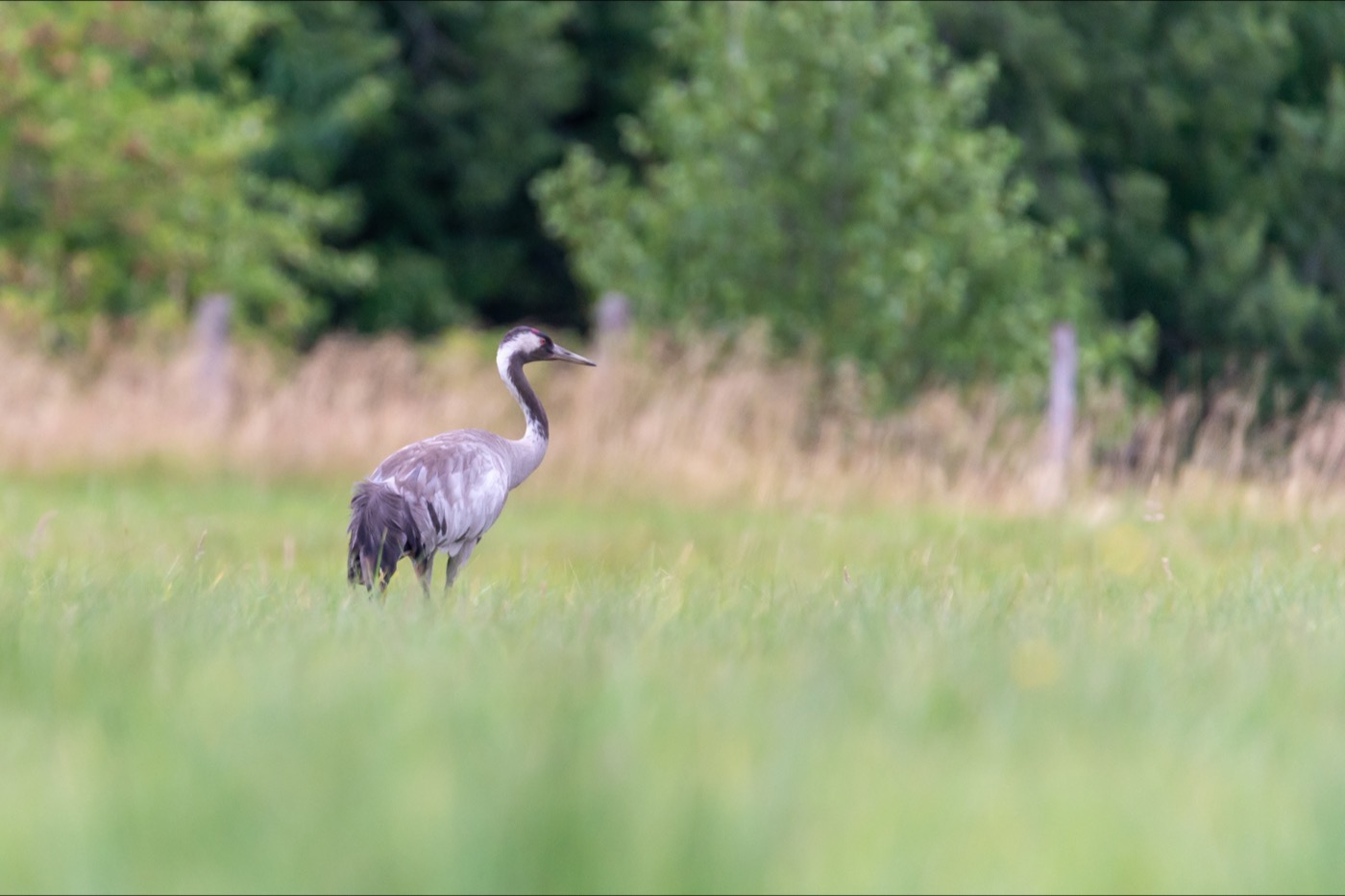
Common crane
At times more than 70,000 cranes rest in the shallow bodden waters south of Darß and Zingst in autumn, one of the most important staging areas in central Europe. The evening is the moment: they come in from the fields to roost in the shallows.
 all year
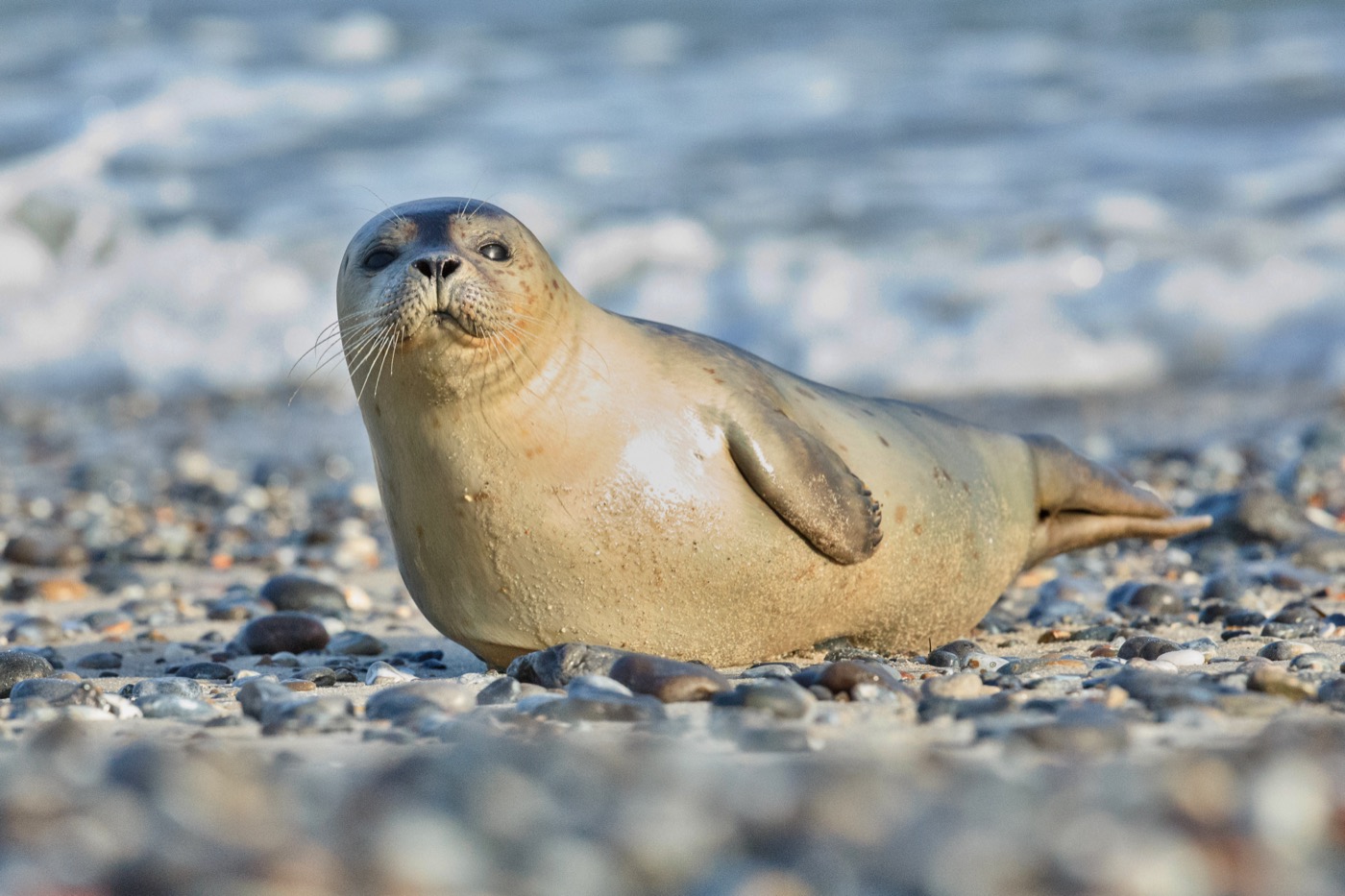
Grey seal
The largest predator in the Baltic had almost gone from these waters and has been back since the nineties. The animals haul out to rest on the sandbanks off Rügen and around the Greifswalder Oie, visible with a bit of luck from an excursion boat.
 all year
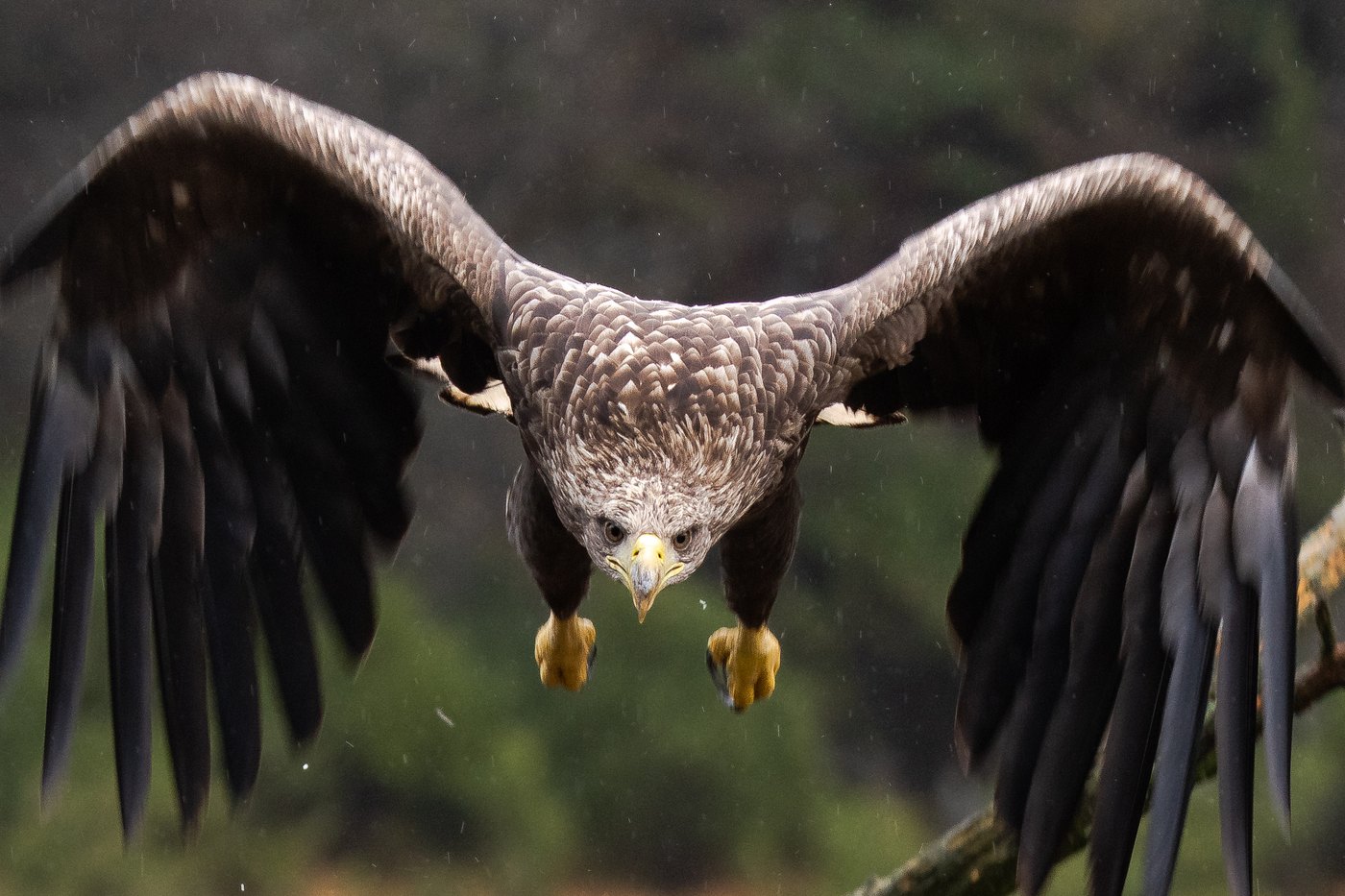
White-tailed eagle
With a wingspan of over two metres it is hard to mistake. The north east holds the largest population in Germany, and over the lakes and lagoons one is usually in the air once you have watched for a while.
 October to May
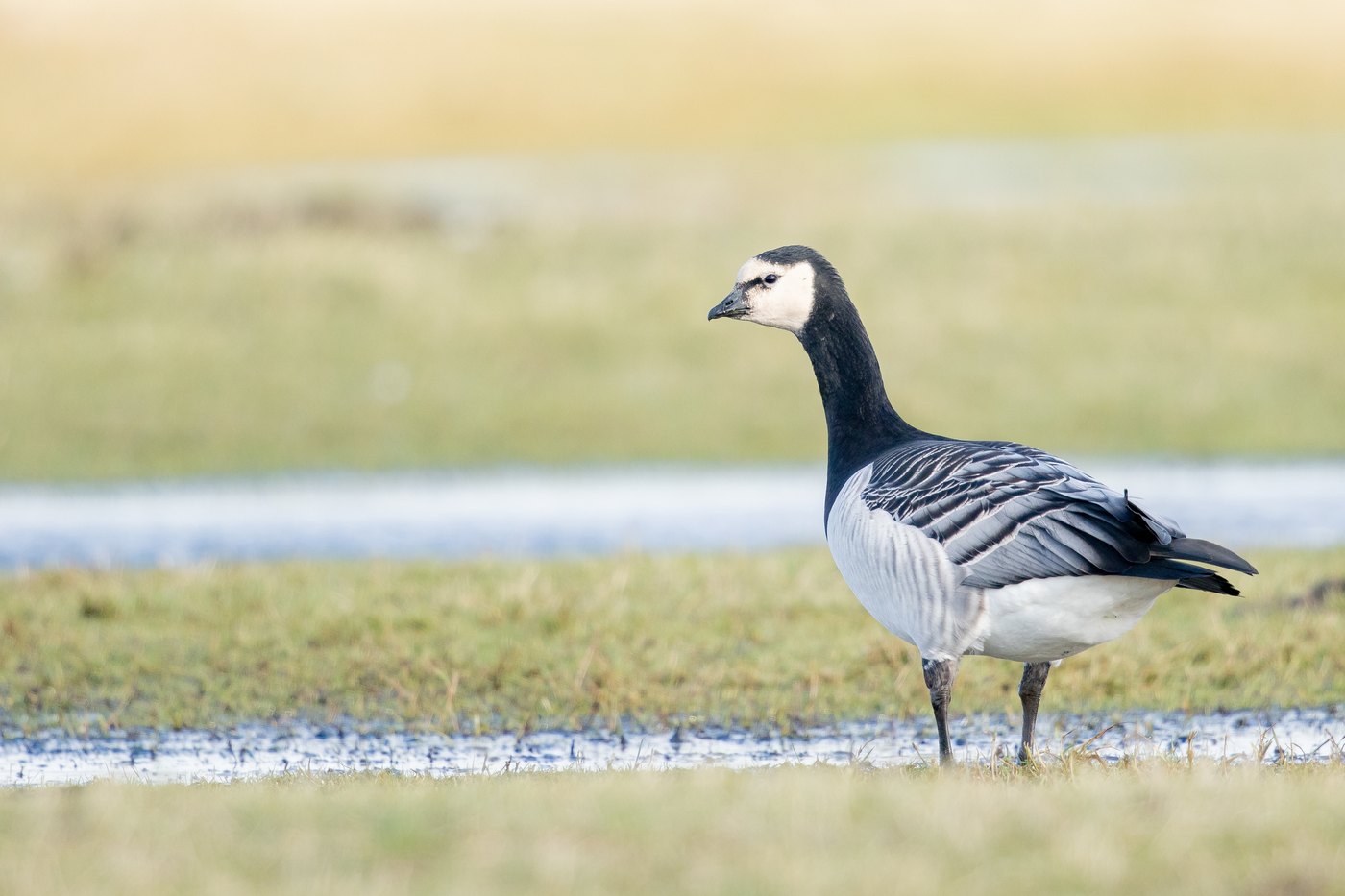
Barnacle goose
Barnacle geese graze mostly on inland grassland all winter, then in spring move onto the salt marshes and feed up for the flight to the Arctic. In the Wadden Sea they gather in tens of thousands, in smaller flocks on the Baltic coast, and when a flock lifts off you hear it before you see it.
Pictures: Freepik
What to check before booking
- Does it stand alone or in a settlement?
- Holiday house does not automatically mean remote. In a holiday park the houses sit close together and you hear the neighbours in the garden; at the edge of a wood the next roof can be a hundred metres away. The map in the listing tells you faster than the text.
- What comes on top of the rent?
- Final cleaning, bed linen and the local visitor levy are often billed separately. Some hosts also meter electricity and water. It is in the terms, not in the headline.
- Is everything on one level?
- Many holiday houses spread over two floors, with the bedrooms upstairs under the sloping roof. Anyone who climbs stairs badly looks at the floor plan.
- Is there a fixed changeover day?
- With holiday houses the week runs Saturday to Saturday in many places, and in high season few hosts move on that. Outside the season there is usually more room. Anyone wanting to arrive midweek settles it before searching.
- Is the plot fenced?
- A fence is not a given. With a dog or small children it is the most important question about the house, and whether the terrace is visible from the road only shows in the photographs.
- How do you get in?
- Handover by the host in person, or a key box at the house. After a long drive and a late arrival, that is the difference between arriving and waiting.
Who it suits
Made for
Families and groups who do not have to be quiet in the evening. Anyone staying a week or two in the same place cooks for themselves and does not plan the day around breakfast times. With a dog it is the simplest choice as well.
Less so for
For a single night it rarely pays off, and many hosts only let from several nights upwards. Anyone who wants service, meaning made beds and someone at a reception desk, is better off in a hotel. And without a car many houses lie awkwardly.
Where it comes from
The rented holiday house comes from the north. In Denmark, wealthy townspeople were putting the first summer houses up in the dunes as early as the nineteenth century, first near Søndervig on the west coast, later in Nordseeland. After the war it became a mass phenomenon: in 1945 the country counted a good four thousand such houses, twenty years later more than a hundred thousand. In the fifties the first agency there began letting such houses to guests by the week. Denmark has around 220,000 summer houses today, and German guests account for the largest share of nights in the rented ones.
Good to know
Dogs allowed more often
A plot of your own makes bringing a dog easier than a flat in a shared building. It is still not a given, and some hosts limit the number or the size.
Parking at the house
A holiday house usually comes with a space on the plot. With a motorhome or a trailer, ask beforehand whether the access is wide enough.
A fireplace is not a promise
A stove in the living room does not mean it may burn all year. Whether wood is laid in or bought yourself is something the host will say.
Getting there
- 2 h 45 minBerlin
- 3 h 10 minHamburg
- 5 h 00 minLeipzig
- 7 h 15 minKöln
- 7 h 15 minFrankfurt am Main
- 8 h 15 minMünchen
Good to know
Fishing on a holiday permit
Fishing on the Baltic requires a licence. Without an exam it works with the Touristenfischereischein in Mecklenburg-Vorpommern and the Urlauberfischereischein in Schleswig-Holstein, both valid for 28 days. In Mecklenburg-Vorpommern the coastal waters need a separate permit as well.
Dogs on the beach
Every municipality sets its own rules. In Schleswig-Holstein dogs are only allowed on general beaches from 1 November, before that on designated dog beaches only. On the mainland coast of Mecklenburg-Vorpommern the usual window is 1 November to 30 April.
Nesting season
From April to mid-July dogs must be leashed almost everywhere. Near protected areas this is worth taking seriously: disturbing a nesting site carries substantial fines.
Bridges to Usedom
Both approaches open for shipping. The Peene bridge at Wolgast at 5:45, 7:45, 12:45, 17:45 and 20:45, closing the road for up to 30 minutes. The Zecherin bridge at 5:45, 8:45, 12:45, 16:45 and 20:45, up to 20 minutes.
Getting to Ruegen
The B 96 bridge stands 42 metres above the water and never opens. The older Ruegendamm does, several times a day for around 20 minutes. If you are stuck there, the ferry from Stahlbrode to Glewitz is the way round.
Fire and wild camping
Open fires are banned on the beach and in the coastal forest, tolerated only at marked fire pits. Sleeping outside a campsite is prohibited in both states, and in the national park so is leaving the paths.
Protected landscapes
- National park
- JasmundVorpommersche Boddenlandschaft
Names and boundaries: © OpenStreetMap contributors.
