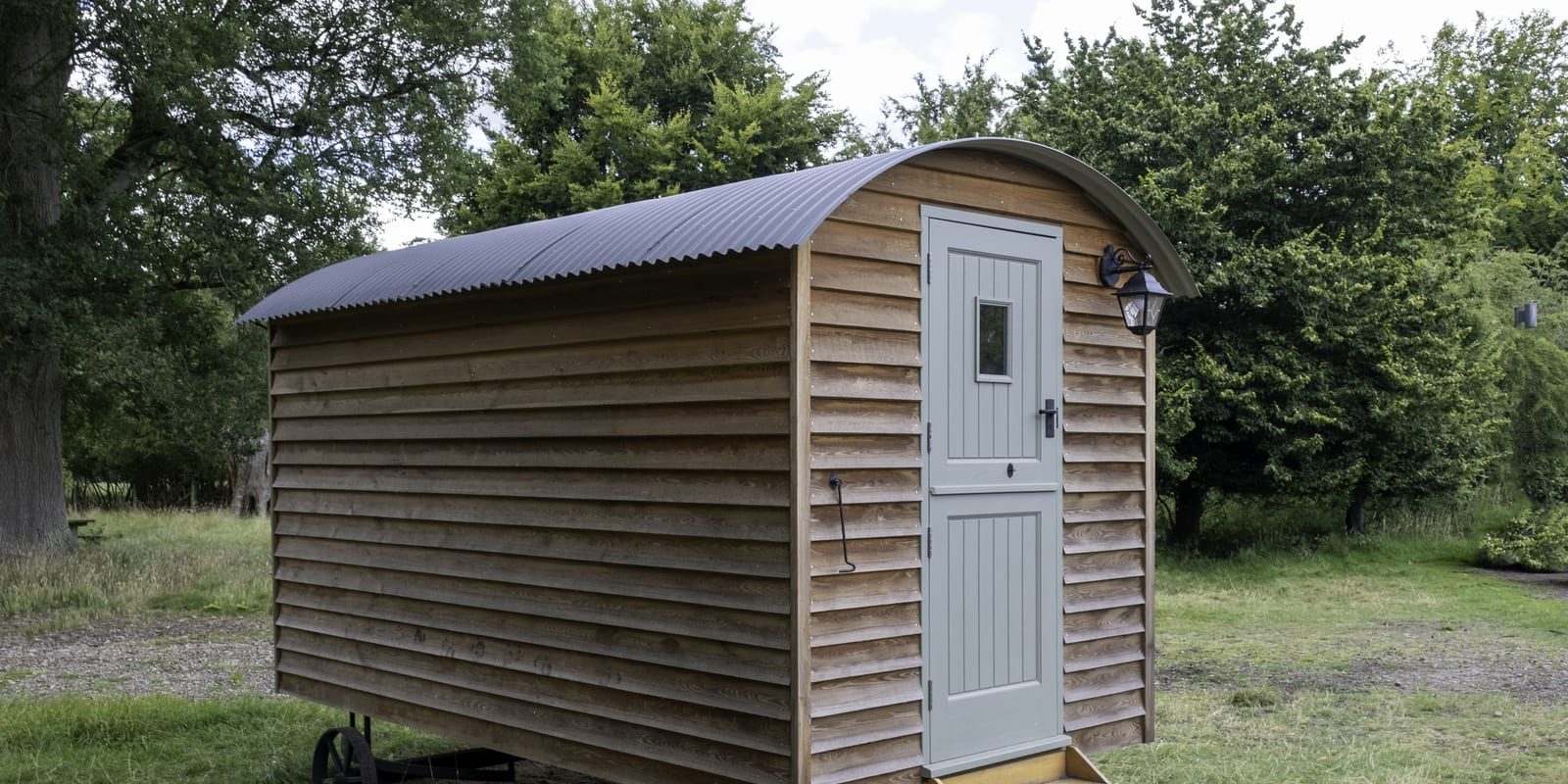
Rent a shepherd's wagon
A shepherd's wagon is a small wooden wagon on wheels, built for one person who had to stay with the flock. Inside there is a single room. The roof is usually curved, the door sits at the narrow end, and a few steps lead up to it. As holiday accommodation it stays in one place, even with the wheels still under it. Its closest relative is the circus wagon, which comes from travelling showpeople and tends to be larger and more colourful. A shepherd's wagon stays plain, and that is part of it.
What to check before booking
- Can you stand up inside?
- A barrel roof takes height away towards the sides. In the middle you can stand upright in most wagons, at the wall you cannot. How much room is left differs from wagon to wagon.
- Where is the bathroom?
- Some wagons have a shower room on board, others send guests to the sanitary building of the farm or site. Everything in between exists: a basin inside, a shower outside. The walk at night and in the rain is what makes the difference.
- How is it heated?
- Wood stove, electric heating or nothing at all. Without heating the season ends in autumn, with a stove someone has to put wood on. Whether the firewood is provided is stated in the listing.
- Are power and water connected?
- A wagon next to the farmhouse is usually on the mains. One standing alone in a meadow often runs on solar power and a water canister. That decides whether the light burns in the evening and whether devices can be charged.
- Where exactly does it stand?
- In the middle of a meadow, in the farmyard or on a campsite. That decides how quiet the night turns out. And how far you carry the luggage from the car.
Who it suits
Made for
Couples and solo travelers who like it small. On a cycling or walking tour the wagon makes a good stop, because in the evening you simply close the door. Anyone who wants little technology around them on holiday gets on well here.
Less so for
Whoever wants to spread out will sit on top of each other in here. For long stays with a lot of luggage the storage is missing, and the steps at the door mean the wagon is not step free. Where the bathroom is in the sanitary building, every trip at night goes outside.
Where it comes from
The wagon belongs to transhumant shepherding. Shepherds moved with their flocks along fixed droving routes and stayed with the animals day and night. The carts of the seventeenth century were so low that you could only get in on your knees, and only towards the end of the nineteenth century were they built high enough to stand in, with a bunk, a bench and a small table top. Southern German transhumant and herded shepherding has been on the German national inventory of intangible cultural heritage since 2020.
Good to know
The stove needs tending
A small wood stove does not heat itself. Where one is fitted you feed it by hand, and it rarely burns through until morning.
Water does not always come out of the wall
If the wagon stands on its own, the water comes from a canister or from the farm. The host says where you shower.
The morning starts early
The wagons usually stand on a farm or by a pasture, and animals are part of everyday life there. Birds and grazing animals are awake before any alarm clock.
