Rent a motorhome
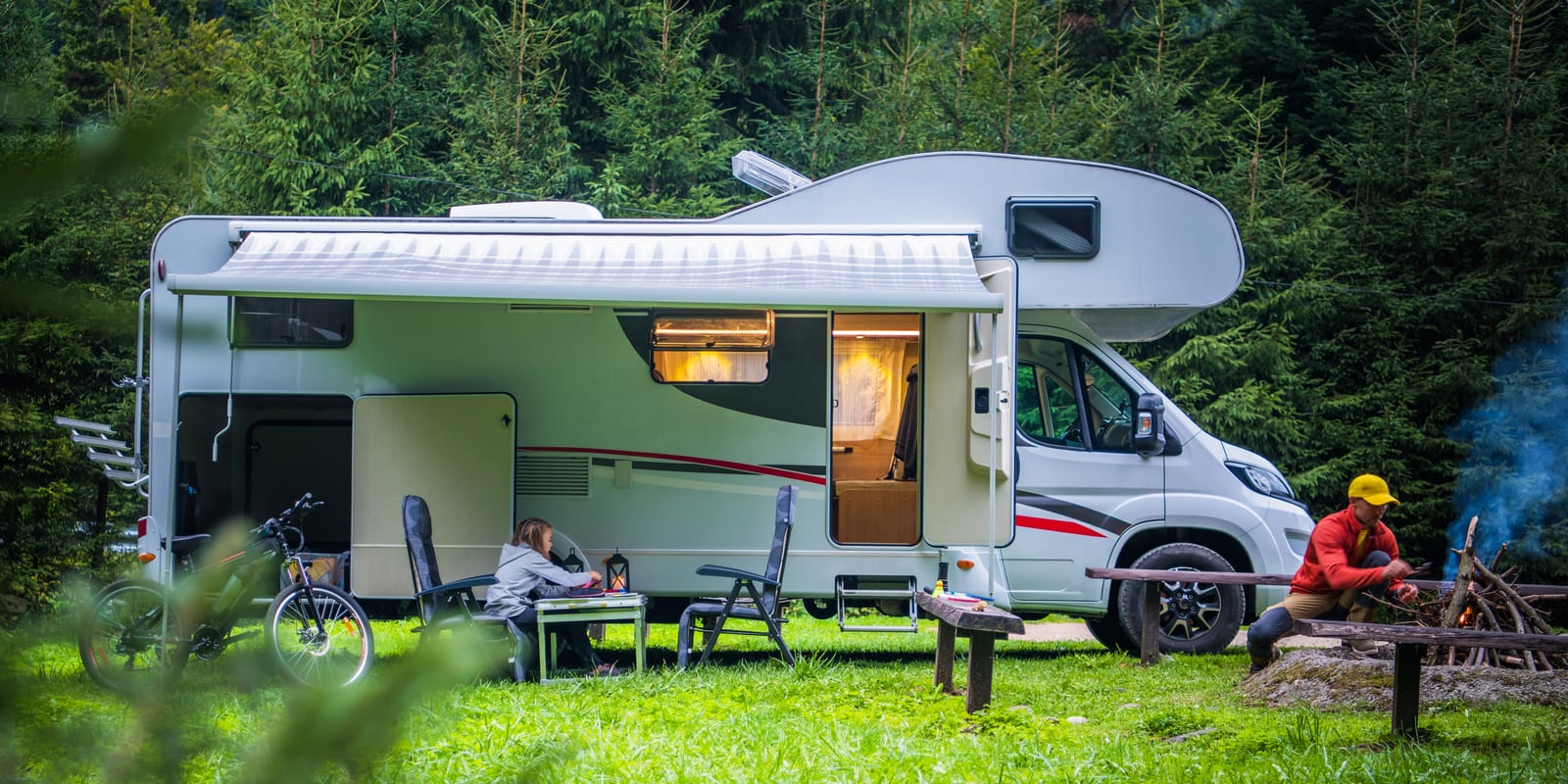
A rental motorhome is a vehicle you live in and drive. Bed, kitchen, seating area and usually a small bathroom are built in. The engine is what separates it from a rental caravan. No towing vehicle is needed, and the living space is there the moment you stop. The shapes range from the van conversion, a delivery van fitted out inside, through the low profile and the overcab model with a bed above the driver's cab to the fully integrated, where the front belongs to the body as well. Some offers are collected and taken away, others stand on a pitch and are let out there.
What to check before booking
- Do you drive it away or does it stay?
- Both exist. A vehicle you collect brings fixed times for handover and return, a camper that stays on its pitch does not. The listing says which case applies.
- Which body type?
- A van conversion gets through narrow village streets and into many car parks. An overcab model offers more berths and more storage, and you feel its height at every barrier. On the road, length and height matter more than the fittings.
- Is your licence enough?
- The permitted weight decides which class you need, and large models sit above the limit for an ordinary car licence. Older licence classes often allow more than the ones issued today, so the owner will say what he requires. Many also set a minimum age.
- Are the kilometres included?
- Some contracts include every kilometre, others a fixed allowance and charge beyond it. Anyone planning a long route checks first.
- How does the handover work?
- Gas, fresh water, toilet cassette and electricity are explained at the start, and that briefing saves a lot of searching later. Existing damage belongs in the protocol, with photographs. The same paper says how the vehicle should come back.
- Is it insured as a rental vehicle?
- Letting a motorhome out for the guest to drive requires its own insurance; the owner's ordinary policy does not cover renting. A lot hangs on this if something happens, so the question is a fair one. For a vehicle that stays on its pitch, it does not arise.
Who it suits
Made for
Anyone who wants to be on the move without hunting for a room in the evening. The bed travels along. For couples and small families who string several places into one trip, and for everyone who wants to find out before buying how two weeks in a vehicle actually feel.
Less so for
If you dislike driving something large, little of this will be fun. Manoeuvring and narrow entrances belong to every day, height limits come on top, and you rarely park right at the door. The usual models have a high step up and a narrow aisle; vehicles with a ramp or a lift do exist, but they are a small market of their own. For a week in one single place the vehicle mostly just stands around.
Where it comes from
In Germany, living in a vehicle starts with a conversion. In 1951 Westfalia in Rheda-Wiedenbrück fitted out a VW bus as the Camping Box, with folding furniture behind the front seats. About a thousand were built up to 1958, and series models followed. Mikafa in Minden was building motorhomes with a body of their own in small runs as early as the fifties, and from 1971 Hymer built the Hymermobil in series.
Good to know
Know your height and length
Car parks, barriers and some forest tracks have a limit the vehicle exceeds. Write the measurements down at the start and you will not have to guess on the road.
The tanks want looking after
Fresh water is filled up, waste water and the toilet cassette are emptied at service points. Campsites and many stopovers have them, the road in between does not.
Dogs by arrangement
Some owners take dogs along, others hand the vehicle over only without animals. Settle it before booking, not at the handover.
