Rent a holiday house
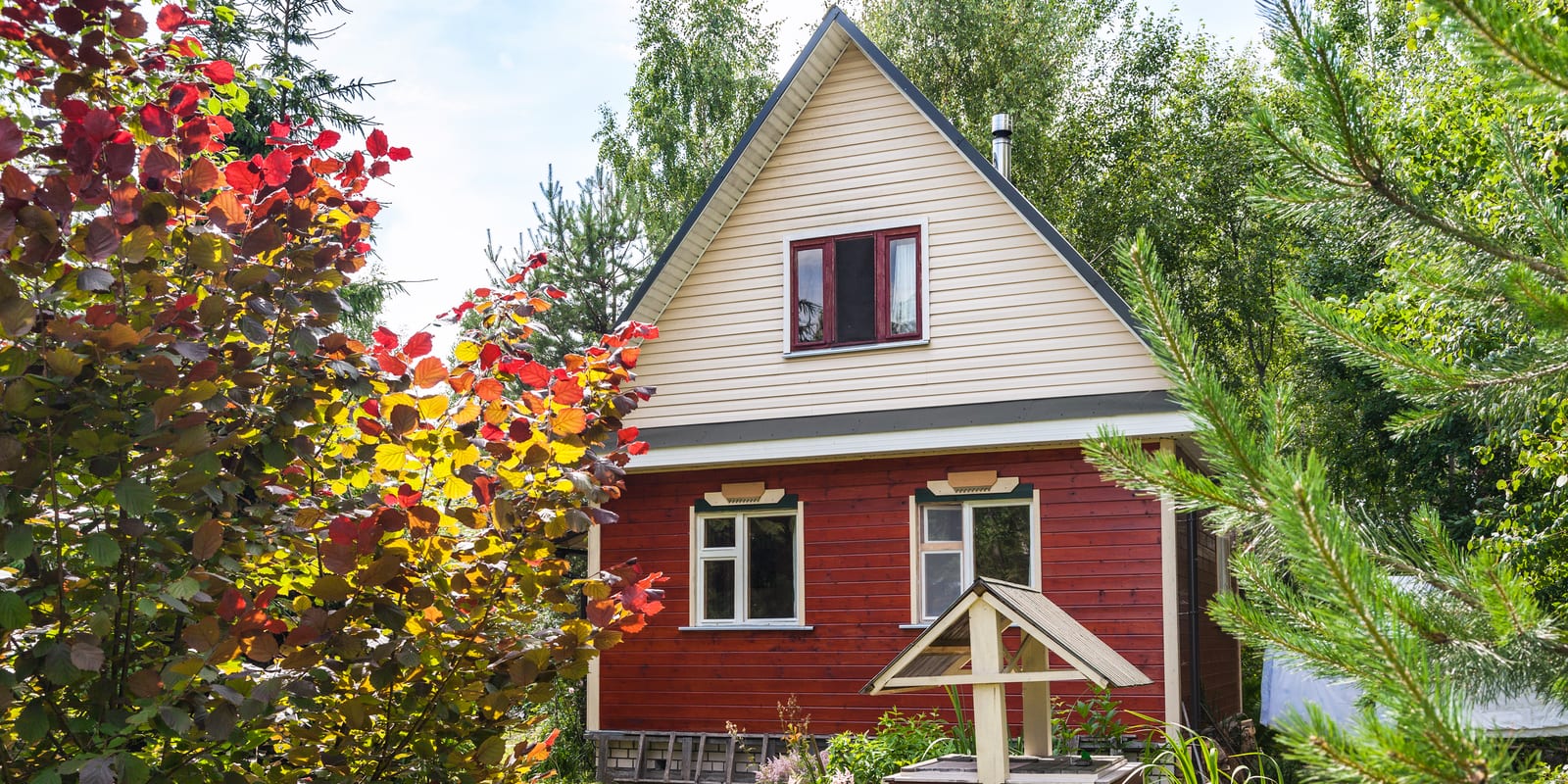
A holiday house is a whole building for one party. The front door and the plot belong to the guests for the length of the stay, with no shared stairwell and no flat next door. That is what separates it from a holiday apartment, which is one unit in a building of several. Standing alone is not guaranteed, though: some houses sit by themselves at the edge of a wood, others in a row in a holiday village. You cook for yourself, a kitchen is part of it. The word says nothing about how it was built, and from the thatched house on the coast to the new build with a sauna, everything is called a holiday house.
What to check before booking
- Does it stand alone or in a settlement?
- Holiday house does not automatically mean remote. In a holiday park the houses sit close together and you hear the neighbours in the garden; at the edge of a wood the next roof can be a hundred metres away. The map in the listing tells you faster than the text.
- What comes on top of the rent?
- Final cleaning, bed linen and the local visitor levy are often billed separately. Some hosts also meter electricity and water. It is in the terms, not in the headline.
- Is everything on one level?
- Many holiday houses spread over two floors, with the bedrooms upstairs under the sloping roof. Anyone who climbs stairs badly looks at the floor plan.
- Is there a fixed changeover day?
- With holiday houses the week runs Saturday to Saturday in many places, and in high season few hosts move on that. Outside the season there is usually more room. Anyone wanting to arrive midweek settles it before searching.
- Is the plot fenced?
- A fence is not a given. With a dog or small children it is the most important question about the house, and whether the terrace is visible from the road only shows in the photographs.
- How do you get in?
- Handover by the host in person, or a key box at the house. After a long drive and a late arrival, that is the difference between arriving and waiting.
Who it suits
Made for
Families and groups who do not have to be quiet in the evening. Anyone staying a week or two in the same place cooks for themselves and does not plan the day around breakfast times. With a dog it is the simplest choice as well.
Less so for
For a single night it rarely pays off, and many hosts only let from several nights upwards. Anyone who wants service, meaning made beds and someone at a reception desk, is better off in a hotel. And without a car many houses lie awkwardly.
Where it comes from
The rented holiday house comes from the north. In Denmark, wealthy townspeople were putting the first summer houses up in the dunes as early as the nineteenth century, first near Søndervig on the west coast, later in Nordseeland. After the war it became a mass phenomenon: in 1945 the country counted a good four thousand such houses, twenty years later more than a hundred thousand. In the fifties the first agency there began letting such houses to guests by the week. Denmark has around 220,000 summer houses today, and German guests account for the largest share of nights in the rented ones.
Good to know
Dogs allowed more often
A plot of your own makes bringing a dog easier than a flat in a shared building. It is still not a given, and some hosts limit the number or the size.
Parking at the house
A holiday house usually comes with a space on the plot. With a motorhome or a trailer, ask beforehand whether the access is wide enough.
A fireplace is not a promise
A stove in the living room does not mean it may burn all year. Whether wood is laid in or bought yourself is something the host will say.
