Rent a chalet
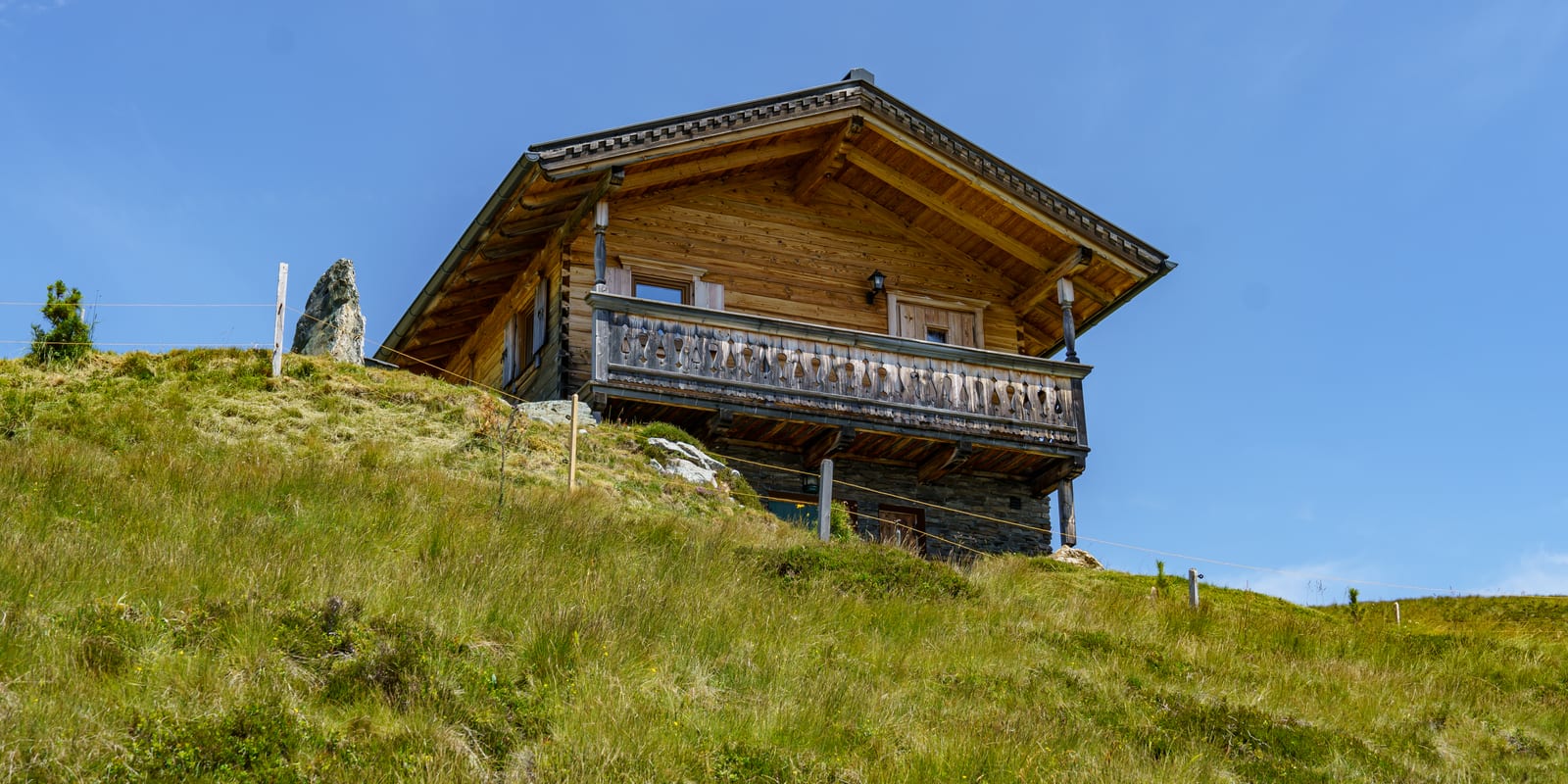
A chalet is a timber house with a shallow gabled roof and wide overhanging eaves. The form comes from the Alps. In the nineteenth century it travelled from there across Europe, and today wooden holiday houses far beyond the mountains carry the name as well. It may be an old farmhouse on a slope, a new building in the same style, or a wooden unit in a holiday park. Unlike a mobile home, the word says nothing about how the building reached its plot. It describes the construction, not the transport.
What to check before booking
- What kind of house is behind the word?
- Chalet is not a protected term. Everything from a farmhouse two centuries old to a timber build from last year goes by it. Photographs and the year of building say more than the label.
- Do you rent the whole house?
- In the mountains a large chalet is often divided into several apartments. You then share the entrance and the stairwell, sometimes the terrace as well. The listing states what belongs to the booking.
- Is there an upper floor or a gallery?
- Many chalets use the space under the roof for sleeping. The stair up can be steep, and under the slope there is not standing height everywhere. If walking is hard, ask for a bed on the ground floor.
- Is the heating wood fired?
- A stove or a fireplace often belongs to the house, but it does not always replace the heating. Ask whether firewood is provided and what else warms the rooms on a cold morning.
- How do you get there?
- Some chalets sit at the end of a narrow road or a little above the parking area. In winter the last kilometre decides whether you need chains and how far the luggage is carried.
Who it suits
Made for
Groups and families who want a whole house to themselves, with a kitchen and a table that seats everyone. Walkers and skiers use it as a base for a week or two. If you would rather cook in the evening than go out, this is the right choice.
Less so for
A chalet is rarely step free. Where the bedrooms sit under the roof, stairs lead up to them, and in the mountains the house often stands on a slope. Without a car, getting there turns awkward, and there is no hotel service: cooking and heating stay with the guests.
Where it comes from
The word comes from French speaking Switzerland, where it meant the hut on the alpine pasture in which herdsmen lived through the summer and made cheese. It is recorded from 1328 in Vaud, later in Valais and Fribourg. Jean-Jacques Rousseau made it widely known when he used it in his novel Julie, or the New Heloise in 1761. In the nineteenth century nobility and the middle classes built houses modelled on those huts, and with the first travellers in the Alps this grew into a style recognised everywhere.
Good to know
Firewood is not always included
A stove or fireplace needs a supply, and who provides it differs from house to house. Settle it before you travel, or the stove stays cold on the first evening.
Often there are stairs to climb
Where the sleeping rooms are under the roof, a stair leads up, often a steep one. With a toddler or bad knees, ask in advance for a room on the ground floor.
Check the last stretch
Not every access road is wide or surfaced. Anyone arriving with a trailer or a large vehicle asks about parking and room to turn.
