Rent an alpine hut
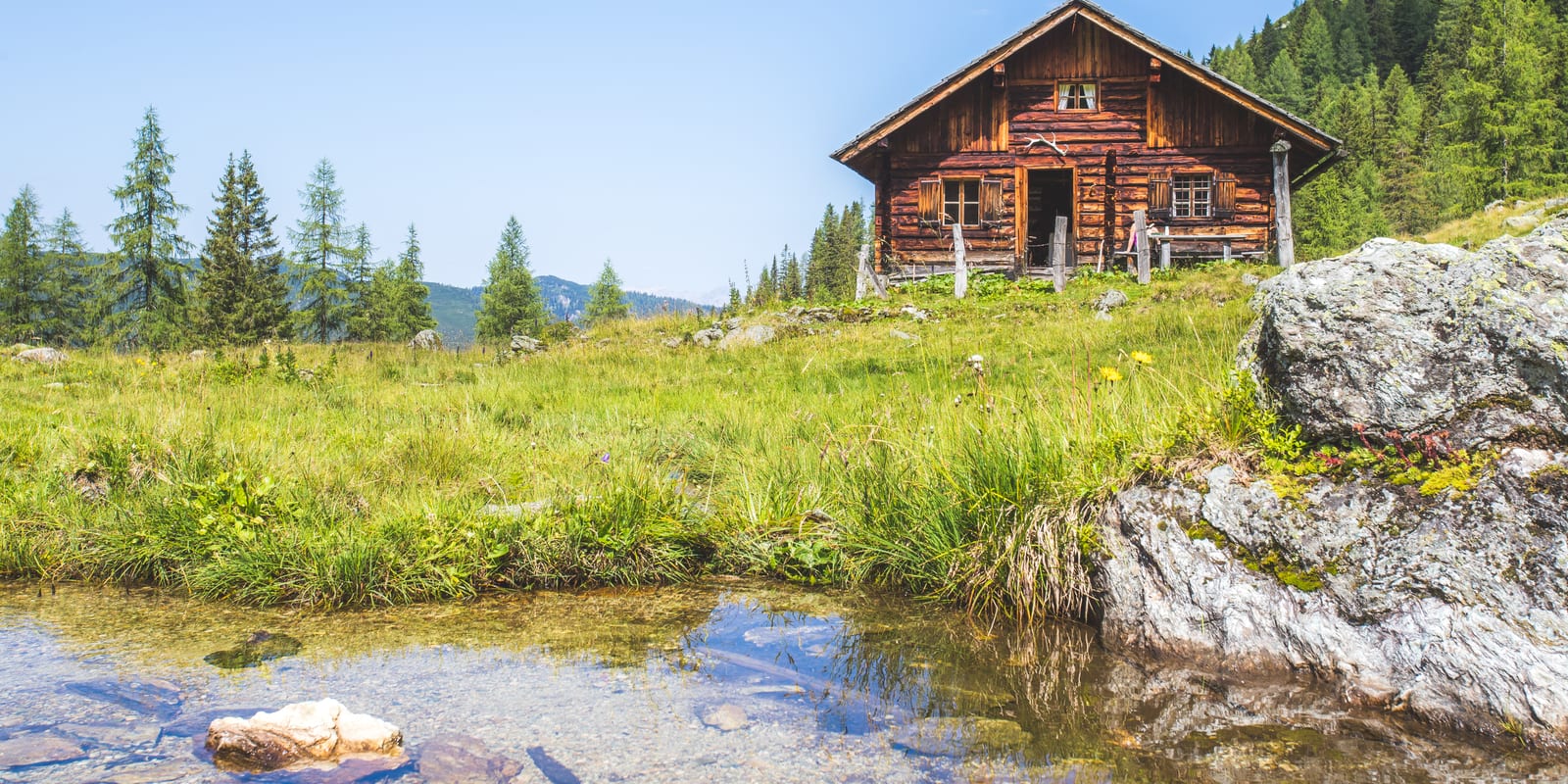
An alpine hut stands on an alp, a mountain pasture that livestock uses only over the summer. It was built for work. Under one roof lay the parlour, the byre and often a cool chamber for the milk, because the herdsman stayed up there for the whole season. Many of these huts are now let as a whole, some alongside a working pasture, some without animals. What separates them from an alpine club refuge is the booking: there you take one bed among many, here the whole house. And where a holiday house has an address in the village, the hut has the grazing land all around it.
What to check before booking
- How far does the car get?
- Some alpine huts have a drive right to the door, for others the last stretch goes up on foot. There is often a barrier on the way, and a key that belongs to it. Some hosts bring the luggage up themselves.
- Is the hut reachable in winter?
- Many alps are open from early summer into autumn only, because nobody clears the track. Where winter lets are offered, the last part often goes by sledge, ski or snowshoe. The description says so when it applies.
- Where does the electricity come from?
- There are huts on the grid, huts with solar panels and huts with no connection at all. A solar system carries lights and chargers, rarely a hairdryer or a kettle. On some huts the wood range heats the water as well.
- Where does the water come from?
- Many alpine huts are fed by their own spring rather than a main from the valley. The water comes cold out of the mountain, usually from a tapped spring above the hut. How the supply is arranged at each hut is stated in the description.
- How is it heated, and who brings the wood?
- On many alpine huts the wood stove in the parlour is the only source of warmth. Some hosts leave the wood ready, with others you buy it or fetch it from the shed. Even in summer the nights up there turn cold.
- How far is the nearest shop?
- You almost always cook for yourself. The nearest shop is down in the valley, and the way there is part of the planning. Shop before you drive up, not after.
Who it suits
Made for
People who want quiet and can take what quiet also means, which is being on your own. Families and small groups get a whole house instead of a room, and that changes an evening. Anyone who likes cooking has the kitchen to themselves.
Less so for
Anyone who wants company in the evening is better off down in the valley. The way to a hut is rarely level, and few of them are step free. And if you have to be online reliably, ask about reception first, because many alps sit out of signal.
Where it comes from
Alpine pasture farming is about four thousand years old in the Alps. On the Dachstein the association ANISA uncovered the remains of huts from the middle and late Bronze Age; charcoal from a fire pit dates one of them to 1360 to 1170 BC. Alps first appear in writing in the eighth century, when the Notitia Arnonis assigns two of them to the church of Salzburg. The alpine pasture season, the summer between the drive up and the drive down, is listed by UNESCO as intangible cultural heritage on a Swiss nomination.
Good to know
Getting there is part of it
A private alpine or forest road with a barrier often leads up to the pasture. How far the car gets and where the key waits is worth settling before you set off.
Cattle around the house
On a working alp cattle graze right up to the hut. Dogs belong on a short lead there, and gates stay shut so the animals stay where they are.
Lighting the stove is part of the day
Where a wood stove or a range stands, it gets used morning and evening. If you have never done it, have the host show you the few steps when you arrive.
The water comes out of the mountain
Many huts hang on their own spring rather than a main from the valley. Going easy on water is not a gesture up there, it is the normal way to live.
