Camping on Usedom
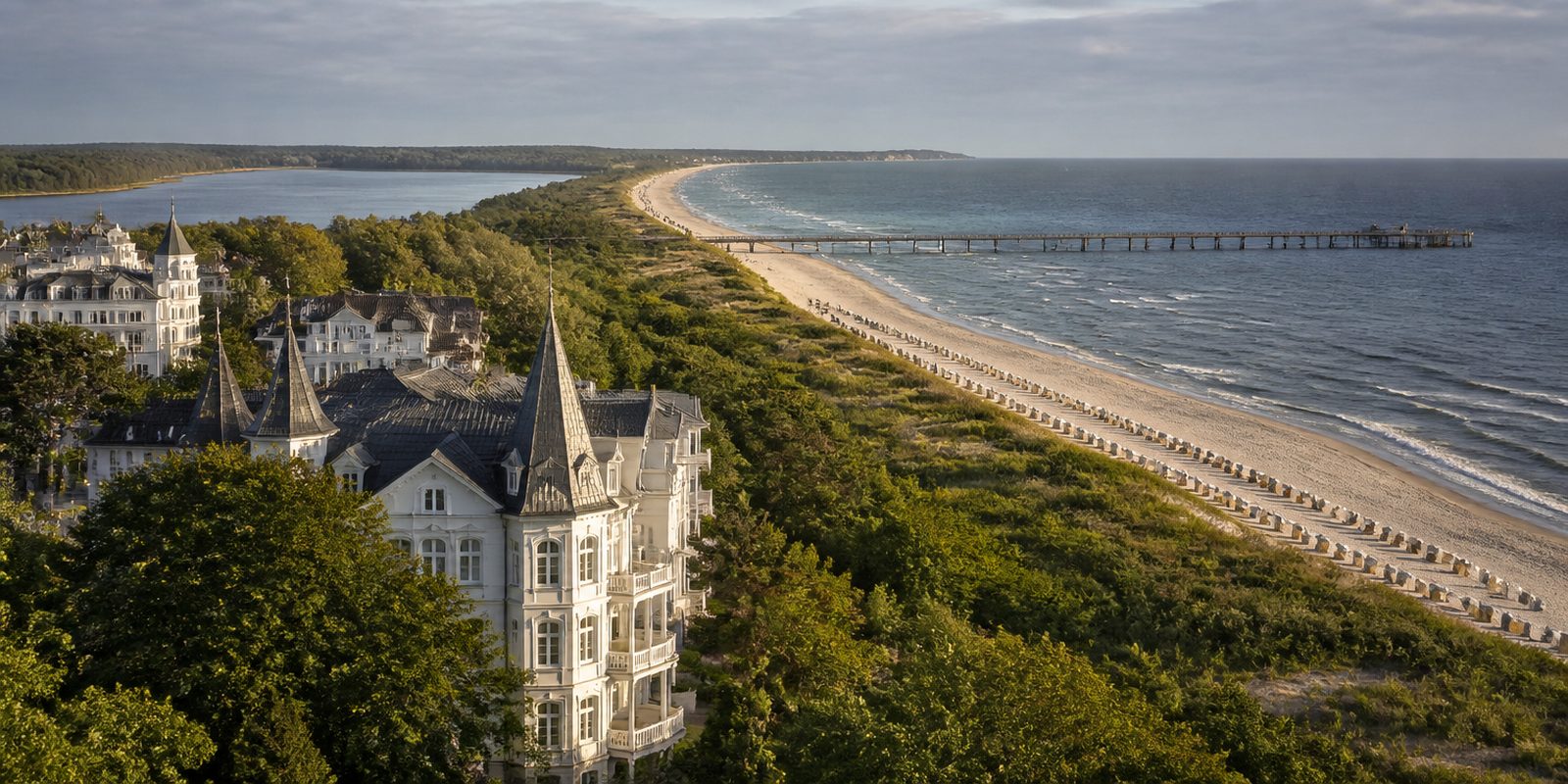
Usedom covers 445 square kilometres, which makes it the second largest German island. The border with Poland runs straight across it: 373 square kilometres lie on the German side, 72 on the Polish side at Świnoujście. Sunshine averages 1,906 hours a year, as much as almost anywhere in Germany or Poland, and the island is known as the Sonneninsel because of it. The coast is lined by the three Kaiserbäder, Ahlbeck, Heringsdorf and Bansin, with their white resort architecture from the imperial era. A promenade of about twelve kilometres links them and carries on to the Polish border, reckoned to be the longest in Europe. The Baltic beach measures 42 kilometres. To the south lies the quieter Achterwasser, and between the two the Golm near Kamminke rises to 69 metres, the highest point on the island. Much of the hinterland, with its bogs, its woods and the Peenestrom, is protected as Naturpark Insel Usedom. The park is among the areas of Germany richest in white-tailed eagles.
14 places and units in this region
Places in this region

The year in this region
September: Potato Festival and Architecture Week
In mid-September, Ückeritz traditionally holds the Kartoffelfest, a potato festival with a harvest parade and regional specialties. At the same time, the Woche der Bäderarchitektur, an architecture week, shows off the white villas of the Kaiserbäder through guided tours and evening light installations. In Zinnowitz, the Seebrückenfest, a pier festival with live music and a market, marks the close of the summer season.
In the middle of the month the sun rises at 6:36 AM and sets at 7:22 PM. That leaves 12 hours and 46 minutes of daylight.
Water and air: Open-Meteo, measured averages. How busy: share of school holidays 2027 across all sixteen federal states. Nature dates: German Weather Service, phenological observations 2014 to 2026 at 16 stations in the region, typical day.
Tours in this region
Marked tours that fit into a day from a site, and one multi day tour per kind.
- Cycling
Usedom Rundweg
The opening belongs to the Peenestrom at Wolgast. Behind the dunes a strip of mixed woodland edges the white beach like a green ribbon, and inland it turns quiet, between reed beds and small lakes out to the Lieper Winkel. Along the coast come Zinnowitz, Bansin, Heringsdorf and Ahlbeck with their spa villas and piers.
140.1 km
- Cycling
Lyonel-Feininger-Radweg
Bronze plaques are set into the ground, each marking the spot where Lyonel Feininger opened his sketchbook and looked in one particular direction. The circuit links the inland villages of Benz, Neppermin and Mellenthin with the seaside resorts of Bansin, Heringsdorf and Ahlbeck, then runs on through Swinemünde to Kamminke, where the view falls from the bluff across the Stettiner Haff. From the Mühlenberg you see Benz and the Schmollensee.
56.8 km
- Cycling
Szlak Orła Bielika
The route is named after the white-tailed eagle. It runs from Świnoujście across the ferry at Karsibór over to Wolin, sometimes on asphalt, sometimes on cobbles and gravel. In the woods of the Wolin National Park the ground starts to roll, and between Sułomino and Płocin the view opens across the Szczecin Lagoon.
42.3 km
- Cycling
Świdny Las
Pine forest on old dunes, with alders and beeches mixed in, and in the Karsiborskie Paprocie reserve royal ferns stand over two metres high. Towards the end the sand gets deeper. From the breakwater at the Piastowski canal the view opens across the Szczecin Lagoon. The ships to Szczecin run through the canal.
13.9 km
- Hiking
Hanseatenweg
Section Mecklenburg-Vorpommern - Alternativstrecke Hanshagen - Swinemünde
The Hanseatenweg traces the old trading links of the Hanseatic League, from the Elbe at Hamburg-Blankenese to the Stettiner Haff. This section begins at Hanshagen near Greifswald and runs via Buddenhagen and Hohendorf to Wolgast, where the Peenestrom divides island from mainland. From there natural forest and field tracks, made-up footpaths and quiet country roads carry the walk across Usedom to Świnoujście. It is about eighty kilometres in all.
65.6 kmMulti day tour
Tours: © OpenStreetMap contributors, ODbL. Lengths computed from the mapped course, as of September 12, 2026.
Animals you can meet here
 November to March
White-tailed eagle
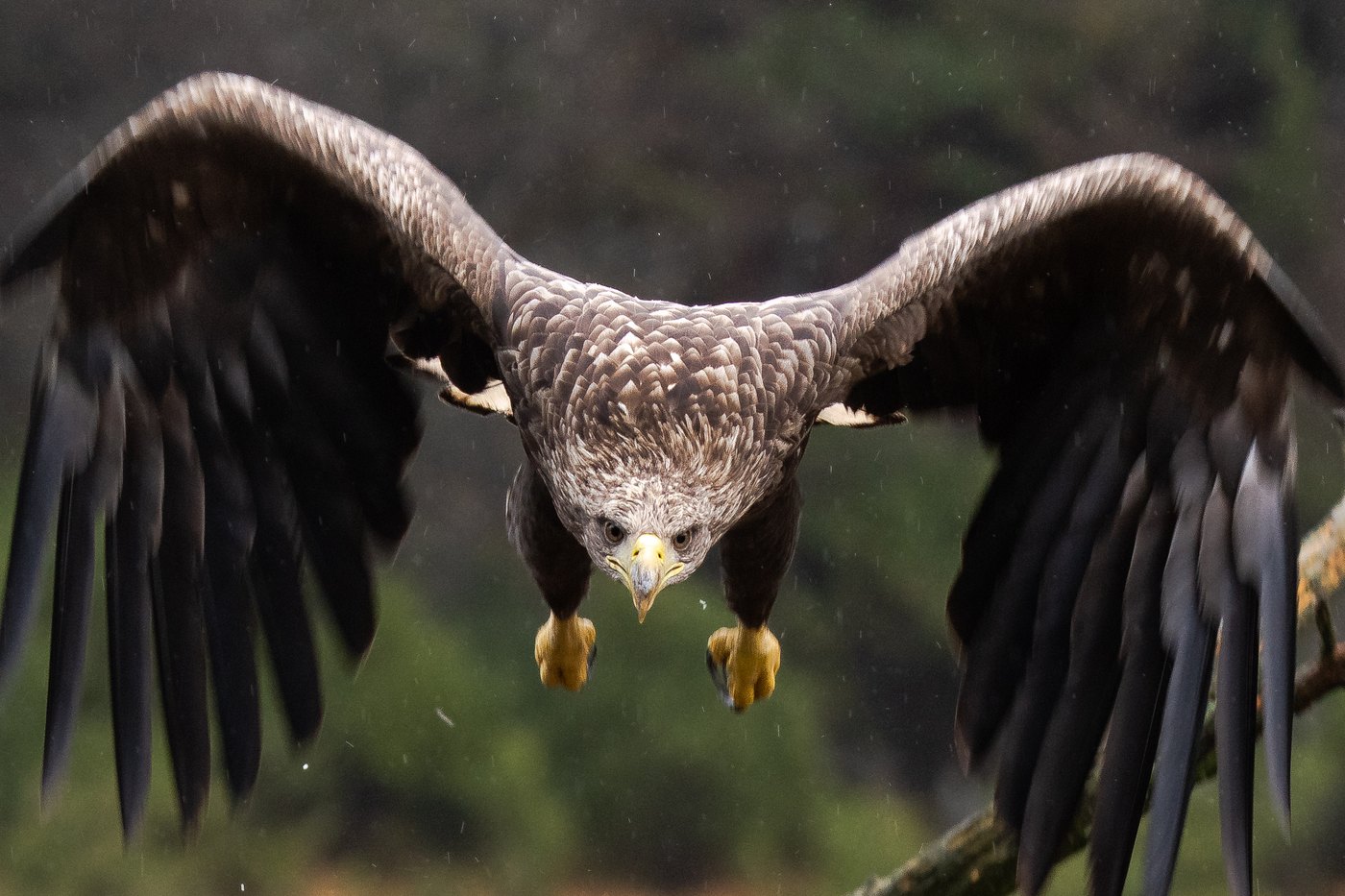
On the Achterwasser around the Halbinsel Gnitz, the resident white-tailed eagles can be seen regularly in these months, before the first eggs lie in the nest by mid-March. With a wingspan of nearly two metres and broadly spread wings, it stands out over the water from far away, its white tail flashing in the light.
 March to April
Common crane
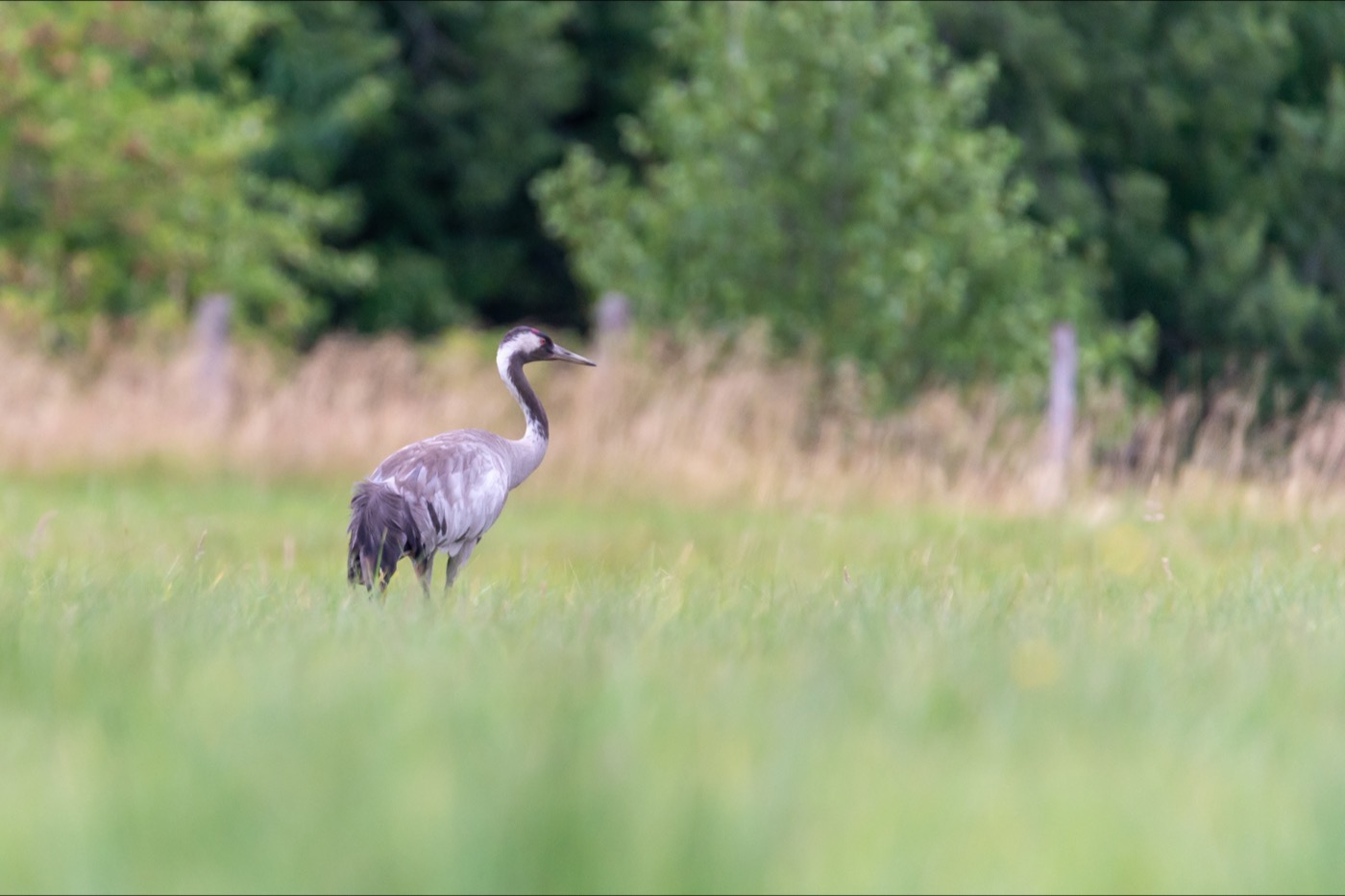
At the Zerninsee near Garz, the first cranes return from their winter quarters between mid-March and early April. The tall, grey bird with the red patch on its crown can often be heard by its trumpeting call before it comes into view.
 April to August
White stork
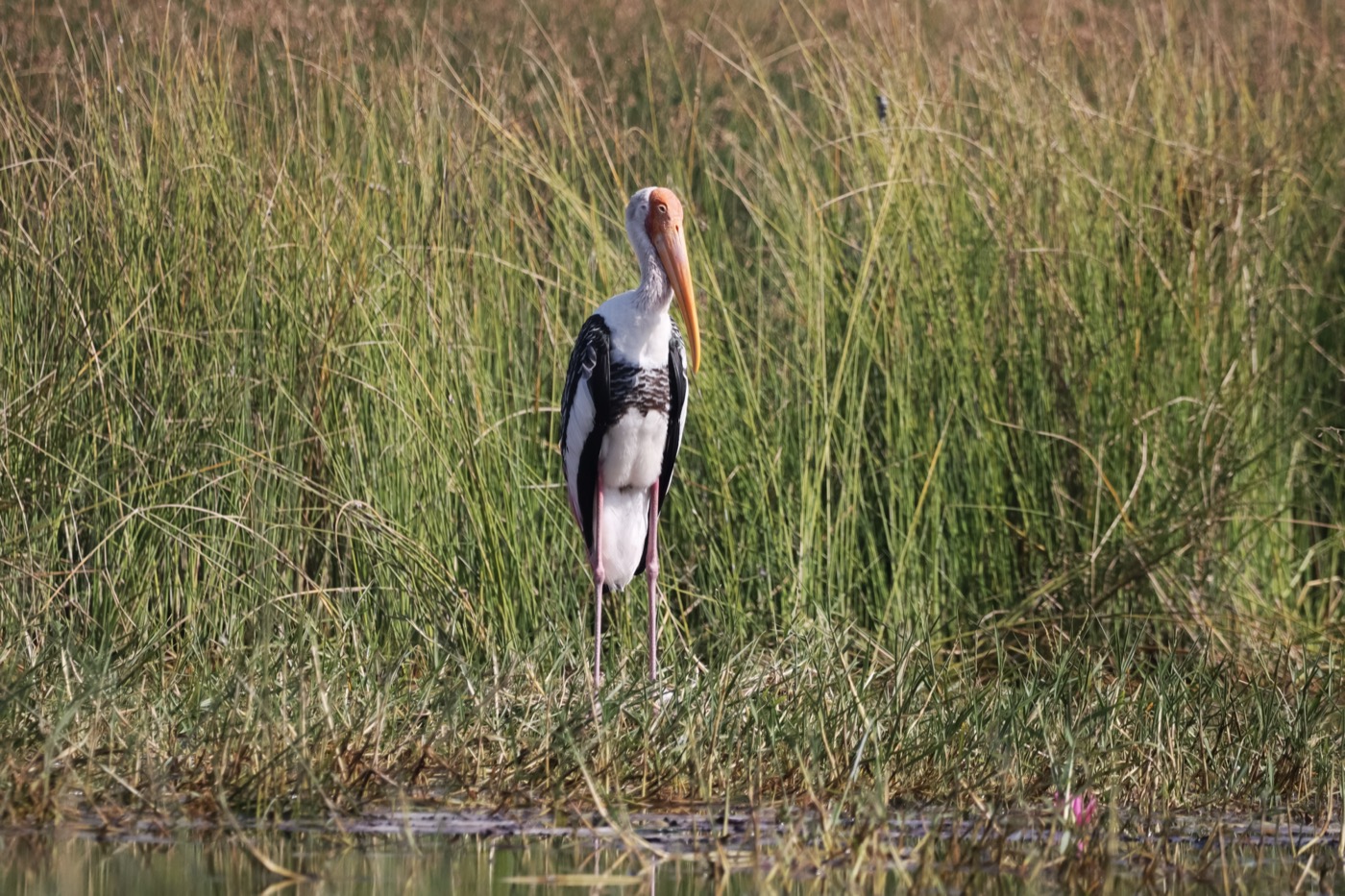
In Kamminke on the Stettiner Haff, the white stork returns to its nest on the village rooftops from April onward. With its white plumage, black flight feathers and long red bill it is unmistakable, and it raises its young there right through to August.
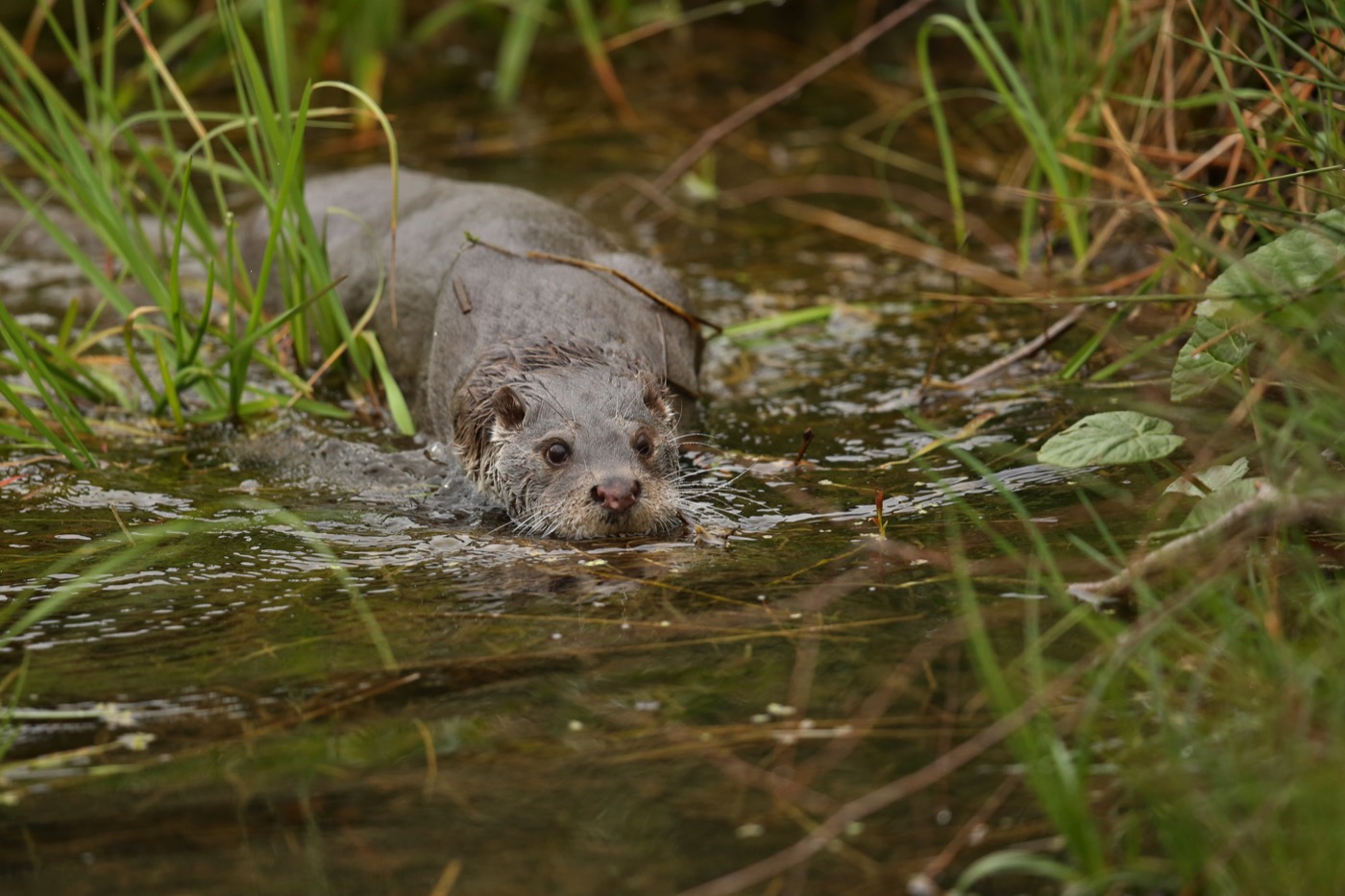 May to September
Otter
On the Achterwasser around the Halbinsel Gnitz, the otter is out and about in the calm bays from May to September, though it rarely shows itself. It is most often given away by a brief ripple on the water at dusk or a fresh track in the soft mud along the shore.
Pictures: Freepik
Getting there
- 2 h 00 minRostock
- 2 h 45 minBerlin
- 3 h 30 minHamburg
- 7 h 30 minKöln
- 8 h 00 minFrankfurt am Main
- 8 h 30 minMünchen
Good to know
Fires and barbecues on the island
In the open landscape of the nature park, fires belong at the marked barbecue sites. In Mecklenburg-Vorpommern no fire may burn in a forest or within 50 metres of one, and that covers the island's coastal woodland. On the beach and in town the municipalities decide. On private ground, ask your host.
Leash Requirement and Dog Beaches
From April to early October, dogs may run off-leash on the Baltic Sea beaches of the Kaiserbäder only in the designated dog-beach sections; a leash is required everywhere else during this period. From October through the end of March, leashed dogs are allowed along the entire length of the beach. Fresh water and waste-bag dispensers are available at the entrances to the dog beaches.
No Access to Peenemünder Haken
The Peenemünder Haken, Struck und Ruden nature reserve at the northern tip of the island is off-limits year-round, including to dogs. It is the only area on Usedom that is fully closed to visitors, protecting breeding white-tailed eagles and numerous documented migratory bird species. Violations are treated as a regulatory offense.
Zecheriner Brücke Opening Times
The Zecheriner Brücke, a bascule bridge carrying the B 110 highway, opens for boat traffic and closes the road and footpath for about 20 minutes each time. In the winter season from October to March it typically opens three times a day, more often in summer. Current times are published by the Vorpommern-Greifswald district authority.
No Wild Camping in the Nature Park
Free overnight stays with a tent or RV outside designated sites are prohibited along the Baltic coast and in the Naturpark Insel Usedom, and fines are possible in nature reserves. RV parking areas and campgrounds offer legal alternatives with proper facilities. The rule applies year-round, regardless of season.
Speed Limit on Achterwasser and Peenestrom
On the Achterwasser and in the Peenestrom up to the Stettiner Haff, a maximum speed of 10 knots applies to boats, and between the Wolgaster Brücke bridge and the PN 53/PN 60 buoy line it drops to just 6.5 knots. The rule protects the European bird sanctuary, which serves as a year-round resting and feeding area for wading and water birds. In harbors and nature reserves, boaters must also keep wake to a minimum.
About this region
Usedom is Germany's second largest island, in the Baltic Sea on the border with Poland, known as the Sonneninsel. Campsites and pitches sit at the three Kaiserbäder of Ahlbeck, Heringsdorf and Bansin, as well as the calmer Achterwasser lagoon in the island's south.
High season is summer, with full beaches at the Kaiserbäder. Things quiet down in May and September, with the Kartoffelfest and the Woche der Bäderarchitektur. When a site is open is shown in each listing's calendar.
