Camping in the Teutoburg Forest
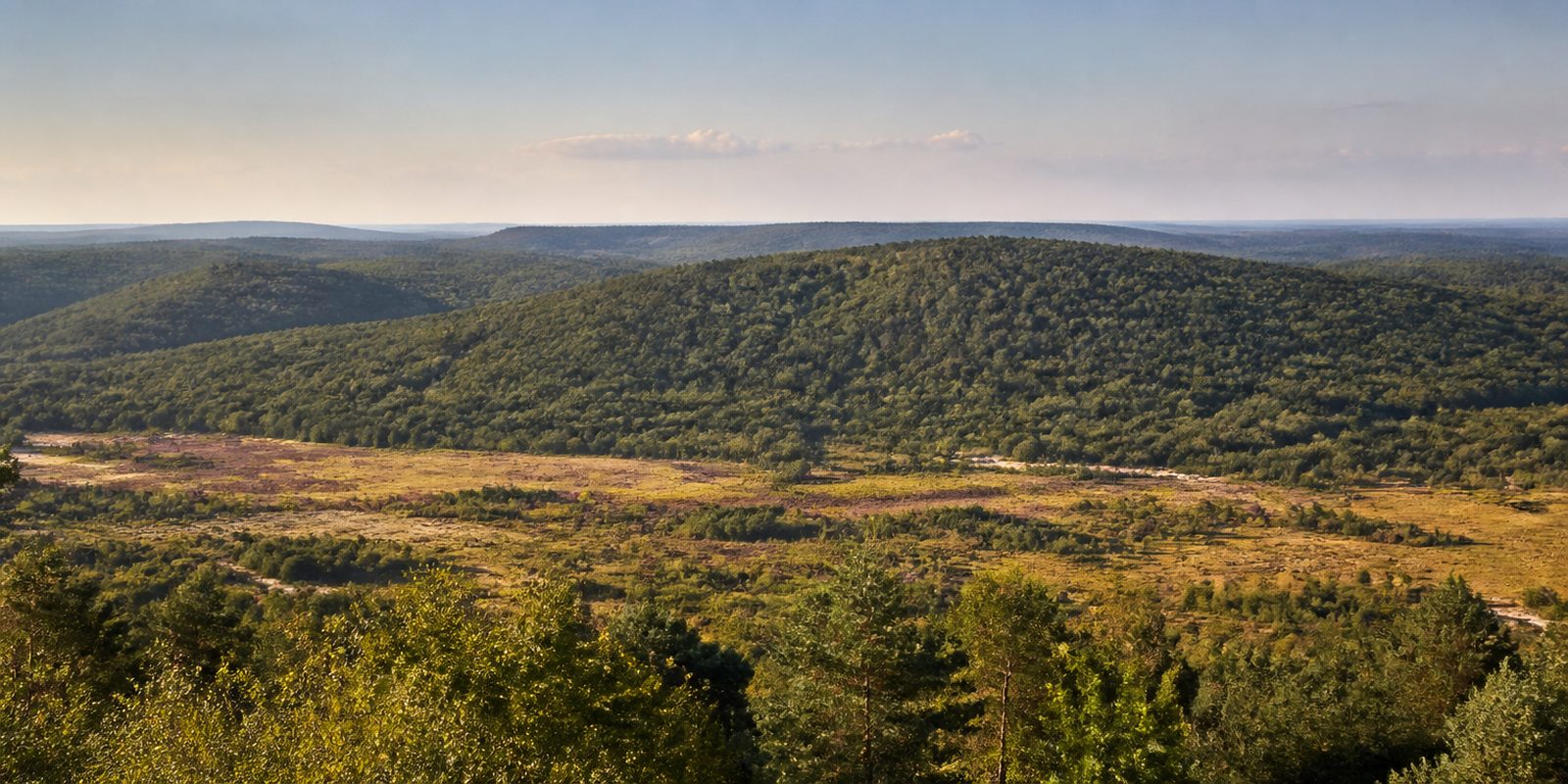
The Teutoburger Wald is a narrow ridge. It runs from the Osnabrücker Land past Bielefeld to the Egge. At its southwestern foot lies the Senne, a sandy landscape of inland dunes, heath and spring-fed brooks that, together with the military training area, forms the largest continuous FFH and bird protection area in Nordrhein-Westfalen. Mountain crest and sand plain sit side by side. To the west follows the flat Münsterland, to the east the Weserbergland. Sandstone formations belong to it as well, the Externsteine and the Dörenther Klippen, and raised bogs lie on the Egge slope. Seven spa towns earned the region its name, Heilgarten Deutschlands, Germany's healing garden.
The year in this region
September: Sheep graze the ridge heath
In early autumn, the sheep flock of the Biologische Station Lippe moves onto the mountain heath at the Knickenhagen to keep open the heath remnants recently extended there. This ridge heath, with heather, juniper and bilberry, differs markedly from the sandy heath of the Senne, and similar stands are also found on the Lippische Velmerstot, a hill. Without grazing or comparable management, such areas grow over with shrubs and trees within a few years.
In the middle of the month the sun rises at 7:00 AM and sets at 7:43 PM. That leaves 12 hours and 43 minutes of daylight.
Water and air: Open-Meteo, measured averages. How busy: share of school holidays 2027 across all sixteen federal states. Nature dates: German Weather Service, phenological observations 2014 to 2026 at 157 stations in the region, typical day.
Tours in this region
Marked tours that fit into a day from a site, and one multi day tour per kind.
- Hiking
Hermannsweg
From Rheine to the Velmerstot the trail runs along the ridge of the Teutoburger Wald, mostly on narrow paths through beech forest. Underneath lies Osning sandstone. At the Dörenther Klippen it stands clear of the slope as a wall of rock, and later come Schloss Iburg, the Sparrenburg above Bielefeld, the Hermannsdenkmal and the Externsteine.
166.1 kmMulti day tour
- Hiking
Eggeweg
The Eggeweg heads south from the Externsteine along the ridge of the Eggegebirge to Marsberg, marked with the white saltire of the E1 long distance path. Between the beeches the view keeps opening up. Along the way lie the twin summits of the Velmerstot, the narrow Silberbachtal with its Silbermühle, the Bierbaums Nagel lookout tower and the ruins of the Iburg near Bad Driburg.
73.8 kmMulti day tour
- Hiking
Velmerstot-Route
From Leopoldstal the way climbs to the Velmerstot, the highest point of the Eggegebirge. Up there the forest thins out and narrow paths cross the plateau between heather and sandstone blocks to the wooden Eggeturm. Downhill through the Silberbachtal the stream follows the path.
8.2 kmLoop tour
- Hiking
TERRA.track "Freedenblüte"
The loop on the Kleiner Freeden near Bad Iburg goes through limestone beech forest along a ridge that drops away on both sides. The limestone below is a fossil sea floor. It lies open in the rock face by the walkers' car park, and in April hollowroot covers the slope in lilac and white, with wood anemone and wild garlic in between. How far the bloom has come is shown by the Freedometer of the TERRA.vita nature park.
8.3 kmLoop tour
- Hiking
Teutoschleife Dörenther Klippen
Above Ibbenbüren a line of Osning sandstone stands in the forest for a good four kilometres, up to forty metres high. The sand came from the Cretaceous. The path runs along the crags, past the Hockendes Weib and the Dreikaiserstuhl, and keeps opening south across the Münsterland.
9.5 kmLoop tour
- Hiking
Viadukt-Wanderweg
Around Altenbeken the route runs mostly through beech forest, with the viaduct of 1853 coming into view again and again. The bridge of twenty-four limestone arches is 482 metres long and up to 35 metres high. Start is the Egge-Museum with its old steam engine.
28.5 km
- Cycling
BahnRadRoute Teuto - Senne Hauptroute
Between Osnabrück and Paderborn the route sticks to two railway lines: the Haller Willem and the Sennebahn. You can hop on the train partway. The route's own signposting was taken down in 2024, so riders navigate by GPS track, and both lines still run. Apart from the crossing of the Teutoburger Wald between Hagen and Bad Iburg it stays flat, and at the end there are Schloss Neuhaus with its baroque garden and Paderborn cathedral.
149.6 km
- Cycling
EmsRadweg
The Ems rises in the Senne between Hövelhof and Schloß Holte-Stukenbrock, and the cycle route follows it from there to the mouth near Emden. There is hardly any climbing. The small brook turns into a wide river across the Münsterland and the Emsland, and the riding is almost all on asphalt, on side roads and separate cycle paths away from traffic.
380.3 kmMulti day tour
Tours: © OpenStreetMap contributors, ODbL. Lengths computed from the mapped course, as of September 12, 2026.
Animals you can meet here
 January to December
Eagle owl
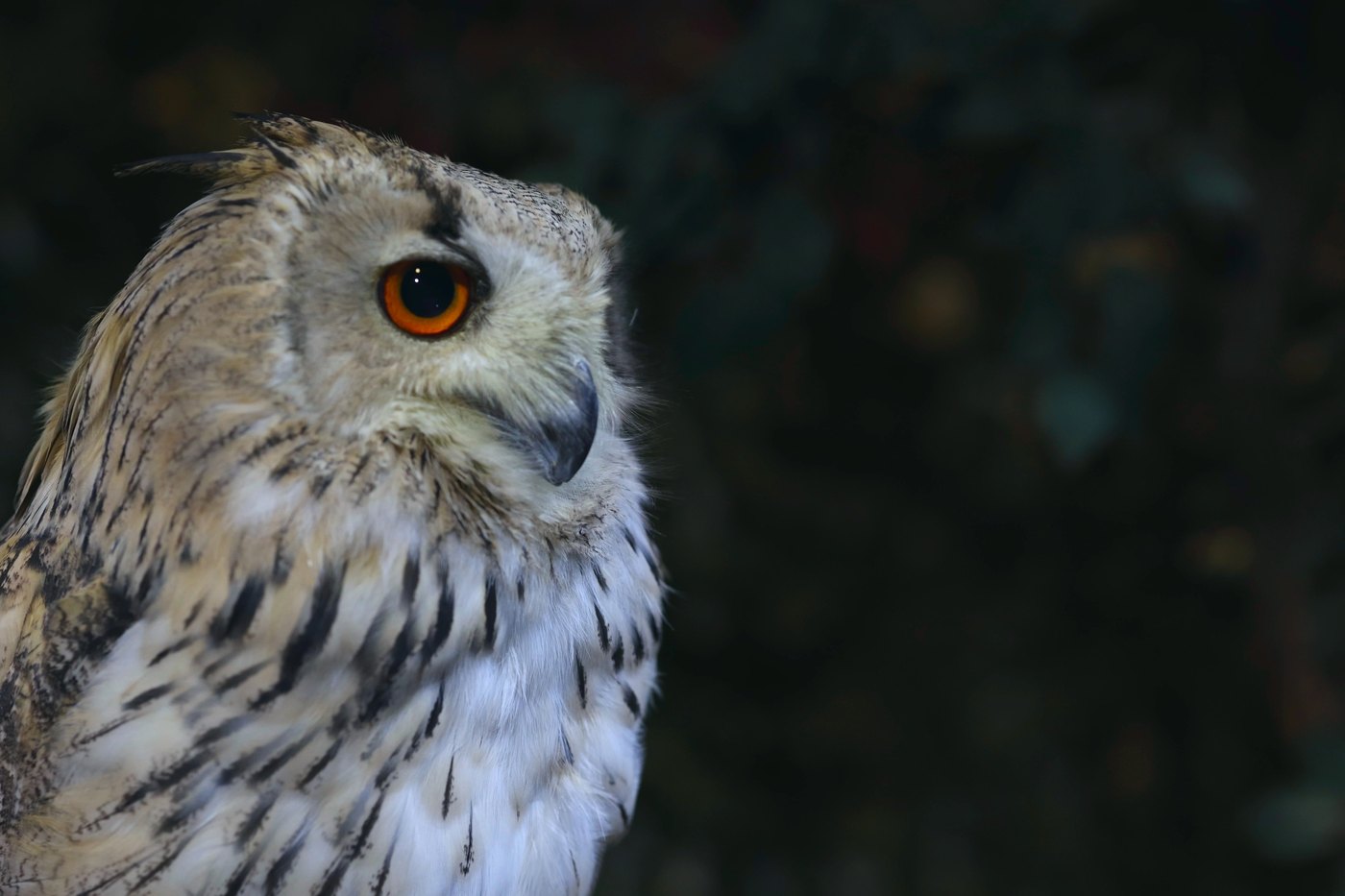
At the Externsteine near Horn-Bad Meinberg, the eagle-owl has bred successfully since 2006, with further territories in disused quarries along the ridge of the Teutoburger Wald. With its ear tufts and orange eyes it is unmistakable, and as Europe's largest owl it reaches a wingspan of up to 1.7 metres. Around Christmas time, the deep courtship calls of the male carry far across the valley on quiet evenings.
- May to October
Senner horse
In the Wildbahn of the Moosheide nature reserve near Hövelhof, the herd grazes freely among inland dunes and heathland, well visible from the Ems-Erlebnisweg and the Heideland-Rundwanderweg. In early May, the Biologische Station Kreis Paderborn-Senne moves the animals from their winter quarters to the summer pasture, where they stay until the move to the Güsenhofsee in October. The Senner is an old regional horse breed rather than a wild horse, even though it lives outdoors all year round.
 March to July
Woodlark
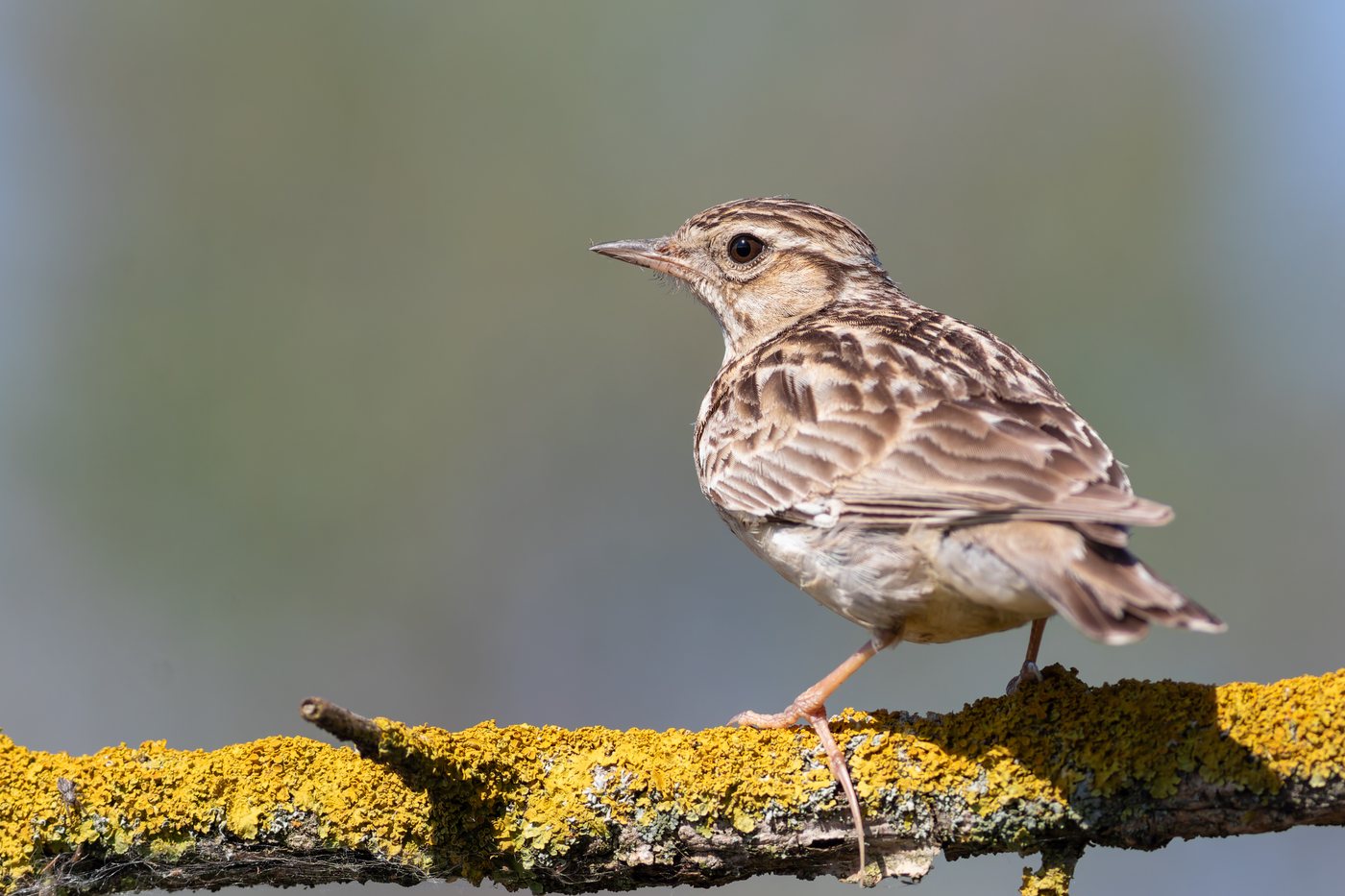
On the open heath and sand flats of the Moosheide nature reserve, the woodlark is considered a characteristic species of the Senne. In flight its short tail stands out, along with the white eyebrow stripe that meets at the nape. From March onward, the male climbs singing in wide circles, and its flowing, melodious song can be heard over the heath well into July.
 January to December
Great grey shrike
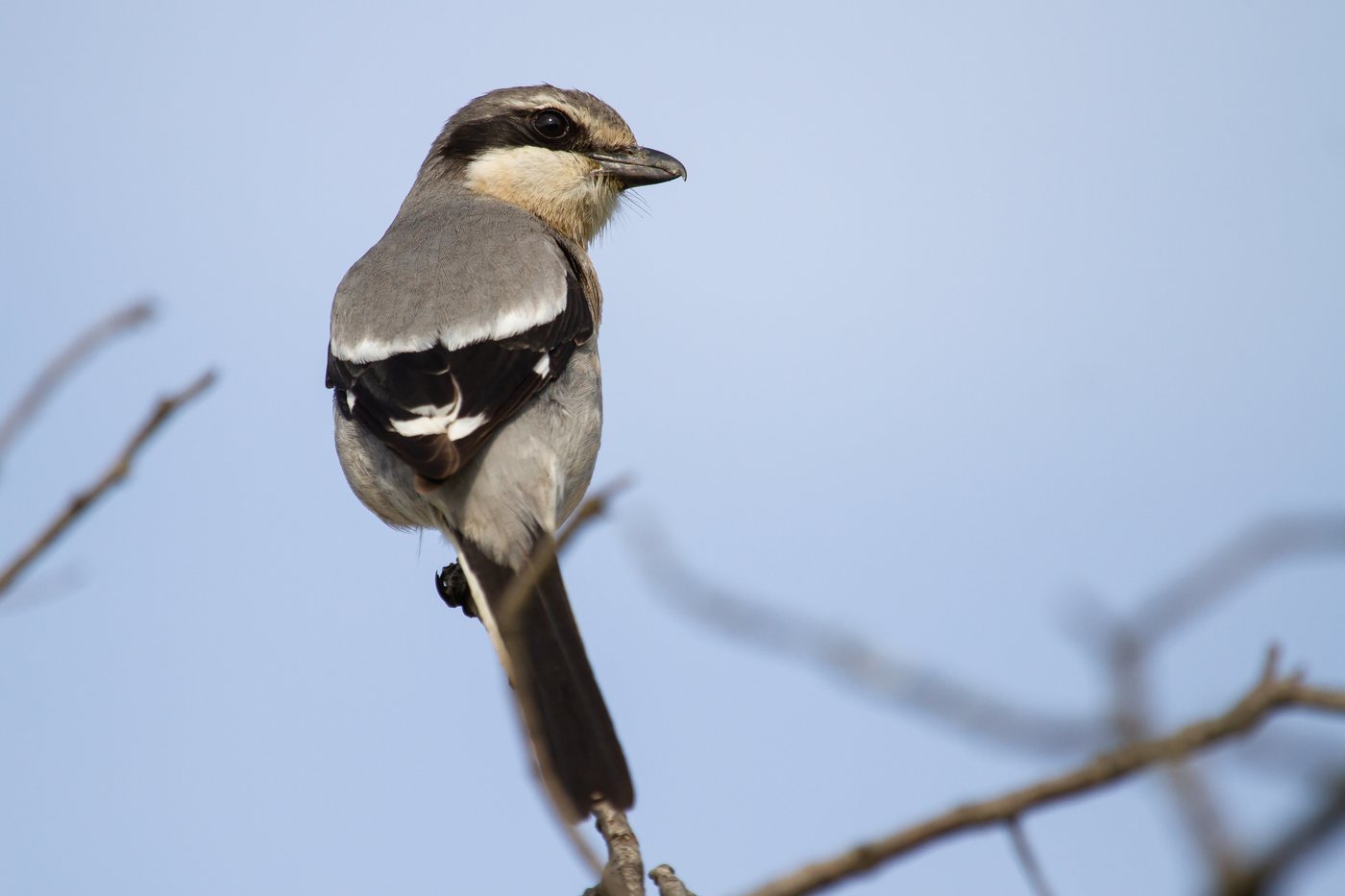
In the winter half of the year, the great grey shrike perches conspicuously on solitary trees and fence posts above the open ground of the Senne and the Paderborner Hochfläche, with good vantage points along the edge of the Moosheide near Hövelhof. Grey and black in colour, with a black mask around the eyes and a strong hooked bill, it can be recognised from a distance by its upright posture on the lookout. From there it watches for mice and small birds and strikes in a swift dive.
Pictures: Freepik
Getting there
- 0 h 15 minBielefeld
- 2 h 15 minKöln
- 2 h 45 minHamburg
- 3 h 00 minFrankfurt am Main
- 4 h 15 minBerlin
- 6 h 00 minMünchen
Good to know
Fire and smoking in the forest
In North Rhine-Westphalia, smoking in the forest is prohibited from 1 March to 31 October; in Lower Saxony, a ban applies over the same period on lighting fires or smoking in forest, bog and heath. For this reason, grilling is only allowed at the officially designated sites. In the Naturschutzgebiet Moosheide nature reserve, grilling is not permitted at any time of year.
Dogs on a leash
In the nature reserves of the Senne, dogs may not run free; this is stated on the information boards of the nature trail in the Naturschutzgebiet Moosheide and in the notices for the Heideland-Rundwanderweg, a circular hiking trail. The same rule applies in the Naturschutzgebiet Freeden nature reserve near Bad Iburg. Dogs should also stay on the leash in the rock area of the Externsteine, because eagle-owls breed there and the young birds sit on the ground in June.
Stay on the marked paths
The woodlark and the European nightjar breed on the ground in the Senne, so on the heath and sandy areas visitors must keep to the marked paths, and parking is allowed only in designated lots. In the Naturschutzgebiet Externsteine nature reserve, simple wooden fencing protects the orchid meadows, and steering visitors away from them is explicitly part of the protection plan there. The Vogelschutzgebiet Senne mit Teutoburger Wald bird protection area covers 15,360 hectares and holds the state's highest population densities for several of these species.
Closure times in the Senne
The Truppenübungsplatz Senne is a military training area, and entering it on foot or by vehicle is not permitted during training periods. The through-roads crossing the site are also closed at times; the neighbouring municipalities of Augustdorf, Hövelhof and Schlangen publish the current closure times online. Freely accessible and open all year round, by contrast, is the Naturschutzgebiet Moosheide nature reserve, where the Senne landscape can be experienced in miniature.
Overnight stays outdoors
The Landesforstgesetz, North Rhine-Westphalia's forest law, prohibits camping as well as parking caravans and motor vehicles in the forest unless a special permit has been granted. Anyone wanting to spend the night in a tent in the nature park books a trekking platform for the purpose; the first one is at Schlangen-Oesterholz and costs from 15 euros a night. The platforms can only be reached on foot via the hiking trails, offer room for two two-person tents, and have a composting toilet nearby.
Swimming at the Lippesee
The Lippesee near Paderborn-Sande is the region's largest recreational lake and is registered as a bathing water in North Rhine-Westphalia. Swimming is allowed only at the designated bathing spots; bathing elsewhere in the lake is not permitted. Alongside the sandy beach there is sailing, stand-up paddleboarding and pedal boat rental.
Protected landscapes
- Nature park
- Teutoburger Wald / Eggegebirge
Names and boundaries: © OpenStreetMap contributors.
About this region
The Teutoburg Forest is a narrow ridge running from the Osnabrück area to the Egge hills, with the sandy Senne landscape at its southwestern foot and rock formations such as the Externsteine. You will find classic campgrounds here as well as simple pitches booked directly with hosts.
Things are busiest between June and September, when the heather blooms. When a site is open is shown in each listing's calendar.
