Camping in the Spessart
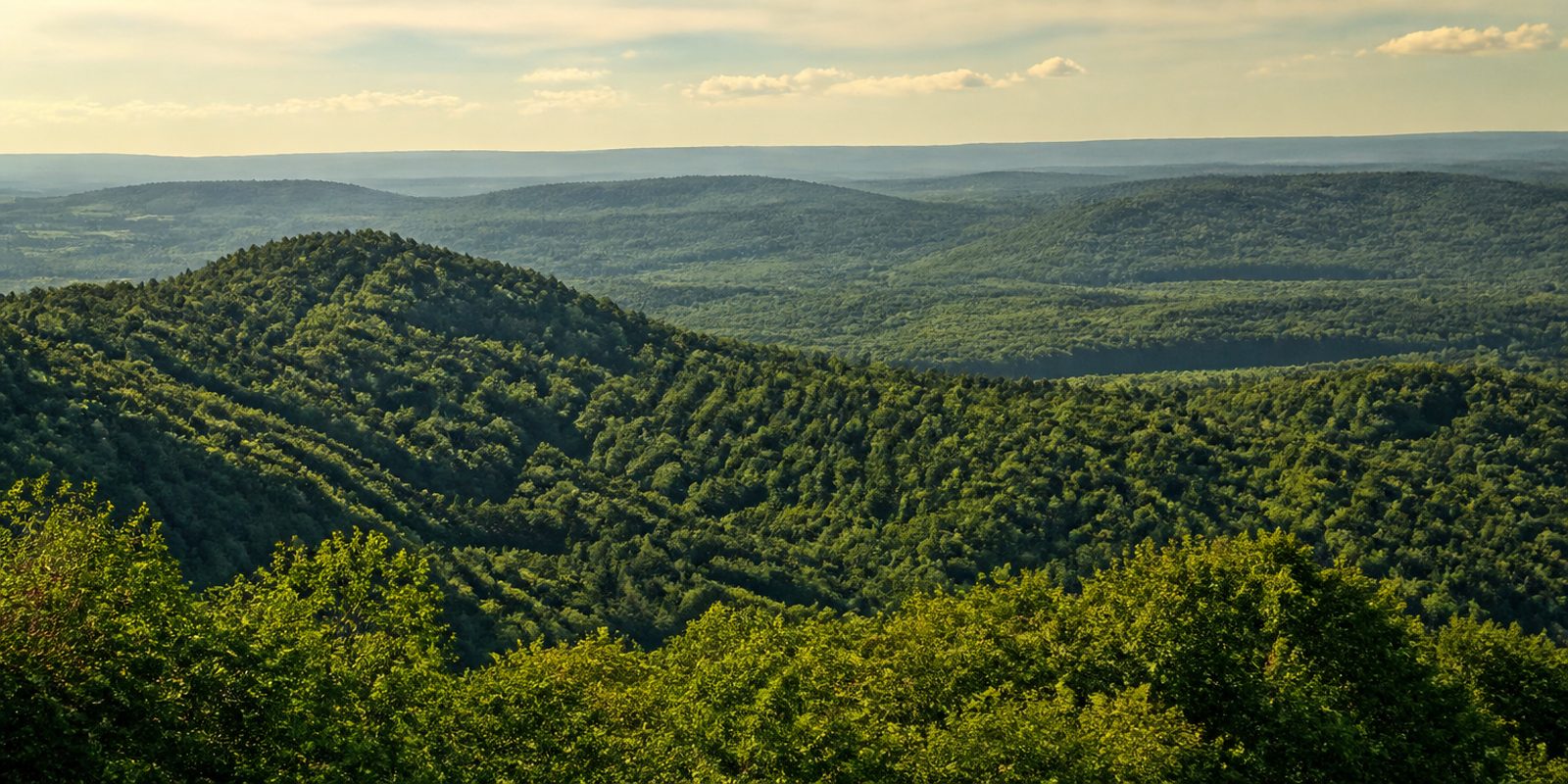
The Spessart is Germany's largest continuous area of mixed deciduous forest. It sits as a Buntsandstein plateau of some 2,440 square kilometers between the Main, the Kinzig and the Sinn, about 70 percent of it under trees. Beeches here are over 180 years old, oaks more than 400. Rhön, Odenwald and Vogelsberg live off open country. The Spessart lives off the forest: streams run in deeply cut valleys, clearings are rare, there is barely a settlement in the interior, and the wealth of birds gave the range its name. Spessart goes back to Spechtshardt, the woodpecker forest.
The year in this region
September: Red Deer Rut Begins
The red deer rut begins in Central Europe in early September and lasts five to six weeks. In the large, unbroken forests of the High Spessart, the stags' bellowing carries far through the dusk; red deer, roe deer, and wild boar are among the region's most common game species. Observation is best done from a trail or a raised hide, so as not to disturb the herds and drive them from the area.
In the middle of the month the sun rises at 6:58 AM and sets at 7:38 PM. That leaves 12 hours and 41 minutes of daylight.
What nature does this month
- Apple picking starts around September 27 (usually between September 17 and October 8)
Water and air: Open-Meteo, measured averages. How busy: share of school holidays 2027 across all sixteen federal states. Nature dates: German Weather Service, phenological observations 2014 to 2026 at 86 stations in the region, typical day.
Tours in this region
Marked tours that fit into a day from a site, and one multi day tour per kind.
- Hiking
Eselsweg
In the Middle Ages salt caravans carried their loads from Bad Orb to Miltenberg on the Main, and the donkeys gave the route its name. Between Schlüchtern and Großheubach it keeps to the ridge, mostly between 400 and 500 metres, and barely touches a village. Old watchtowers and prehistoric ring ramparts stand along the way, and at the end Kloster Engelberg above the Main. You walk in forest for days.
112 kmMulti day tour
- Hiking
Birkenhainer Straße
Between Hanau and Gemünden the old trade road stays on the ridges of the northern Spessart throughout, with few steep sections and wide views across the valleys. It was already in use three to four thousand years ago, and later carters travelled it between the Rhine Franconian and East Franconian lands. Old boundary stones still mark the state border. Near Kloster Einsiedel, hollow ways with wheel ruts cut into rock have survived.
70.5 kmMulti day tour
- Hiking
Spessartbogen Hauptroute
From Langenselbold to Schlüchtern the premium trail runs through the sandstone Spessart of Hesse, over wooded ridges and down into quiet green valleys. Gnarled old oaks stand along the edge, and between them beech woods, flower-rich meadows and streams where beavers have been at work. Almost ninety kilometres add up to about 2,300 metres of climbing. From the crest the view reaches the Vogelsberg.
89.5 kmMulti day tour
- Hiking
Spessartweg 1
The route starts on the edge of Aschaffenburg and ends on the market square in Gemünden. In between lie beech woods, the ponds of the Sieben Seen near Unterbessenbach and open meadow valleys, plus the rocks of the Teufelskanzel, the castle at Rothenbuch and the old town of Lohr with its Kurmainz palace. Shortly before the end, the ruin of Schönrain opens the view into the Main valley. About 1,550 metres of climbing add up.
62.7 kmMulti day tour
- Hiking
Fränkischer Rotwein Wanderweg
Between Großwallstadt and Bürgstadt the route stays in the vineyard slopes above the Main, on iron rich red sandstone that holds the day's warmth into the night. Churfranken is Franconia's most important red wine region. Between Erlenbach, Klingenberg and Miltenberg, vineyards, sandstone quarries and half timbered lanes take turns, along with Kloster Himmelthal, the Clingenburg and Kloster Engelberg above Großheubach. The Main stays below almost all the way.
77.4 kmMulti day tour
- Cycling
Kahltal-Spessart-Radwanderweg
The route climbs the Kahl valley, crosses the heights of the Spessart and ends at Lohr, on made up forest and field tracks with short stretches on quiet roads. About 600 metres of climbing add up, and the high point is the Eselshöhe at a good 500 metres. Burg Alzenau, old mills such as the Hasenmühle and the Spessartwiesen lie along the way. Two railway lines keep it company.
81.1 km
- Cycling
Main-Radweg
The Main lays itself around the Spessart in great loops, and the cycle route follows it with hardly a climb, sealed for most of the way. Between Wertheim, Miltenberg and Aschaffenburg the south facing slopes carry the vines, the north facing ones the forest. Every few kilometres comes a wine tavern.
608.9 kmMulti day tour
- Mountain biking
Bikewald Route A - Hochspessart-Trail
The route strings the Bikewald tours B, C and D into one big loop through the high Spessart, on made up forest and field tracks with stretches of meadow path. The loop measures about 150 kilometres. It starts at the forest car park on the Eselsweg near Weibersbrunn, then come Rothenbuch, Heigenbrücken and the Hohe Wart, with a detour to Schloss Mespelbrunn. The old Spessart country inns line the way.
147.9 kmMulti day tour
- Mountain biking
Spessart Biken (2) - Wiesbütt-Schleife
From Biebergemünd-Roßbach the loop rolls in on the cycle path towards Bieber and then climbs into the forest. It touches the Burgbergkapelle, the Wiesbüttsee on the Bavarian border, the Lochborner Teich and the Lochmühle. The way back uses a stretch of the Birkenhainer Straße and the narrow Bieberer Pfädchen. The Wiesbüttsee holds the highest bog of the Spessart.
20.9 km
Tours: © OpenStreetMap contributors, ODbL. Lengths computed from the mapped course, as of September 12, 2026.
Animals you can meet here
 September to October
Red deer
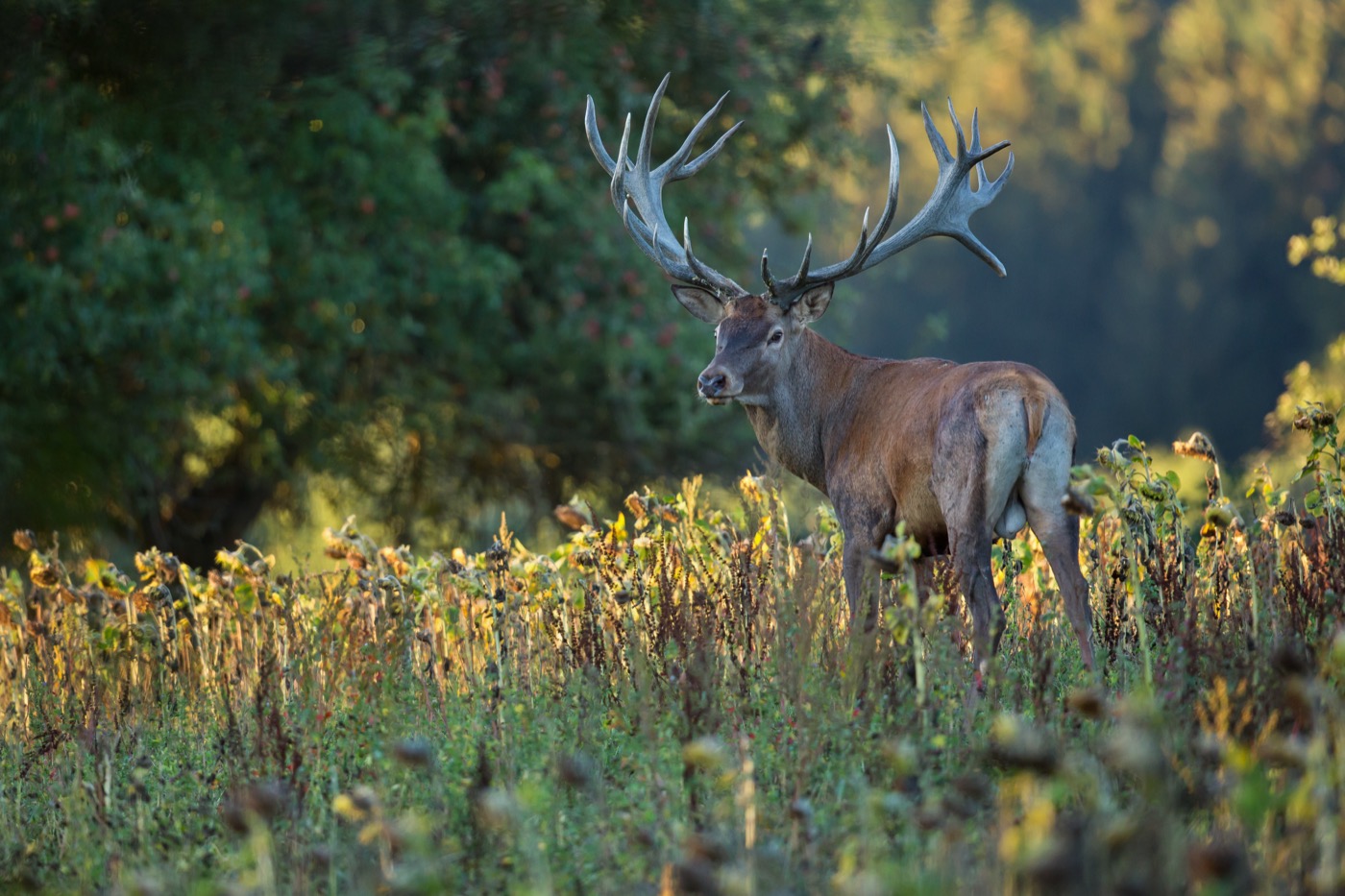
In the large, undisturbed forests of the Hochspessart, the red deer rut begins in early September and lasts five to six weeks. At dusk, the deep, drawn-out roaring of the stags carries far through the trees and keeps the herd together. The best way to watch is from a trail or an elevated hunting stand, so the animals do not move off.
 all year
Eurasian beaver
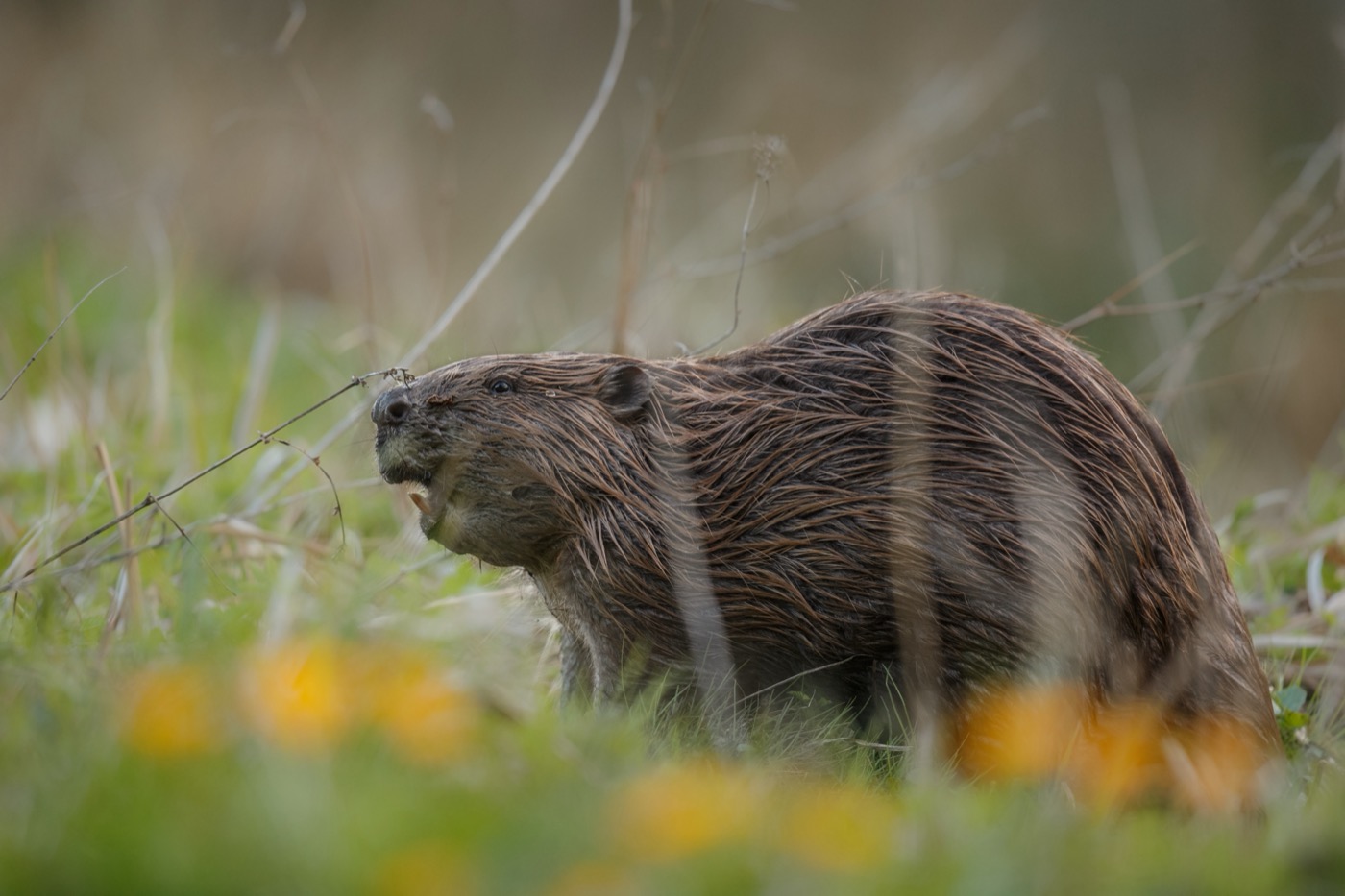
Along the Sinn, Schmale Sinn and Jossa, as well as the Kahl, Lohr and Hafenlohr, the beaver holds more than 100 territories in the nature park. Felled willows and alders on the banks, fresh gnaw marks on the trunks and the smooth slides down into the water give it away more often than a sighting of the animal itself. It does not hibernate, gnawing on bark and twigs and building its dams all year round.
 March to May
Middle spotted woodpecker
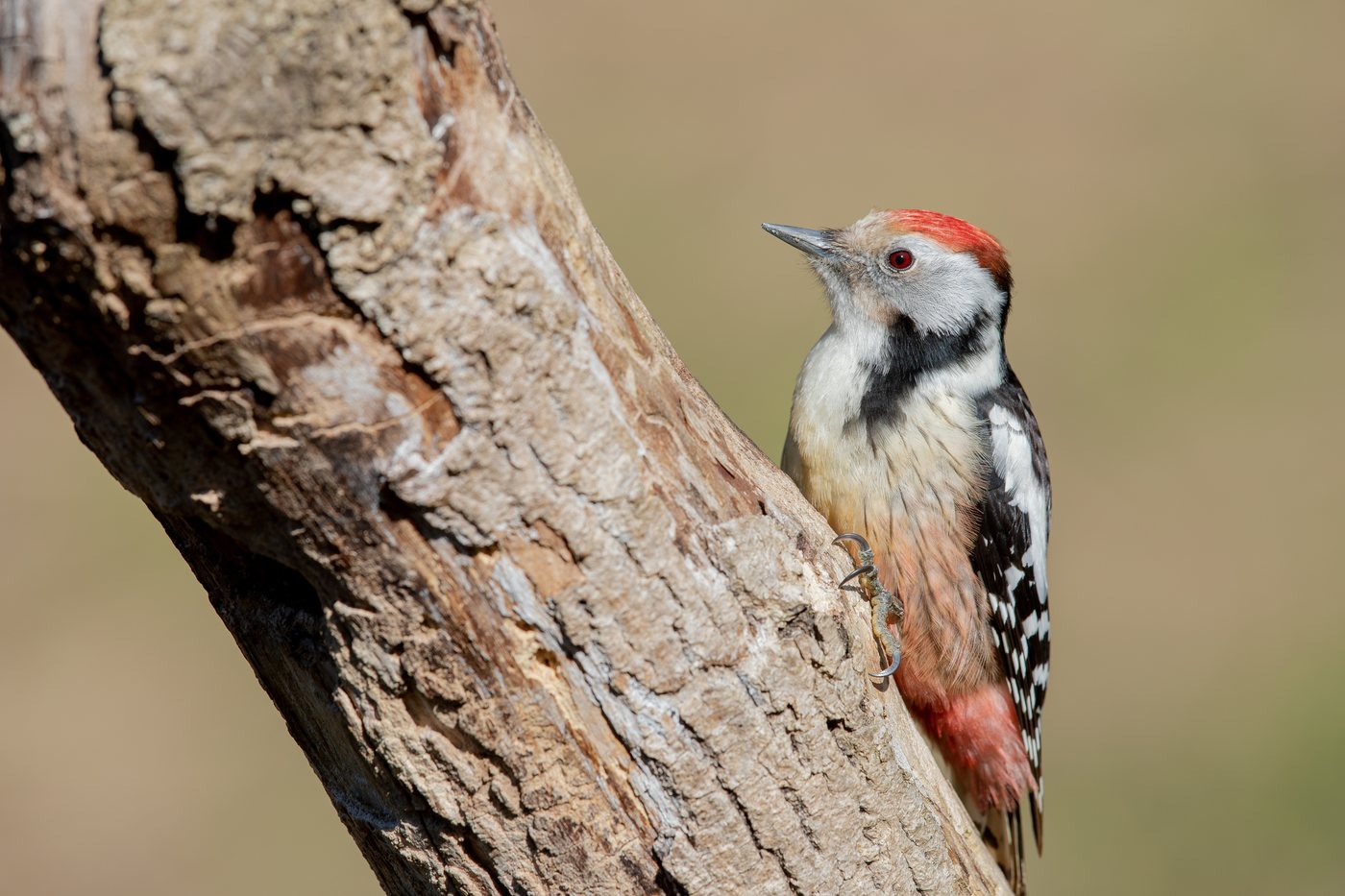
In the old oak stands of the Hochspessart, among them the Eichhall and Rohrberg woodland reserves, the middle spotted woodpecker lives as an indicator species of intact old oak forest. Unlike its relatives it rarely drums, instead climbing along thick, deeply furrowed branches to probe for insects, recognizable by its red cap without a black moustache stripe. In spring, especially from April, it is easiest to find by its call, and by May it is already leading its first young.
 all year
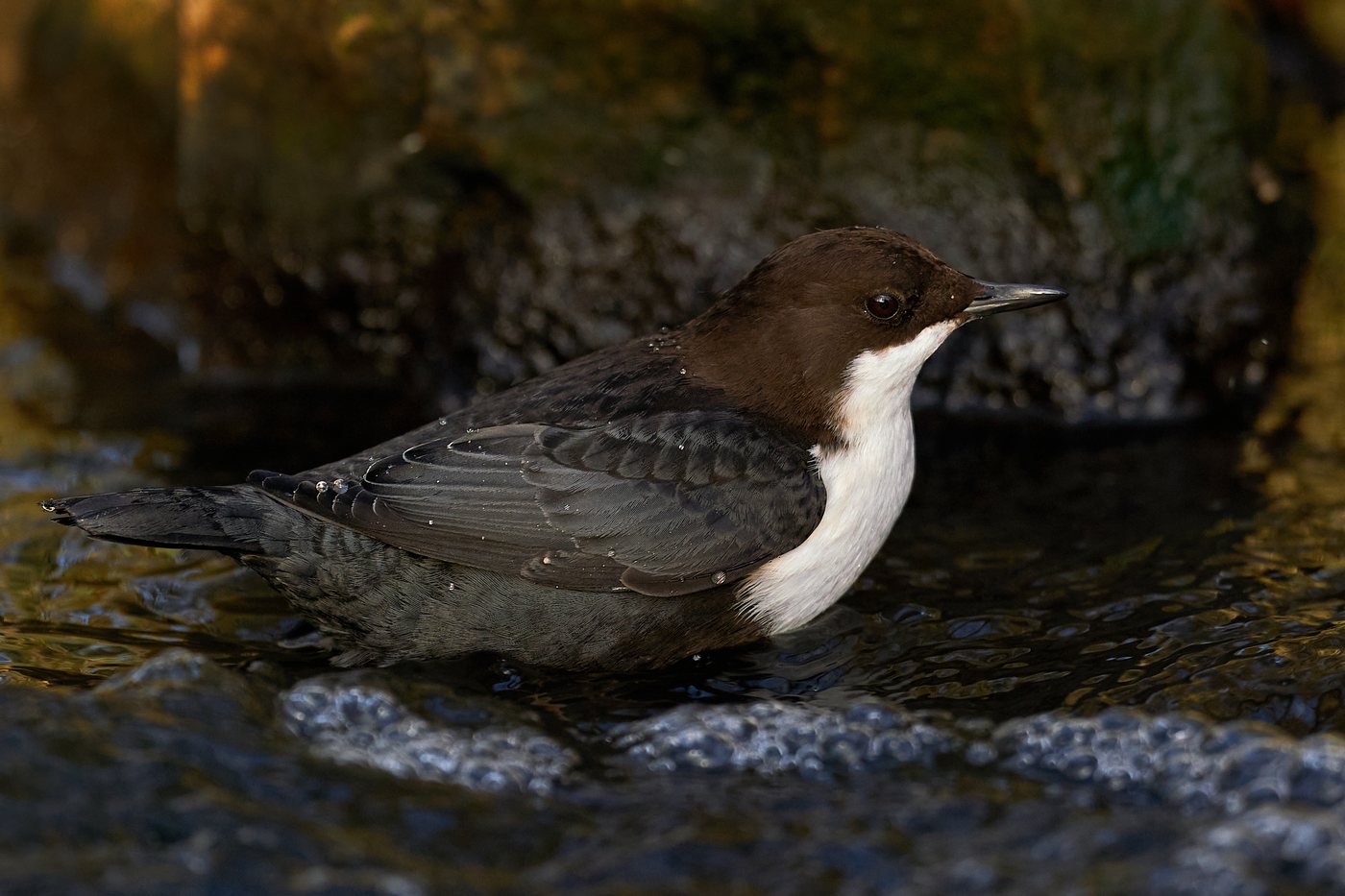
White-throated dipper
On the Hafenlohr, Lohr, Aschaff, Elsava, Kahl and Bieber, the white-throated dipper perches year round on stones in the middle of the clear, fast-flowing water, often alongside the kingfisher. The white bib on its otherwise dark breast marks it out from a distance, along with the bobbing motion it makes while standing on its stone. To hunt, it dives under and walks along the streambed, picking larvae and small crustaceans out from between the stones.
Pictures: Freepik
Getting there
- 2 h 45 minFrankfurt am Main
- 2 h 45 minWürzburg
- 4 h 30 minKöln
- 5 h 15 minMünchen
- 7 h 00 minHamburg
- 7 h 30 minBerlin
Good to know
The floating bridge at Stadtprozelten
On the southern edge of the Spessart, no bridge crosses the Main between Stadtprozelten and the Wertheim village of Mondfeld. A ferry does the job, linking Bavaria with Baden-Württemberg and running into the evening in the summer half of the year. High water, fog, ice or repairs halt it.
Open Fire Only With Permission
Under Article 17 of the Bavarian Forest Act, open fireplaces and unattended fire are permitted in the forest, and within 100 meters of it, only with a permit. Smoking in the forest is also banned from March 1 to October 31. For the same reason, the trekking site in the Naturpark Hessischer Spessart deliberately has no fire pit.
Overnight Stays Only at the Trekking Site
For overnight stays outdoors, the area has exactly one designated spot: the trekking site on the Spessartbogen trail, in the Rohrbachtal valley. It is booked online in advance, holds up to four people, and may only be used for a single night. It can only be reached on foot or by bike, there is no infrastructure on site, and starting points such as Schlüchtern or Bad Orb lie about 21 to 22 kilometers (roughly 13 to 14 miles) away.
Stay on the Trail in Nature Reserves
Many hiking trails pass through nature reserves for parts of their route, and the nature park explicitly asks visitors not to leave the marked trail there. The Naturpark Spessart contains 20 Natura 2000 habitat sites and three EU bird sanctuaries, including areas such as Sinngrund, Hafenlohrtal, Eichhall, Rohrberg, and Wiesbüttmoor. The fritillary meadows should be viewed from the trail only while they are in bloom.
Keep Dogs on a Leash in Protected Areas
Since visitors may not leave the marked trail in nature reserves, dogs must be kept on a leash there too. This applies above all to the valley meadows along the Sinn and Jossa rivers, home to protected fritillaries, beavers, otters, and great crested newts, as well as to the Wiesbüttmoor. On the remaining forest tracks, entering the woods for recreation is unrestricted, and under Article 13 of the Bavarian Forest Act, it is done at one's own risk.
Swimming Is Found at the Range's Edge
The Wiesbüttsee, a lake at 436 meters in the Hessian Spessart, lies within a nature reserve and is not open for swimming. The managed swimming spots lie at the edge of the range, above all the Meerhofsee, a lake in the Kahlgrund district near Alzenau with about twelve hectares of water, a sandy beach, a bathing island, and a slide. It is open there from 10 a.m. to 8 p.m., and the site is closed on Tuesdays.
Protected landscapes
Names and boundaries: © OpenStreetMap contributors.
About this region
The Spessart stretches between the Main, Kinzig and Sinn rivers in Bavaria and Hesse, Germany's largest contiguous deciduous forest. Deeply cut stream valleys and centuries-old beeches and oaks shape the landscape rather than open fields. Campsites and pitches sit along the forest edges and river valleys, from tent meadows to motorhome pitches.
It gets busy in summer with the stag beetles, quiet in autumn during the red deer rut. When a site is open is shown in each listing's calendar.
