Camping in the Münsterland
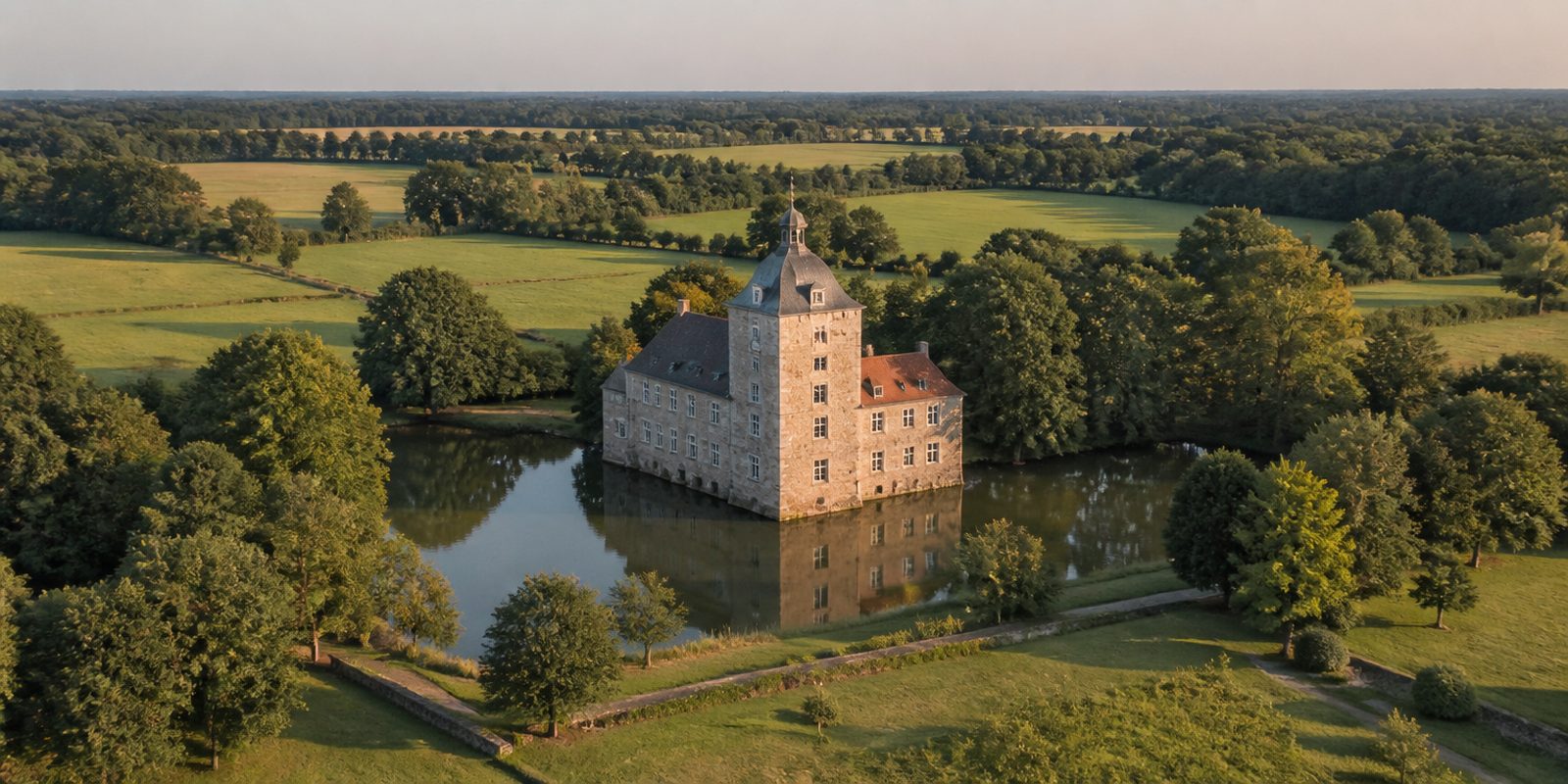
The Münsterland is a wide park-like landscape, mostly flat to gently undulating, at an average elevation of around 100 meters. There are no uplands and no mining country. For either of those you have to travel to other parts of North Rhine-Westphalia. Copses, hedgebanks and riparian woods divide the meadows, pastures and fields into small units, and among them stand more than a hundred moated castles, fortresses and Gräftenhöfe. Broad wet meadows and bogs run through the region, and the state's strongholds of lapwing, curlew and little owl lie here. The world's northernmost flamingos breed in the Zwillbrocker Venn.
The year in this region
September: Apple Harvest in the Baumberge
On September 20, 2026, the Coesfeld district nature conservation center holds the 14th Baumberger Apple Festival with Nature Park Day at the Alter Hof Schoppmann farm in Nottuln-Darup, from 11 a.m. to 5 p.m. Owners of traditional orchards bring several tons of apples to the large mobile cider press, and fruit brought along is identified by variety. Traditional orchards are also the little owl's preferred hunting ground in the Münsterland.
In the middle of the month the sun rises at 7:04 AM and sets at 7:47 PM. That leaves 12 hours and 43 minutes of daylight.
What nature does this month
- Apple picking starts around September 30 (usually between September 19 and October 8)
Water and air: Open-Meteo, measured averages. How busy: share of school holidays 2027 across all sixteen federal states. Nature dates: German Weather Service, phenological observations 2014 to 2026 at 216 stations in the region, typical day.
Tours in this region
Marked tours that fit into a day from a site, and one multi day tour per kind.
- Cycling
100 Schlösser Route
Four interlocking loops pass about a hundred moated castles and manor houses, from Burg Hülshoff near Havixbeck to Schloss Nordkirchen. In between lie meadows, pastures and hedgebanks, and the route stays almost entirely away from motor roads. It is flat nearly everywhere. Only in the Baumberge and the Tecklenburger Land does the ground rise.
962.3 kmMulti day tour
- Cycling
Flamingoroute
The name comes from the Zwillbrocker Venn, where the world's northernmost flamingo colony breeds on an island in a shallow lake among thousands of gulls. Around it the route uses the junction network of both countries and crosses bogs, heaths and wet meadows in the Westmünsterland, the Achterhoek and Twente. Schloss Ahaus and Schloss Gemen lie along the way. You barely notice the border.
483.6 kmMulti day tour
- Cycling
EmsRadweg
The Ems accompanies the route from its sources in the Moosheide near Hövelhof all the way to Emden, first as a narrow meadow stream, later as broad tidal water. Most of the riding is on asphalt, on quiet minor roads and separate cycle paths. South of Greven the Dortmund-Ems-Kanal crosses the river on an old canal bridge. From Papenburg on, the tide comes along.
380.3 kmMulti day tour
- Cycling
Hohe Mark RadRoute
Pine woods, heath and marshy land take turns, and moated castles such as the one at Raesfeld stand in between. One section runs dead straight along the Wesel-Datteln-Kanal, the busiest canal in Germany after the Rhine. Further east things get winding and shady, between the Halterner Stausee and the Hervester Bruch. Water is almost always close.
281.3 kmMulti day tour
- Cycling
Werse Radweg Hauptroute
The route starts on the Ems at Rheda-Wiedenbrück and only meets the Werse at Beckum, where the river comes down out of the Beckumer Berge. Until then it crosses loamy fields and passes farmsteads, and from Beckum on it follows the river through Ahlen and Drensteinfurt. Downstream the land softens into floodplain, sandbanks and old river arms, as far as the mouth in the Ems at Münster-Gelmer. Five viewing towers stand along the way.
107.1 km
- Hiking
Hohe Mark Steig
Section Wesel - Olfen
From Wesel to Olfen, straight across the nature park. The finest stretch is the Westruper Heide, where the path runs through fine dune sand between juniper bushes and grazing moorland sheep, and the Holtwicker Heide is crossed on sandy trails too. Elsewhere it goes through pine and birch, along wet meadows and past the Halterner Stausee. The highest point is the Stimberg in the Haard, at 157 metres.
134.8 kmMulti day tour
- Hiking
Raute Baumberge
In the Baumberge between Billerbeck and Nottuln, the highest ridge in the flat Münsterland, rising almost a hundred metres above the surrounding land. The rock beneath is Baumberger Kalksandstein, grey when freshly cut and yellow brown once weathered, and the figures on the cathedrals of Münster and Cologne were carved from it. From the tops the view opens far across fields and hedgebanks. The stone is still quarried today.
21 kmLoop tour
- Canoeing
Wasserwanderweg Werse
The Werse flows so slowly that you can paddle in both directions and come back in the evening to the spot where the boat went in. The banks are low and green, with old mills, weekend cabins and shady patches of wood in between. The best known stretch runs from Pleistermühle to Sudmühle. Weirs keep the water level steady.
24 km
Tours: © OpenStreetMap contributors, ODbL. Lengths computed from the mapped course, as of September 12, 2026.
Animals you can meet here
 February to August
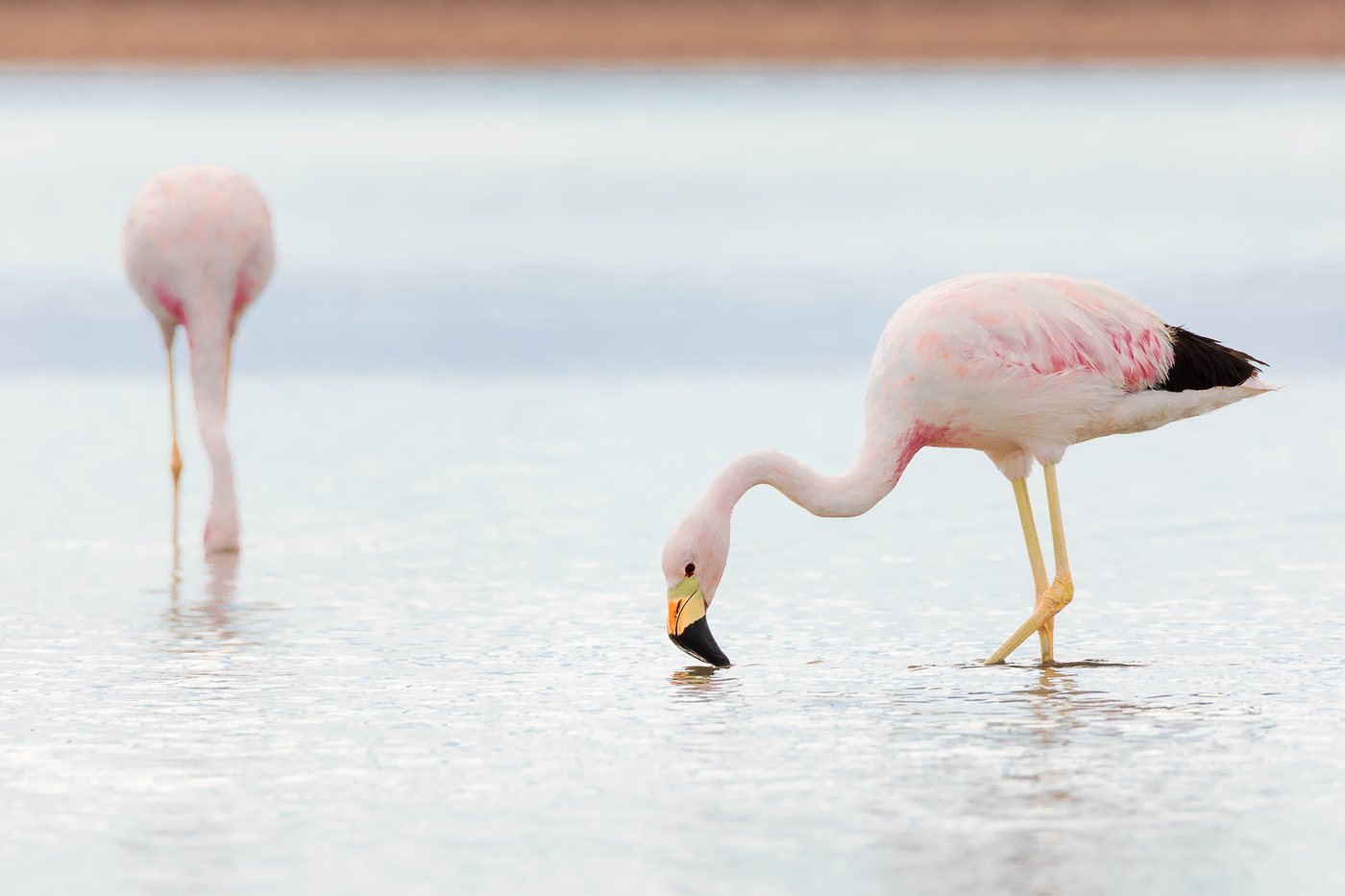
Chilean flamingo
The world's northernmost flamingo colony lives at the Zwillbrocker Venn near Vreden, usually with 50 to 60 birds present. The Chilean flamingo has pale pink plumage and grey legs with reddish joints, and its pale bill ends in a black tip. From February to August the group stays at the Venn and breeds on the island in the Lachmöwensee, where the first chicks hatch from mid-May.
 February to March
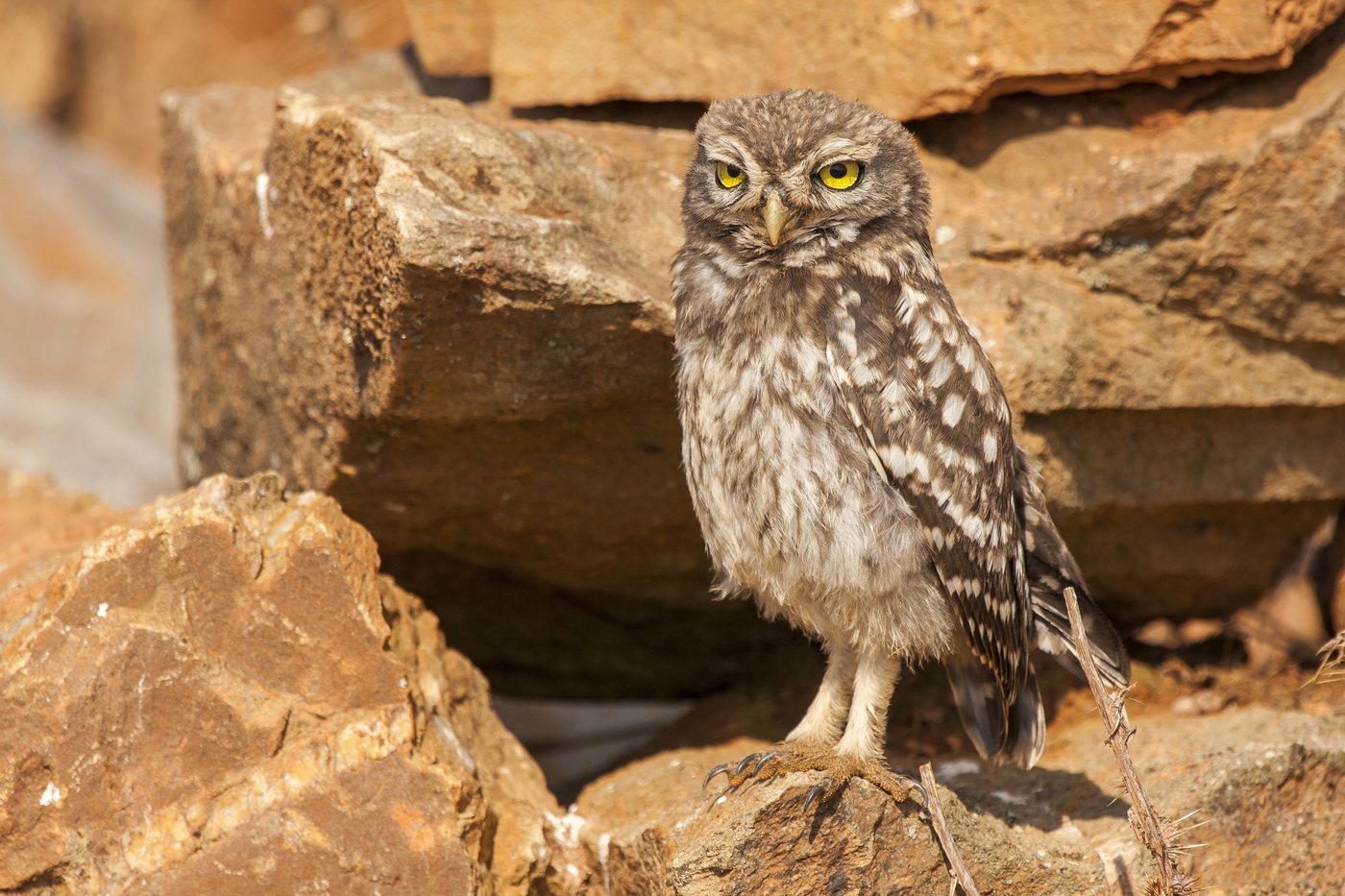
Little owl
The little owl lives in the open parkland of the Münsterland, especially where old pollarded willows and orchard meadows border short grazed pastures with stables. It is recognized by its stocky shape without ear tufts and the pale spots on its brown plumage. February and March mark its main courtship period, when it also calls by day from fence posts and branches.
 March to June
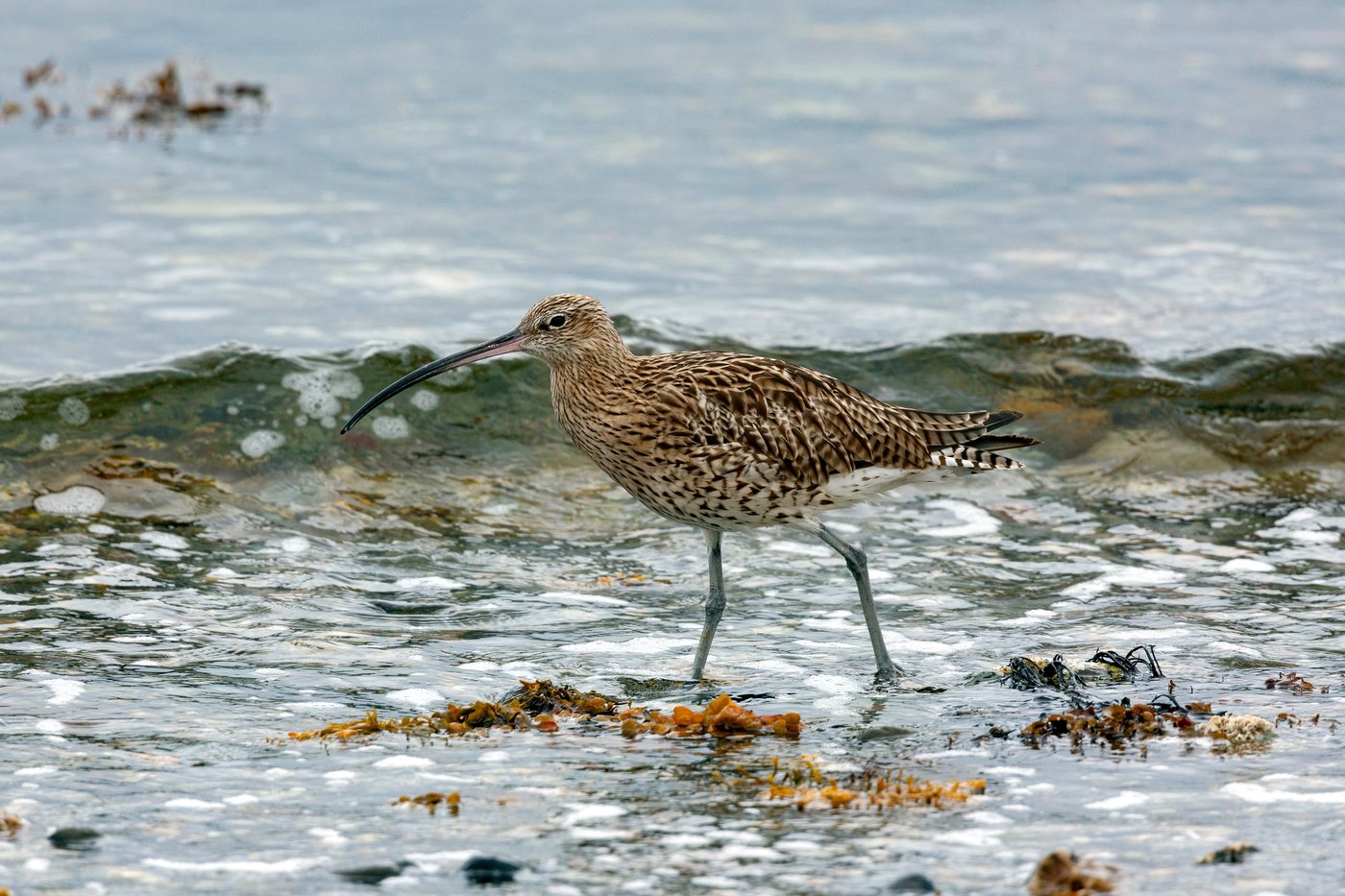
Eurasian curlew
The Eurasian curlew breeds in the wet meadows of the Westmünsterland, among them the Amtsvennwiesen near Vreden and the Moore des Münsterlandes and Düsterdieker Niederung bird sanctuaries. Its long, downcurved bill and trilling flight call make it unmistakable as it marks its territory with wavering display flights over the meadows from late March. By June the last chicks have fledged.
- March to October
Dülmen pony
At the Merfelder Bruch nature reserve near Dülmen, about 400 animals form the last continuously naturally selected herd of wild horses on the European mainland, living largely undisturbed within a fenced area. The sturdy ponies, with thick manes and coats mostly ranging from mouse grey to brown, live in stable family groups. The reserve is open Saturdays, Sundays and public holidays from March to November 1, and on the last Saturday in May the yearling stallions are gathered from the herd during the traditional wild horse round-up.
Pictures: Freepik
Getting there
- 0 h 15 minMünster
- 1 h 45 minKöln
- 2 h 45 minHamburg
- 3 h 00 minFrankfurt am Main
- 4 h 45 minBerlin
- 6 h 30 minMünchen
Good to know
Leash Once You Leave the Path
In North Rhine-Westphalia there is no general leash requirement on forest paths, as long as the dog is reliably recallable and stays in sight on the path. Once the path is left, the dog must be leashed. In nature reserves both rules apply together: neither people nor dogs may leave the paths, and dogs must be leashed. Leashed dogs are allowed in the Merfelder Bruch wild horse enclosure, except on the day of the wild horse roundup.
Watch from Blinds and Towers
The valuable bird habitats are laid out so they can be viewed from fixed points. Along the circular trail at the Zwillbrocker Venn are two observation platforms and a lookout tower; the platform at the Remise looks out over the flamingo island from about 300 meters away. At the Rieselfelder Münster, the 233-hectare reserve north of the Coermühle mill is largely closed to visitors, and observation blinds H5 through H10 offer views instead; in the adjoining nature discovery area to the south, 22 information posts guide visitors through the terrain.
Boating Rules on the Rivers
On the Berkel, certain stretches are closed in April and May for nature conservation reasons and may not be paddled during that time. The Ems between Warendorf and Rheine is considered easy to paddle and suitable for beginners too, and under normal conditions the Werse can even be paddled in both directions. On the Bocholter Aa, portaging is required at the Krechting weir and at the weirs within the town of Bocholt.
Smoking and Fire in the Forest
In North Rhine-Westphalia, smoking in the forest is banned from March 1 to October 31, and open fires and grilling are prohibited there year-round. The Naturpark Hohe Mark specifically asks visitors not to discard lit cigarettes and not to build campfires. Anyone who wants to grill should use campsites and the designated grill spots in town.
Campsites and Overnight Stays
RV parking areas and campgrounds can be found in many towns across the region, ranging from a simple overnight spot to a fully equipped campground. Staying overnight outside these sites is not an option: cycling in the forest is only allowed on established paths, and in nature reserves the paths may not be left at all. Details on capacity and pricing are available directly from the individual providers.
Signage and Border Crossings
The major cycling routes are signposted throughout and do not end at the national border: the Flamingoroute runs 473 kilometers (about 294 miles) between Enschede and Borken, the Vechtetalroute goes from Darfeld to Zwolle in the Netherlands, and the Berkelroute follows the river across the border. The main hiking trails of the Westfälischer Heimatbund cross the entire Münsterland and are marked with a white St. Andrew's cross. Along the EmsRadweg, train stations lie within five kilometers (about three miles) of the route.
Protected landscapes
- Nature park
- Hohe Mark - Westmünsterland
Names and boundaries: © OpenStreetMap contributors.
About this region
The Münsterland lies in the west of North Rhine-Westphalia: a flat parkland landscape of meadows, pastures, and moated castles. The Zwillbrocker Venn holds the northernmost flamingo breeding colony in the world. Pitches and campsites range from a simple spot to a fully equipped site.
Things are busiest between April and August, when the flamingos are at the Venn, and quietest in winter. When a site is open is shown in each listing's calendar.
