Camping on the Moselle
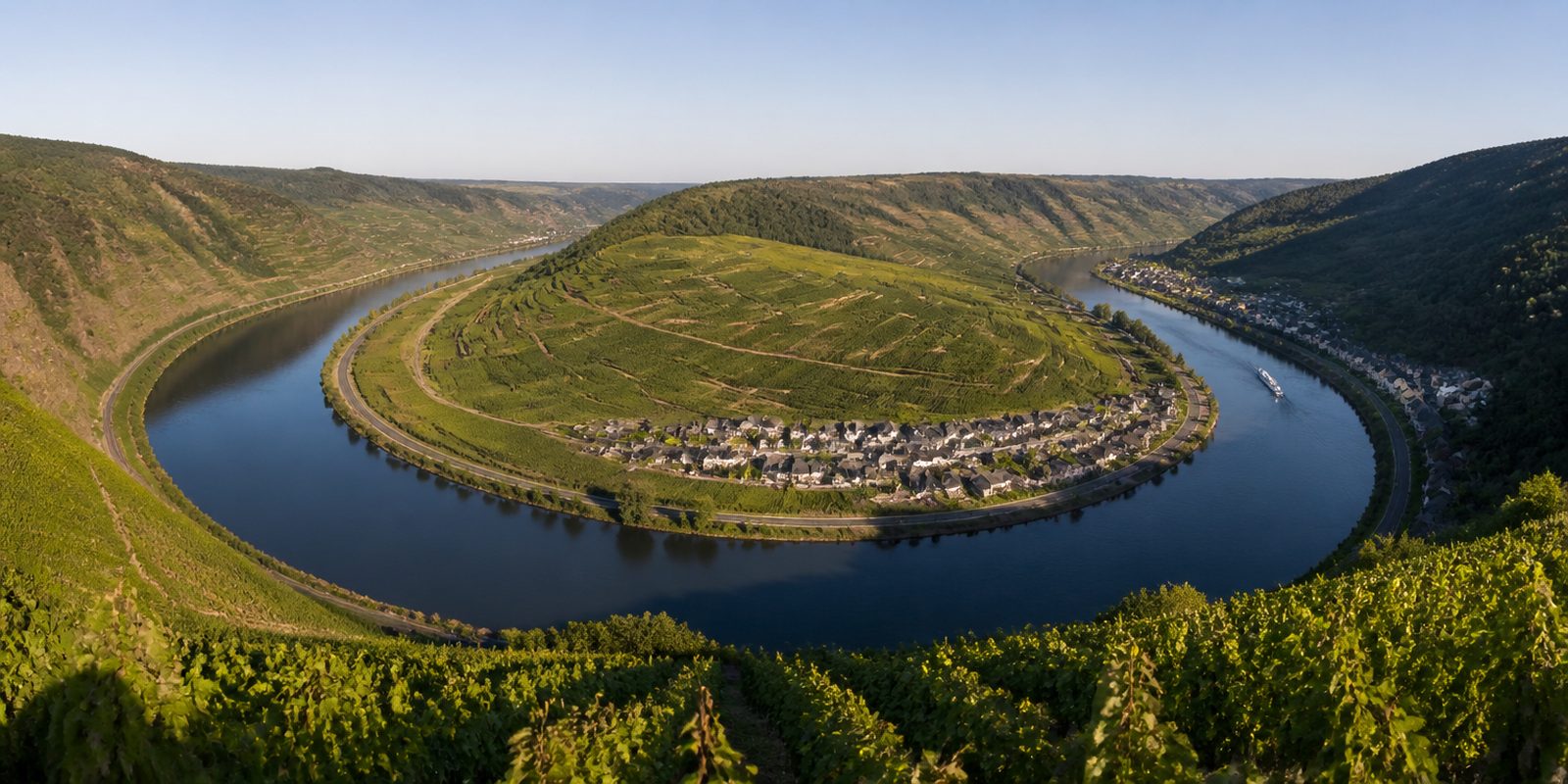
Between Trier and Koblenz the Mosel loops tightly. Its best known bend, at Bremm, has a name of its own, the Cochemer Krampen. The railway cut out the detour with a tunnel 4.2 kilometers long, the longest in Germany when it was completed in 1877. Right beside it the Calmont rises at around 65 degrees to 378 meters and counts as one of the steepest vineyards in Europe. A few dozen growers work it. They still train their vines singly on stakes, a method known on the Mosel as Moselpfahlerziehung, with up to 10,000 plants per hectare. The valley follows an alternation of slate slopes and widenings of the river where wine already grew in Roman times, as the wine ship recovered near Neumagen and now kept in the Landesmuseum Trier shows. Trier itself was Augusta Treverorum, capital of the province of Gallia Belgica. Since 1986 the Porta Nigra and five other Roman buildings have given the city the title of World Heritage. Downstream, Traben-Trarbach rose before the First World War to become the second largest wine trading place in Europe after Bordeaux, a past still told by the Jugendstil bridge gate of the architect Bruno Möhring.
The year in this region
September: The Grape Harvest Begins
Mid-September brings the Burgundy varieties and the Riesling grapes destined for sparkling wine and Kabinett. In the exceptionally early 2025 vintage, harvesting began across the region as early as September 8. On the first weekend of September, Bernkastel-Kues traditionally holds the Weinfest der Mittelmosel, the middle Mosel wine festival, with a parade and fireworks.
In the middle of the month the sun rises at 7:07 AM and sets at 7:47 PM. That leaves 12 hours and 40 minutes of daylight.
Water and air: Open-Meteo, measured averages. How busy: share of school holidays 2027 across all sixteen federal states. Nature dates: German Weather Service, phenological observations 2014 to 2026 at 179 stations in the region, typical day.
Tours in this region
Marked tours that fit into a day from a site, and one multi day tour per kind.
- Hiking
Moselsteig
Twenty-four stages from Perl on the upper Mosel to the Deutsches Eck in Koblenz, mostly along the top of the slope with the river's loops below. Again and again the path climbs into the steep vineyards and drops back into the wine villages, past Trier with the Porta Nigra, past the Bremmer Calmont and the Reichsburg Cochem. The high point is the Mehringer Berg.
366.4 kmMulti day tour
- Cycling
Mosel-Radweg
Asphalt nearly all the way, water nearly all the way: from Metz by Trier to Koblenz the route stays at river level while the vineyards climb steeply on both sides. There is hardly any gradient. Castles stand above the loops between Zell and Koblenz, and in Traben-Trarbach art nouveau houses line the bank.
273.6 kmMulti day tour
- Hiking
Saar-Hunsrück-Steig
Over seventy per cent of the route runs on natural ground, narrow paths through the Hunsrück woods, often beside a stream. The Cloef looks down on the Saar loop. Also on the way are the Baybachklamm gorge, the Erbeskopf at 816 metres and the Celtic ring fort of Otzenhausen.
379.6 kmMulti day tour
- Cycling
Maare-Mosel-Radweg
The old railway line softens the descent. From Daun to Bernkastel-Kues the way drops almost three hundred metres without ever getting steep, over viaducts and through long tunnels like the Großes Schlitzohr, where bats hang from the ceiling. Along the sides lie the maars of the Vulkaneifel, water-filled craters set in beech wood.
59.3 km
- Hiking
Calmont-Klettersteig
Between Bremm and Ediger-Eller the route crosses the steepest vineyard in Europe, with slopes reaching 65 degrees. Ladders, iron pegs and steel cables lead across bare slate, two to three hundred metres above the Mosel loop. A Gallo-Roman temple stands at the top.
2.4 km
- Hiking
Traumpfad Koberner Burgweg
The climb starts at the parsonage in Kobern. A narrow switchback path pulls up the slope to a plateau of vineyards, then drops into the Keverbach valley, where wooden walkways cross the stream and mineral springs come up out of the ground. Above it all stand the ruins of the Oberburg and the Niederburg and the Matthiaskapelle from the thirteenth century.
17 km517 m ascent
Tours: © OpenStreetMap contributors, ODbL. Lengths computed from the mapped course, as of September 12, 2026.
Animals you can meet here
 March to August
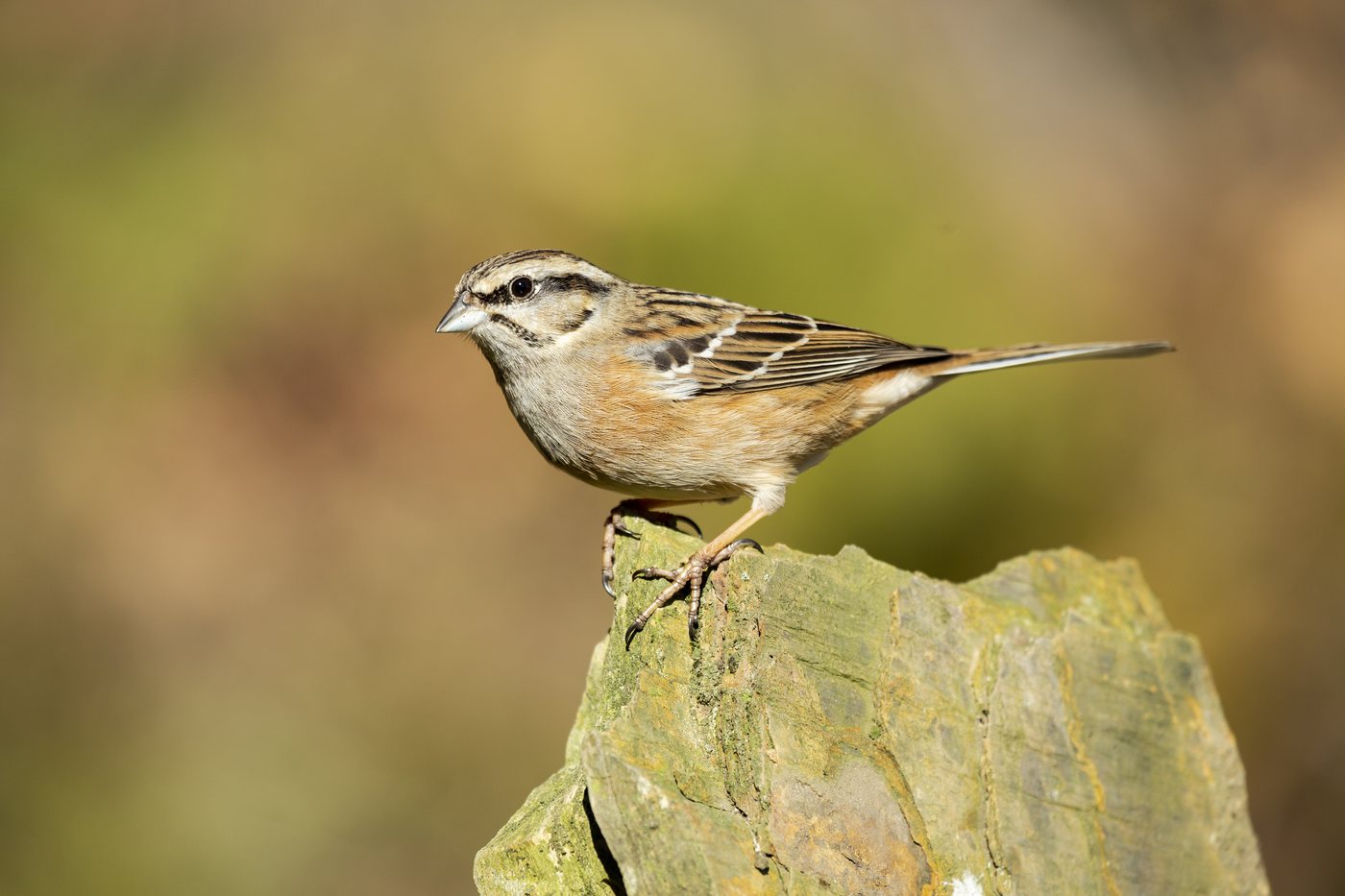
Rock bunting
In the vineyards near Winningen, the rock bunting sings from the warm stone walls and defends its territory there. Its grey head with black stripes and rust-red breast set it apart from the closely related yellowhammer. Between Winningen and Küsserath lies one of the largest populations of this bunting in Germany, settled on the warm terraced slopes above the Mosel.
 April to September
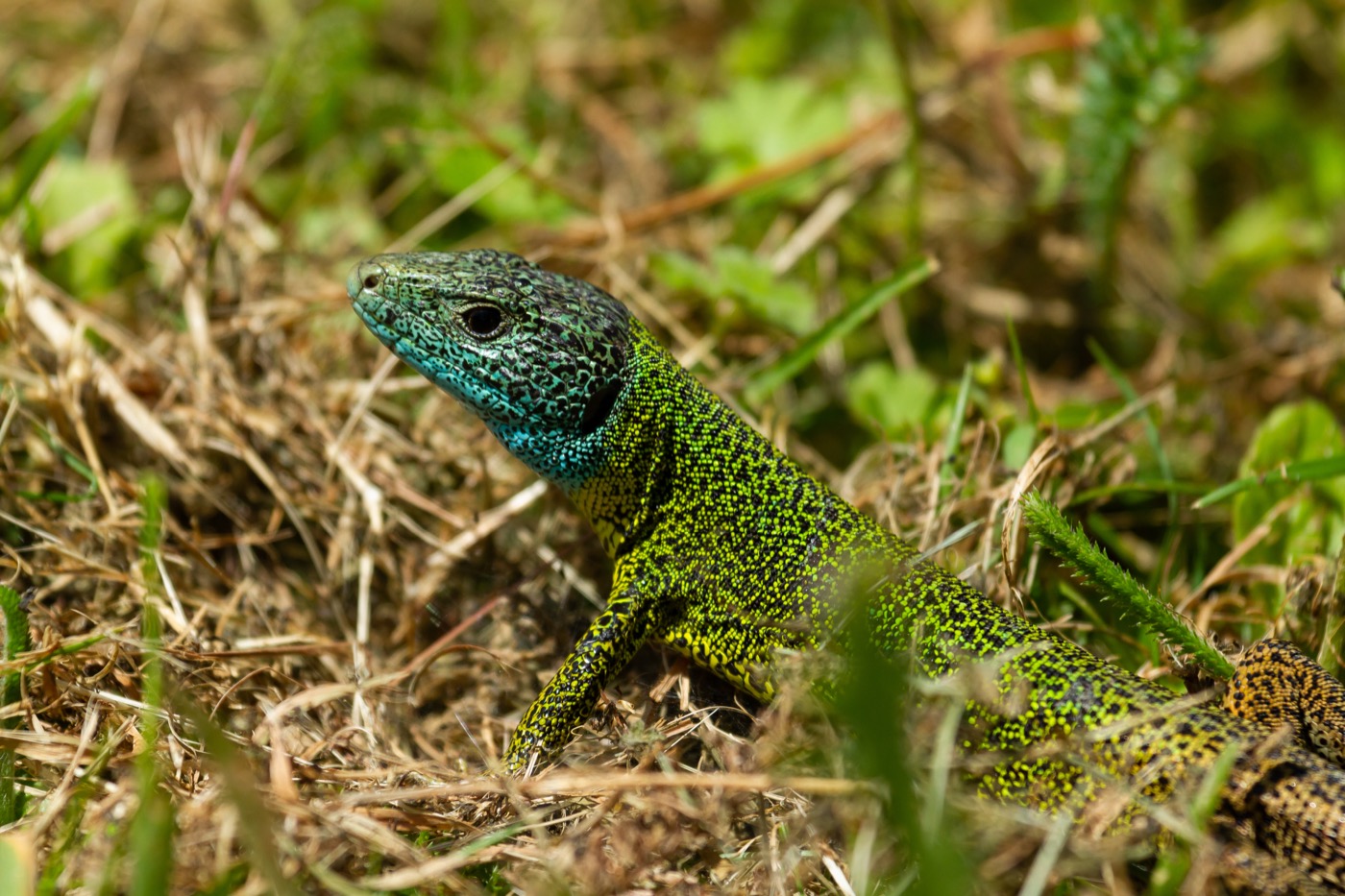
Green lizard
On the vineyard walls between Cochem and Bremm, the western green lizard emerges from its hiding places in the stonework as soon as the rocks warm up in the sun. Its bright green body is hard to miss, and males also show a vivid blue throat during the mating season. Between the rows of vines it basks on the warm dry-stone walls and hunts insects there.
 February to June
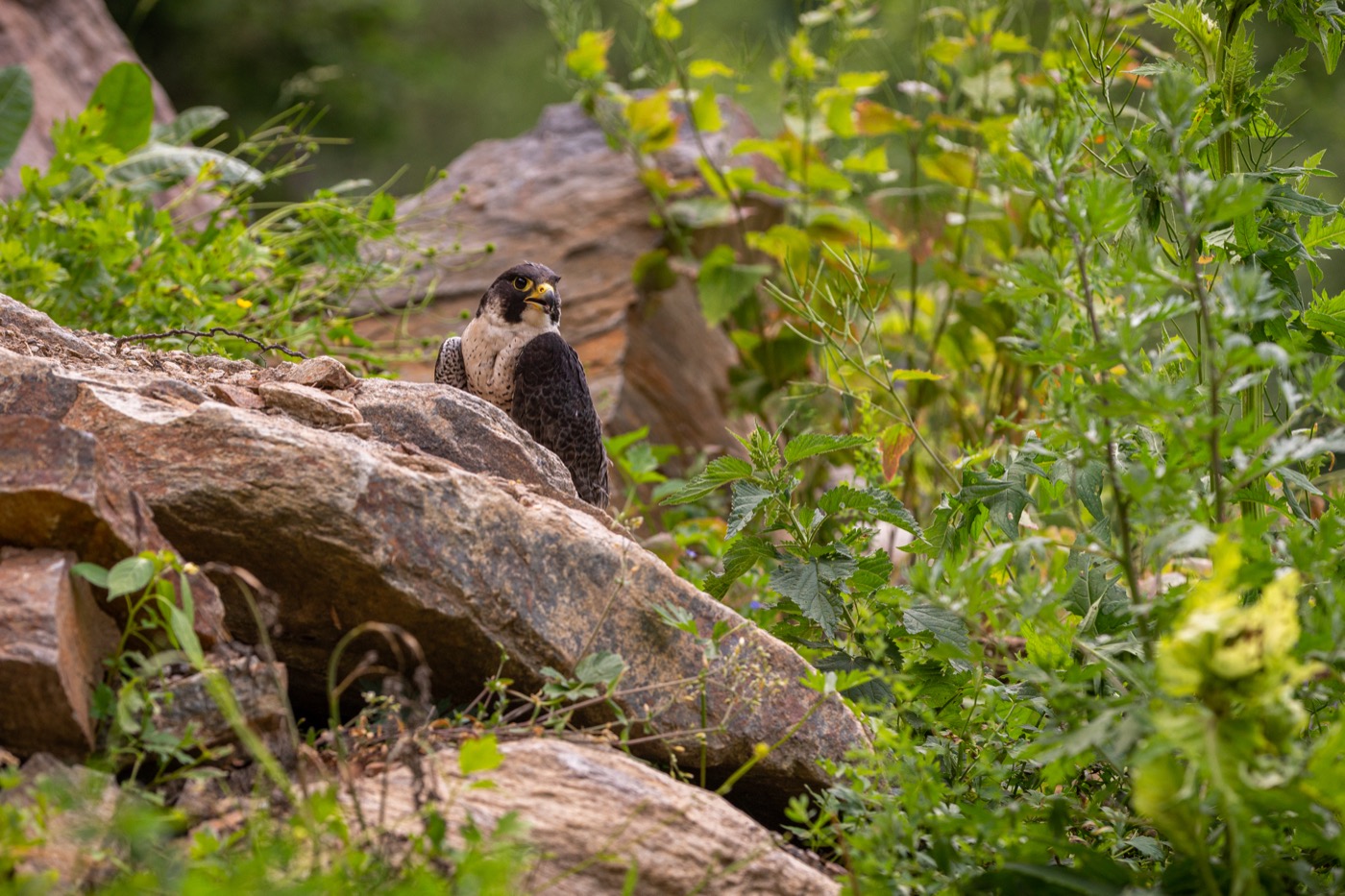
Peregrine falcon
On the rock faces near Cochem, the peregrine falcon takes up its ledge in the cliff in spring and lays two to four eggs there. Its slate-grey back and pale underside barred in flight mark it out even from a distance. When hunting, it stoops at high speed onto other birds before returning to its ledge in the rock.
 September to February
Eagle owl
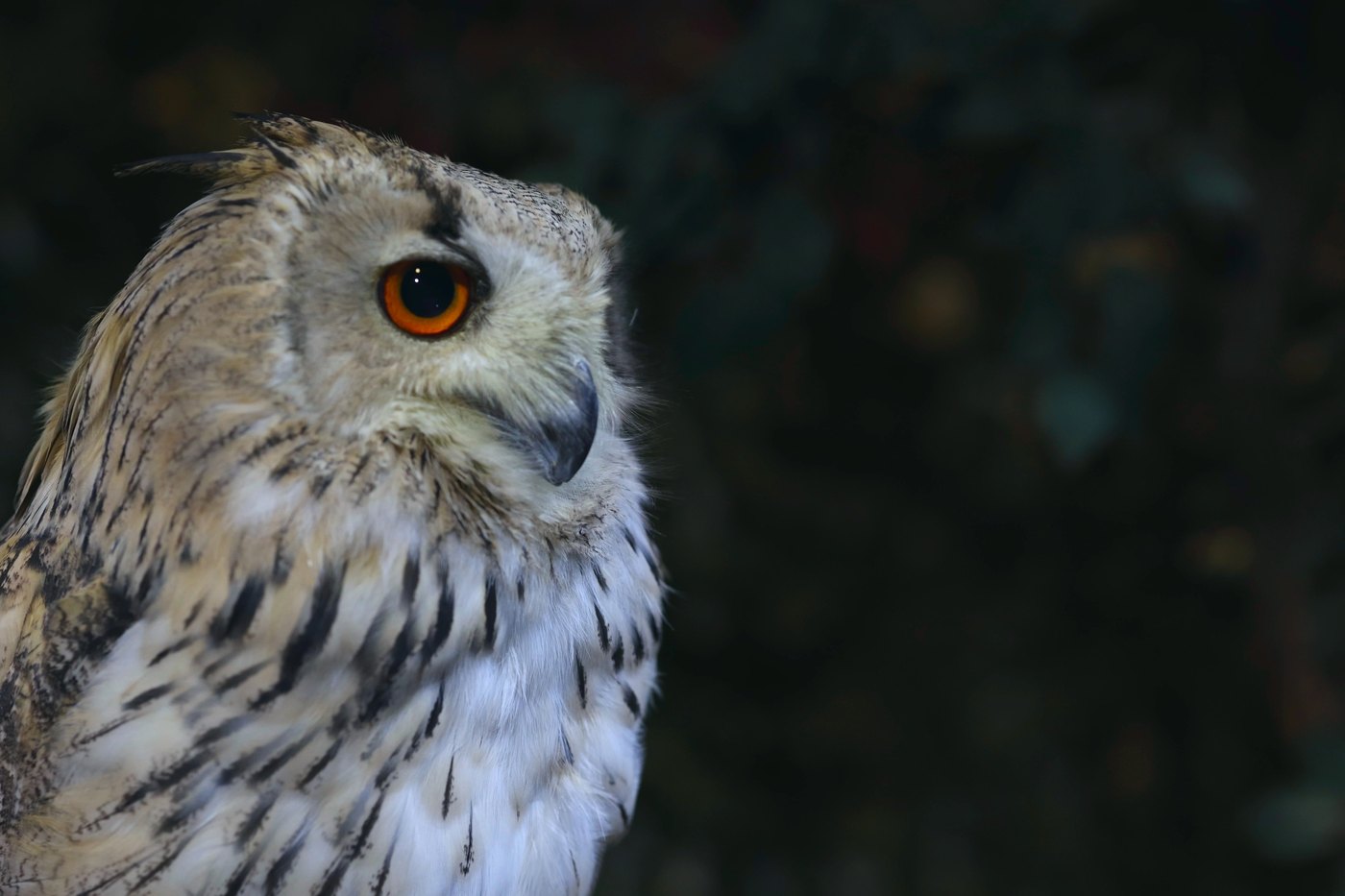
On the steep slopes near Zell an der Mosel, the eagle-owl sits hidden in the slate rock by day and becomes active only at dusk. It is most likely to give itself away through its deep, far-carrying call, which echoes across the valley through the quiet winter months. By late February the first pairs here have laid their eggs, having already marked and defended their territory with calls since winter.
Pictures: Freepik
Getting there
- 1 h 15 minKoblenz
- 2 h 00 minFrankfurt am Main
- 2 h 00 minKöln
- 5 h 30 minMünchen
- 5 h 45 minHamburg
- 7 h 15 minBerlin
Good to know
Fire in the woods needs permission
Under section 24 of the Rhineland-Palatinate forest act, lighting a fire in woodland or within 100 meters of it needs permission from the forestry office. Above the vineyards, woodland begins almost everywhere. Smoking there is not allowed either. The stretch around Perl belongs to Saarland and follows that state's forest act.
Leash Rule in Forest and Reserve
In the forests on the Mosel slopes, dogs must be kept on a leash during the breeding and rearing season, as required statewide under the state forest law. Unlike some neighboring states, Rhineland-Palatinate does not set a fixed calendar period for this. Large parts of the steep vineyard slopes are additionally designated as bird sanctuary and FFH habitat protection areas, where visitors are asked to be mindful of nesting species such as the eagle owl and peregrine falcon.
Mittel- und Untermosel Bird Sanctuary
About 15,900 hectares of the Mosel slopes between Trier and Koblenz are designated as the Mittel- und Untermosel EU bird sanctuary. It protects, among other species, the eagle owl, peregrine falcon, red kite, black stork, and rock bunting, which has one of its most significant populations nationwide here.
Hochmoselbrücke
Between Zeltingen-Rachtig and Ürzig, the Hochmoselbrücke spans the valley at a length of 1,702 meters and a height of 158 meters, making it Germany's second-highest bridge after the Kochertalbrücke. Traffic has crossed it as part of the B 50 highway between Wittlich and the Hunsrück since November 21, 2019.
Overnight Parking in a Camper Van
Parking a camper van is permitted general use under German road traffic law, but staying overnight outside designated sites counts as a separate, restricted use. In practice, a single overnight stay is often tolerated as long as no one is obstructed and no camping furniture or awnings are set up.
Swimming in the Mosel
As a federal waterway with 28 locks built for shipping, the Mosel is not among the officially designated swimming waters in Rhineland-Palatinate. Those who want to swim head instead to outdoor pools such as the Moselbad in Bernkastel-Kues or the Triolago recreational lake near Riol.
Protected landscapes
- National park
- Hunsrück-Hochwald
- Nature park
- Natur- und Geopark VulkaneifelSaar-Hunsrück
Names and boundaries: © OpenStreetMap contributors.
About this region
Between Trier and Koblenz the Moselle winds through tight loops, the best known being the Cochem Bend at Bremm. Steep vineyards such as the Calmont and the Roman city of Trier have shaped the valley since antiquity. In the wine villages along the river you will find pitches for motorhomes and tents as well as fixed stays.
High season is July and August. When a site is open is shown in each listing's calendar.
