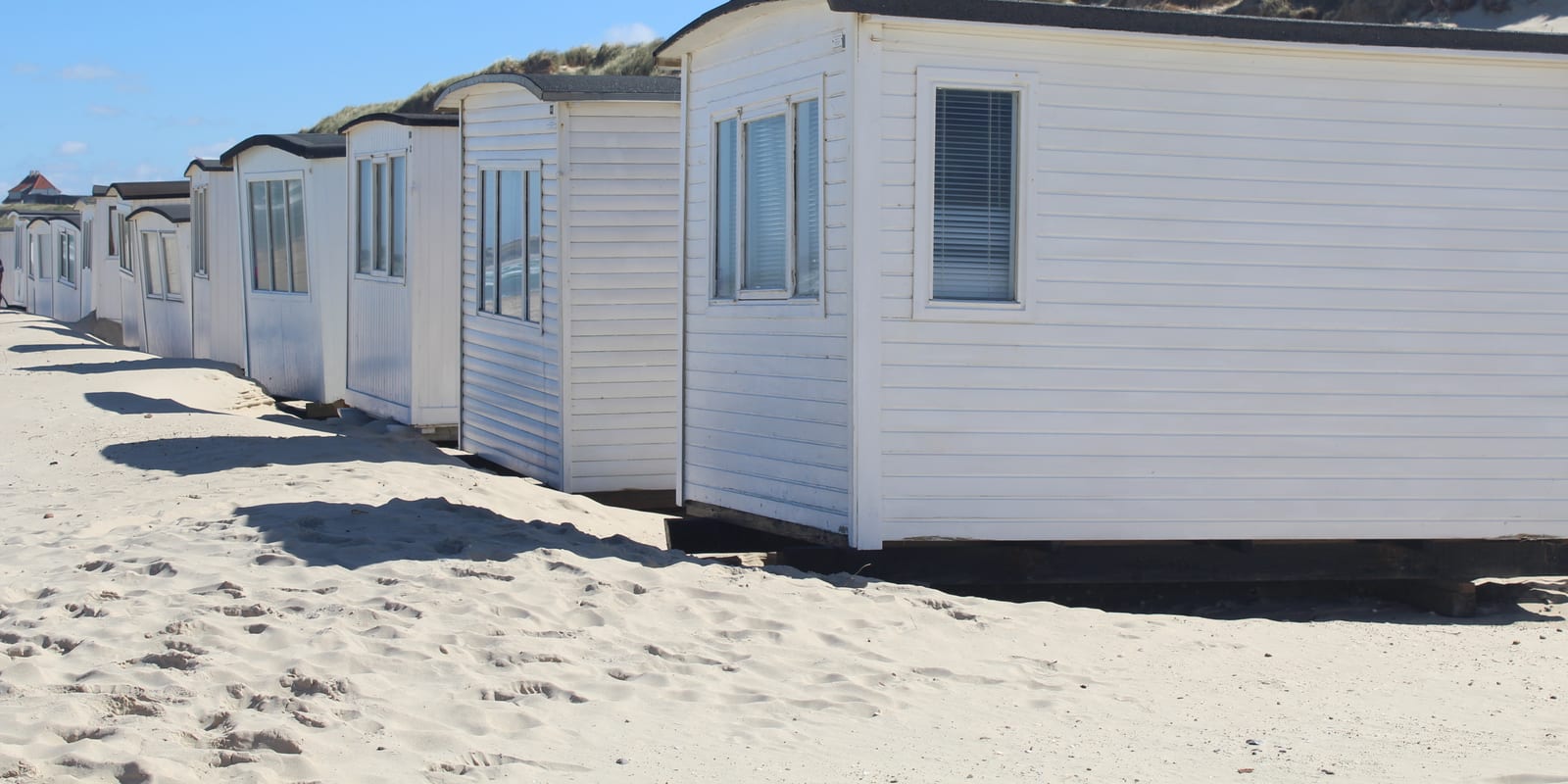
Rent a mobile home
A mobile home is a finished living unit that arrives on a low loader and then stays put. There is a chassis underneath, but no road licence. It serves only to push the house into position once it comes off the truck. How wide such a house may be is therefore decided by the road, not by the floor plan. Kitchen and bathroom are built in, and a wooden deck usually sits in front of the door. What separates it from a chalet is mainly the way it is built: a light frame with clad walls instead of a timber house.
What to check before booking
- Is it heated and insulated?
- There are worlds between a summer model and a house built for the whole year, and from the outside you can hardly tell. Anyone booking outside the warm months asks about heating and windows, and whether the site is open at all by then.
- How old is the house?
- Mobile homes stay on their pitch for many years. Layout, windows and insulation have changed a great deal in that time. The year of manufacture often says more than the description.
- What is the terrace like?
- An open wooden deck, a roofed veranda or a closed porch, all of it occurs. In summer you sit out there more than inside. A look at size and shade is worth it.
- Where does it stand on the site?
- On the edge with a clear view or in the middle of a row, that is a wide difference. The site map shows it faster than the text does. Ask as well how far it is to the car and to the entrance.
- What do you need to bring?
- Bed linen and towels are not included everywhere. Some hosts lay them out, others rent them, and with others again you pack your own.
Who it suits
Made for
Families and groups who want the campsite without pitching a tent. For a first camping holiday it works particularly well, because bathroom and kitchen are already there. Anyone travelling with children has short ways to everything that happens on the site.
Less so for
Anyone looking for quiet and distance is rarely in the right place. Mobile homes usually stand close together, and light construction muffles less than a stone wall does. The floor also sits above the ground, so steps lead up to the door.
Where it comes from
The mobile home descends from the American travel trailer. As long as the units were towed behind a car they stayed narrow, about two and a half metres. In 1954 the industry built the first ones a good three metres wide, which only a truck could move, and called them mobile homes. The type reached Europe by way of Britain, where static caravans had stood on holiday parks since the 1930s; it came to campsites in France and further south in the 1970s.
Good to know
Mobile does not mean drivable
The chassis is not licensed for the road. The house arrives once on a low loader and then stays where it stands.
The door is a step up
The floor rests on the chassis and therefore sits above the ground. If walking is difficult, ask how many steps there are or whether a ramp exists.
Dogs only by arrangement
Rental accommodation often follows different rules than the tent field. Whether the dog may come inside is stated in the listing or settled beforehand.
