Camping in the Mecklenburg Lake District
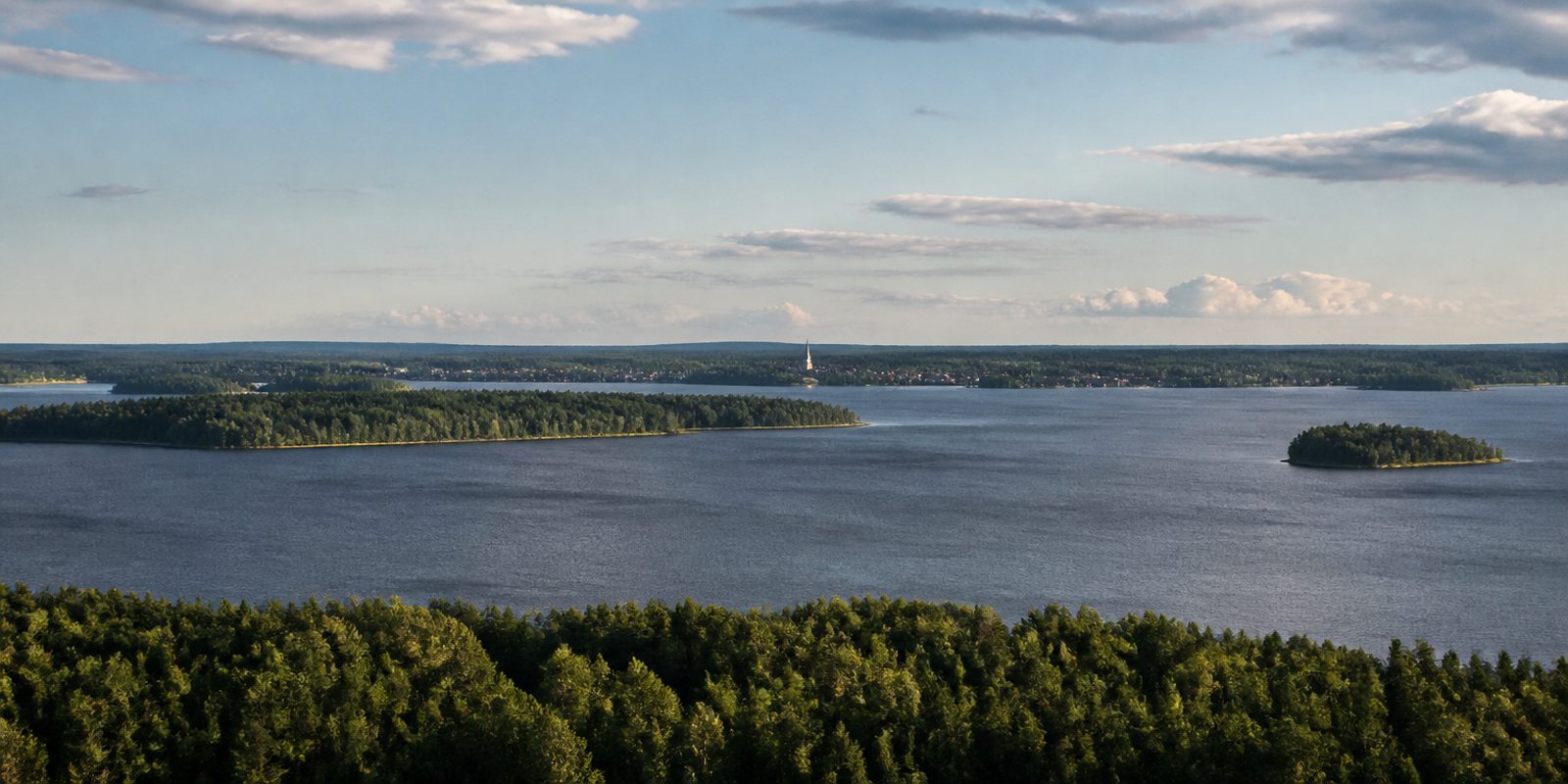
Between Waren, Neustrelitz and Neubrandenburg lies the Müritz-Nationalpark, at 322 square kilometers the largest national park on the German mainland. More than 70 percent of it is forest, and 107 lakes of over one hectare lie within it. The Müritz gave it its name. At around 113 square kilometers it is the largest lake lying entirely within Germany, and the national park borders its eastern shore along ten kilometers. Near Serrahn, 268 hectares of old beech forest have belonged since 2011 to the UNESCO World Natural Heritage of the Ancient Beech Forests of Germany. No forestry has taken place there for decades. Around the park stretches the far larger Mecklenburgische Seenplatte with more than 1,000 lakes. It formed during the Weichselian glaciation some 20,000 to 17,000 years ago, when the retreating ice left behind the channels and basins that now hold one forest lake, bog and river valley after another. In the west of the lake district lies the Naturpark Nossentiner/Schwinzer Heide. There a further distinction comes from the dark night: since 2025 the park has held the certificate of DarkSky International as an International Dark Sky Park.
70 places and units in this region
Places in this region

The year in this region
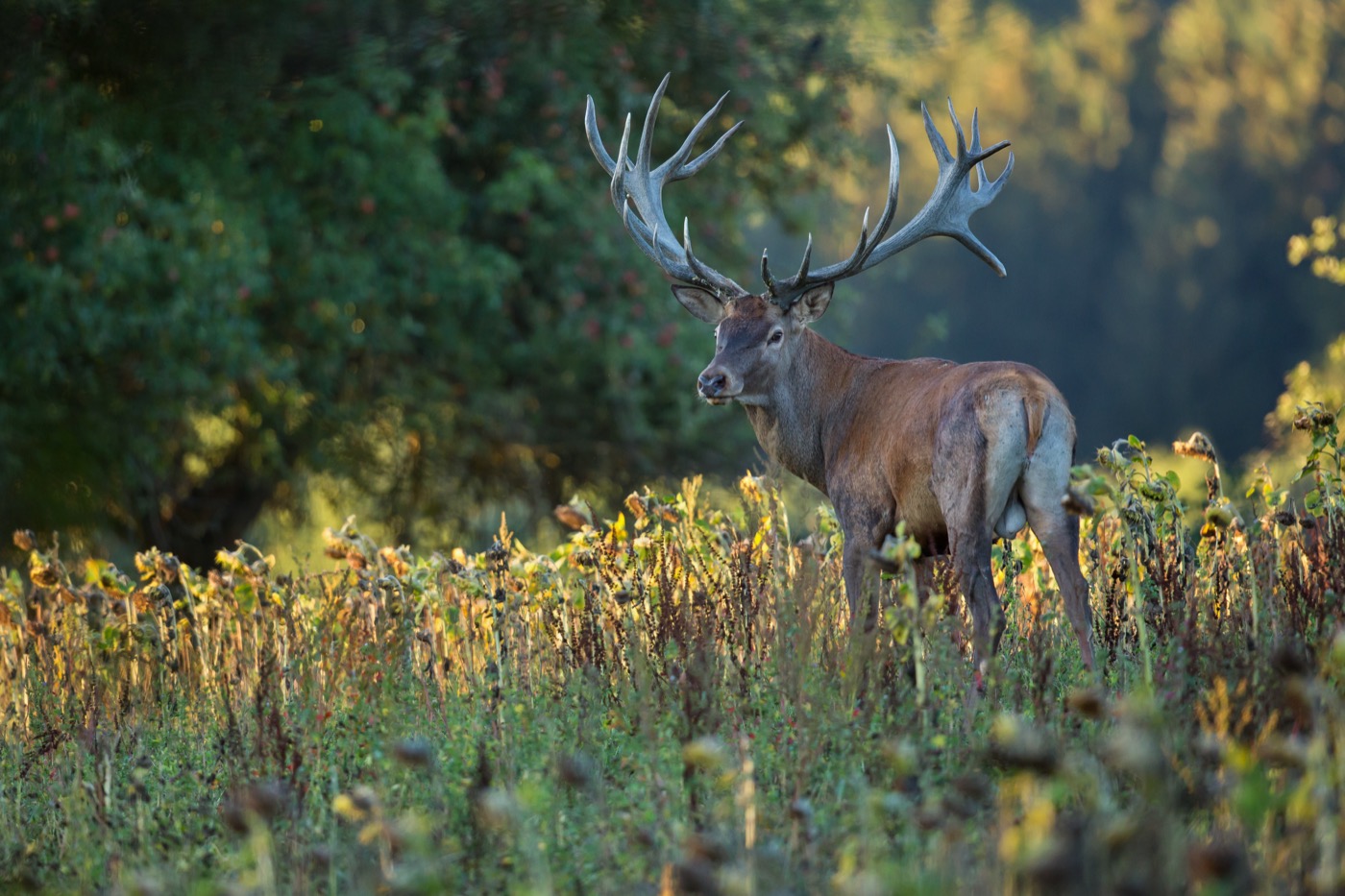
September: Red Deer Bellow in the Forests
From mid-September, the rutting season of the red deer begins in the Müritz-Nationalpark: stags leave their herds to compete for females, bellowing several hundred times a night, audible for kilometers around. The best time to follow the spectacle is in the early morning hours around Serrahn and Schwarzenhof. At the same time, the first cranes begin gathering in the region for their autumn stopover.
In the middle of the month the sun rises at 6:40 AM and sets at 7:26 PM. That leaves 12 hours and 46 minutes of daylight.
Water and air: Open-Meteo, measured averages. How busy: share of school holidays 2027 across all sixteen federal states. Nature dates: German Weather Service, phenological observations 2014 to 2026 at 100 stations in the region, typical day.
Tours in this region
Marked tours that fit into a day from a site, and one multi day tour per kind.
- Cycling
Radweg Hamburg-Rügen
From Hamburg to Sassnitz, first along the Elbe-Lübeck canal, then through the Schaalsee biosphere reserve and past Schwerin with its castle. Sternberger Seenland, Güstrow and the Mecklenburgische Schweiz follow. The surface keeps changing, from asphalt to firm gravel tracks to village cobbles, and at the end the Rügendamm carries you onto the island.
527.4 kmMulti day tour
- Cycling
Elbe-Müritz Rundweg
Between the Elbe at Wittenberge and the Müritz lies the Prignitz, flat and wide, with fields and long stretches of forest. Around thirty stork pairs nest in Rühstädt. Further north the lakes begin, Plau am See first, then Waren and Röbel on the Müritz.
419.4 kmMulti day tour
- Cycling
Mecklenburgischer Seen Rundweg
The route strings one lake onto the next, from the Schweriner See by way of the Dobbertiner See to the Krakower See. Sea eagles breed in the pines. Through the Nossentiner/Schwinzer Heide it crosses glacial outwash sand, and near Sternberg the Slavic fort of Groß Raden has been rebuilt on its peninsula.
265 kmMulti day tour
- Cycling
Müritz Rundweg
All the way round the largest lake that lies wholly within Germany: 112 square kilometres of water, 31 metres deep at its deepest. Reeds line the whole eastern shore. That side belongs to the Müritz national park, while Waren, Klink, Röbel and Rechlin follow one another on the other, with their harbours and boathouses.
115 km
- Hiking
Müritz-Nationalpark-Wanderweg
Nine stages through Germany's largest land national park, from Waren along the Müritz shore to Boek and on by Fürstensee to Serrahn. The old beech woods there are world heritage. The ground was shaped by the ice age, low hills and wide plains with more than a hundred lakes between them, and the Käflingsberg tower looks out over all of it.
172.9 kmMulti day tour
- Hiking
Grüne Runde Neubrandenburg
The loop threads together the best parts of the Neubrandenburg path network, from the Broda lido on the Tollensesee to the ice age stream valleys in the north. Broad forest tracks alternate with narrow footpaths. Open fields with long views lie in between, and in the Burgholz the ramparts of the Slavic Ravensburg still stand out clearly.
40.9 km
- Canoeing
Wasserwanderstrecke Obere Havel im Müritz-Nationalpark
From Kratzeburg on the Käbelicksee the way goes lake by lake, on the topmost Havel, where the river is still narrow and no motorboats run. Reed banks and water lilies follow. At the Granziner Mühle the Havel is silted up with sand. A rail trolley carries the boat seven hundred metres on to the Pagelsee, and the long Useriner See closes the stretch.
22.5 km
Tours: © OpenStreetMap contributors, ODbL. Lengths computed from the mapped course, as of September 12, 2026.
Animals you can meet here
 September to November
Common crane
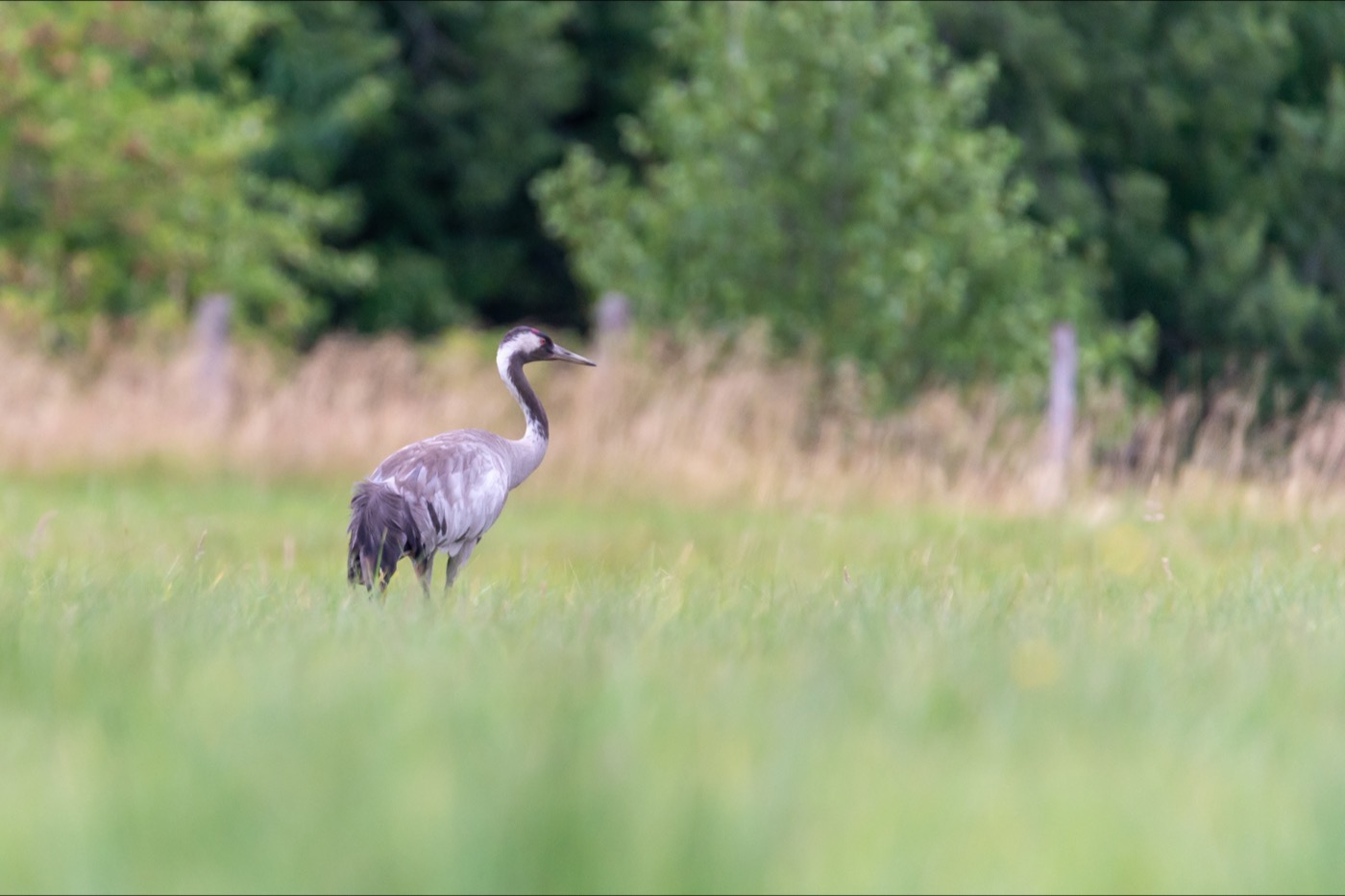
At Rederangsee near Federow in Müritz National Park, hundreds of common cranes gather every evening from September onward to roost together on the water. The grey bird with its red crown patch and bushy tail feathers is easy to recognize by its trumpeting call, which carries far across the lake. In early October, park rangers regularly count well over 10,000 resting cranes here, before the last flocks head on toward southwestern Europe in November.
 March to October
Osprey
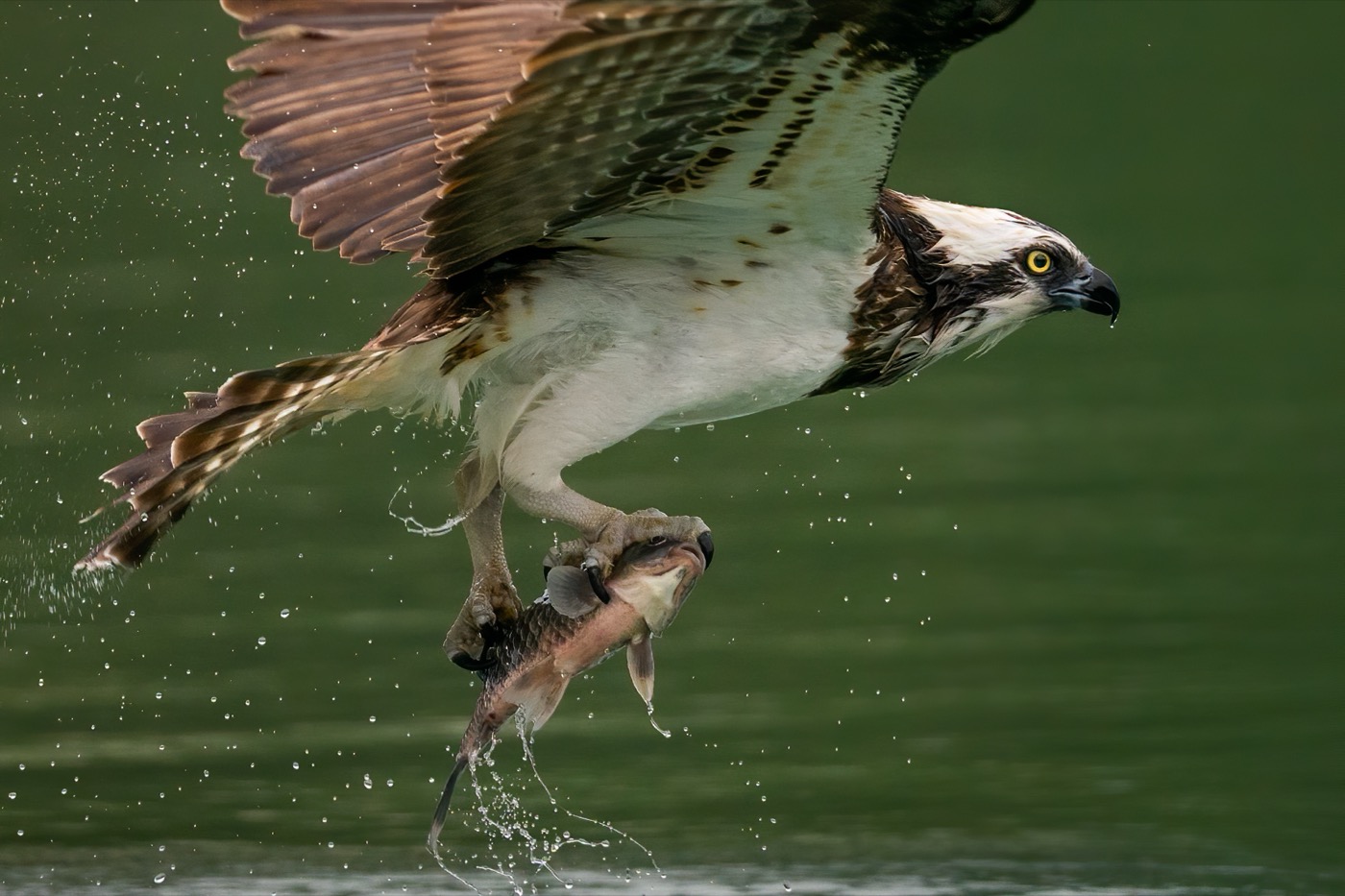
From the fixed observation points at Boek and Federow, visitors can watch the roughly ten osprey pairs of Müritz National Park fishing after they return from Africa in late March and settle into nests built on high-voltage pylons near the water. Its white belly and dark eye stripe set it apart from other birds of prey in the area, especially when it hovers briefly over the water before plunging down after a fish. The pairs stay at their nests until October, then fly back to their African winter grounds.
 November to March
White-tailed eagle
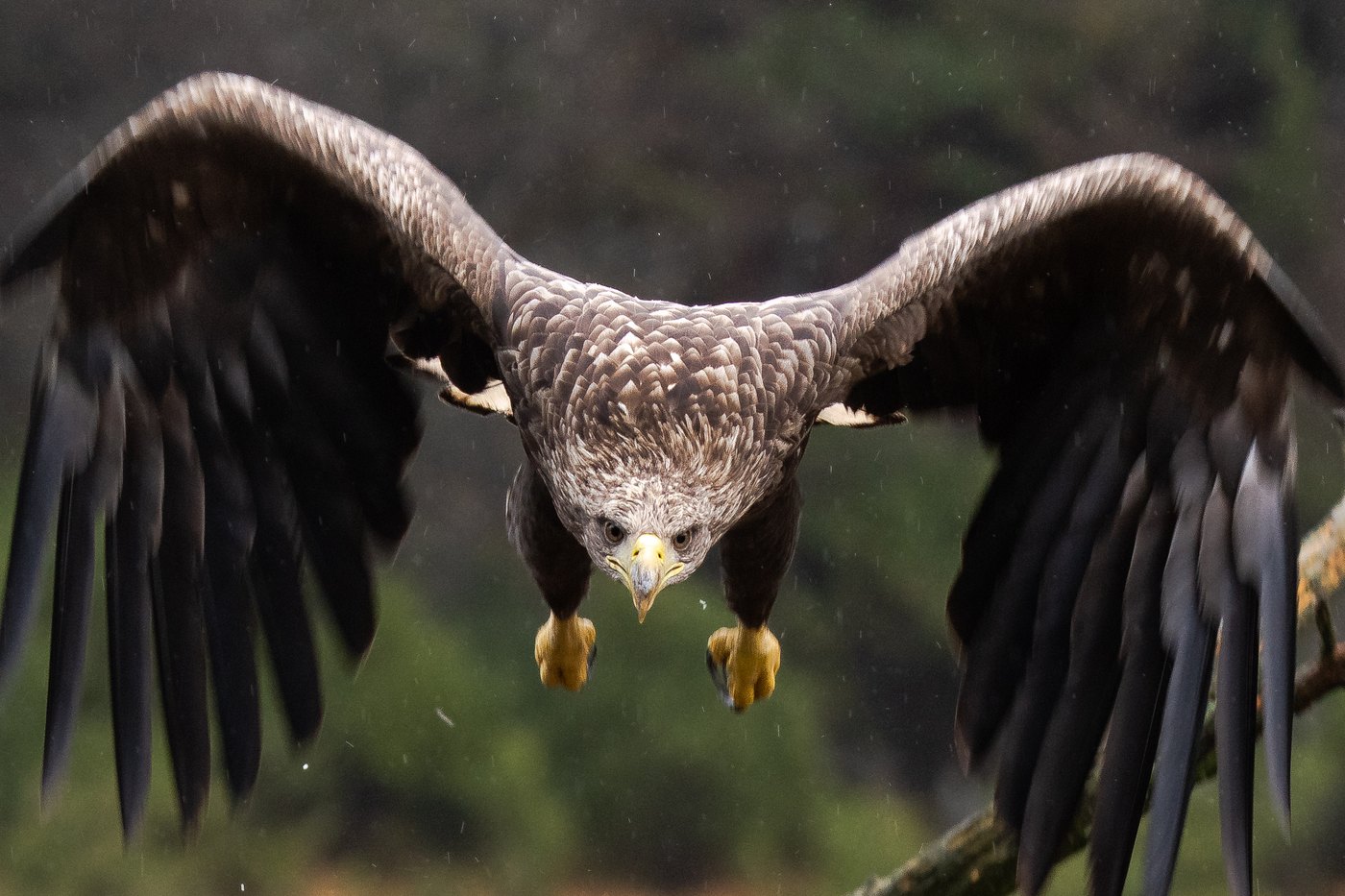
From the observation points at Boek, Federow, and Zinow in Müritz National Park, the roughly 23 resident pairs of white-tailed eagles are easiest to spot in the winter half of the year, when bare branches leave a clear view of their nests. The pale head and short, wedge-shaped white tail mark out the adult bird in flight from other birds of prey in the area. Unlike the ospreys, which do not return from Africa until spring, white-tailed eagles stay in their territories all year round.
 September to October
Red deer
Around Serrahn and Schwarzenhof in Müritz National Park, the red deer rut begins in mid September and is best followed in the early morning hours. The stag with its heavy antlers is known for its loud, far-carrying roar, which it lets out several hundred times a night to keep rivals away and attract females. The rut still echoes through the woods of the area into October.
Pictures: Freepik
Dark skies
Places certified by DarkSky International.
Naturpark Nossentiner/Schwinzer Heide
Certified in December 2025. Pine woods, heath and quiet lakes between Krakow am See and Malchow, with wide stretches where no light burns at all once it is dark.
Getting there
- 1 h 30 minRostock
- 2 h 15 minBerlin
- 3 h 15 minHamburg
- 7 h 15 minKöln
- 7 h 15 minFrankfurt am Main
- 7 h 45 minMünchen
Good to know
Leash Requirement in the National Park
In the woods and meadows of the Müritz-Nationalpark, dogs must be kept on a leash year-round to protect red deer, fallow deer, wild boar, and ground-nesting birds from disturbance. Dogs are not permitted to swim freely in the national park's lakes because of the waterbirds that breed there.
Keep Your Distance from Crane Roosts
At the cranes' evening gathering sites, such as the Rederangsee near Federow, visitors should keep their distance and use guided walks or fixed viewing points rather than approaching the birds directly. When canoeing in the national park, large gatherings of birds on the water should also be given a wide berth.
Opening Times of the Malchow Swing Bridge
The swing bridge in the island town of Malchow opens on the hour for boat traffic, briefly halting road traffic: from 9 a.m. to 8 p.m. between April and September, until 4 p.m. in October, and until 3 p.m. in November. Anyone driving through Malchow should plan for these short closures.
Use Campsites Outside the National Park
Camping and overnight stays are generally not permitted inside the Müritz-Nationalpark itself, including at the rest stops along the water trails. Designated RV sites are available instead on the edges of the region, for example at the Seglerhafen, the sailing harbor, in Röbel with about 30 spaces, or at the harbors in Waren.
Open Fires Only at Designated Fire Pits
Under Mecklenburg-Vorpommern's state forestry law, open fires in the woods are generally allowed only at sites approved by the forestry authority. Grilling or campfires anywhere else in the forest are banned year-round, not only when wildfire risk is high, and the rule also covers disposable grills and camping stoves.
Boating Rules on the National Park's Waters
On the water trails of the Müritz-Nationalpark, such as the Obere Havel, motors, sailing, and windsurfing are prohibited; only canoes and rowboats are allowed, and only along the green-marked channel. Landing and resting are permitted solely at designated spots, and group trips are limited to eight boats and require registration.
Protected landscapes
- National park
- Müritz-Nationalpark
- Nature park
- Feldberger SeenlandschaftFlusslandschaft PeenetalNossentiner / Schwinzer HeideUckermärkische Seen
Names and boundaries: © OpenStreetMap contributors.
About this region
The Mecklenburg Lake District lies between Waren, Neustrelitz and Neubrandenburg, with more than 1,000 lakes around Müritz National Park and the beech forests of Serrahn, a UNESCO World Heritage Site. Campsites and motorhome pitches line the lakeshores outside the park.
Peak season is summer at lakes like the Müritz, with quieter spells in spring and late autumn. When a site is open is shown in each listing's calendar.
