Shepherd's Huts in the Lüneburg Heath
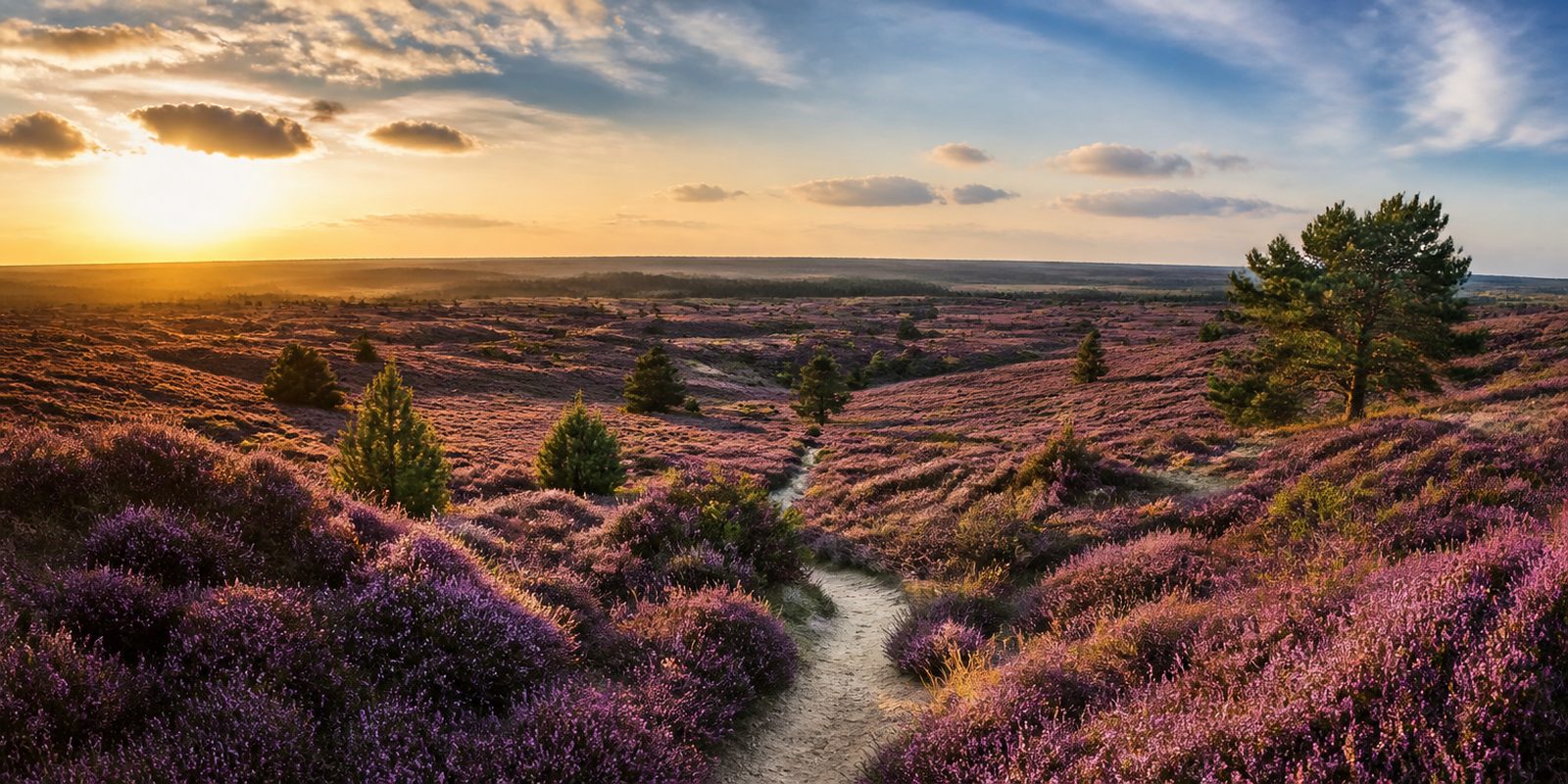
Early mornings here often bring mist over the sand, and from mid-August the flowering heather turns the open ground purple well into September. From a shepherd's hut you are out in it in two steps. As holiday accommodation these huts almost always stand on farms and grazing land at the edge of the heaths, usually within walking distance of sandy tracks and of routes such as the Heidschnuckenweg. That the sleeping quarters of a shepherd should become a guest room suits a region where herding is still the work that shapes this land.
The year in this region
September: Beekeepers Harvest Heather Honey
During the heather bloom in August and September, bees gather nectar from the heather, which beekeepers turn into pure heather honey through a laborious process. The harvest lasts only six to eight weeks, because the thick honey has to be stirred out of the combs rather than spun out. Toward the end of the month, the heather bloom on the sandy flats gradually fades.
In the middle of the month the sun rises at 6:53 AM and sets at 7:37 PM. That leaves 12 hours and 45 minutes of daylight.
Water and air: Open-Meteo, measured averages. How busy: share of school holidays 2027 across all sixteen federal states. Nature dates: German Weather Service, phenological observations 2014 to 2026 at 40 stations in the region, typical day.
Tours in this region
Marked tours that fit into a day from a site, and one multi day tour per kind.
- Hiking
Heideschleife Radenbachtal
From Undeloh across the Radenbach and through open oak wood until the valley widens: grass along the brook, heather and juniper on the slopes, pines on pale sand in between. Past the Totengrund, whose flanks rise forty metres, the route reaches Wilsede and climbs the Wilseder Berg. On a clear day Hamburg is visible.
20.5 kmLoop tour
- Hiking
Heideschleife Wilseder Berg
Between Oberhaverbeck and Niederhaverbeck the going alternates: sandy paths over bare pine roots, dense mixed wood, open heath, and the juniper hollows of Steingrund and Totengrund. Wilsede has thatched roofs and no cars. Beyond it the path climbs the Wilseder Berg, a terminal moraine of the Saale glaciation and at 169 metres the highest ground in the heath.
14.9 kmLoop tour
- Hiking
Heideschleife Töps
The walk begins deep in the woods. From the Weseler Weg it passes the Pastorenteiche near Hanstedt and drops to the Schmale Aue, a clear heath brook in open meadow below a steep bank. Up on the Töps heath the land opens again, and grey Heidschnucken graze in the Weseler Heide.
20.8 kmLoop tour
- Hiking
Heideschleife Tütsberg
The loop wraps around the headwaters of the Wümme, which rises here in the highest part of the heath and only arrives far to the west, near Bremen. The ground stays wide and open, with few climbs, broken by birch avenues, single oaks and juniper. A flock of Heidschnucken grazes at Hof Tütsberg.
11.9 kmLoop tour
- Hiking
Heideschleife Pietzmoor
Behind Schneverdingen, boardwalks cross the Pietzmoor, the largest continuous bog in the Lüneburg Heath. The rectangular sheets of water date from the days of peat cutting, and they mirror the sky and the standing dead trees. In places the peat lies seven and a half metres thick. Cotton grass grows along the edges.
6.3 kmLoop tour
- Hiking
Heideschleife Haverbeeke
A short arc through the heath at Niederhaverbeck, down to the brook. The Haverbeeke comes off the Wilseder Berg. It runs bright over sand between alders, below the Haverbeckhof a pond lies ringed by trees and benches, and the mostly fine gravel surface carries a pram or a wheelchair just as well.
3.6 kmLoop tour
- Cycling
Hohe-Heide-Radweg
A wide loop through the Hohe Heide between Walsrode, Soltau, Schneverdingen and Visselhövede, stitched together from local cycle paths. There are no hills here. Instead there are grain fields and potato fields, pine wood, meadows and heath after heath with grazing flocks, and around Neuenkirchen artworks stand out in the open landscape.
215.1 kmMulti day tour
- Cycling
Alte Salzstraße
The route follows the old salt road from Lüneburg to Lübeck, which carried Lüneburg salt to the Baltic from the twelfth to the sixteenth century and kept the herring trade going. Today the Elbe-Lübeck canal sets the direction. The cycle route crosses the Elbe at Lauenburg, a good two kilometres east of the historic crossing at Artlenburg. Further north lie the lakes around Mölln.
115.4 km
Tours: © OpenStreetMap contributors, ODbL. Lengths computed from the mapped course, as of September 12, 2026.
Animals you can meet here
 March to October
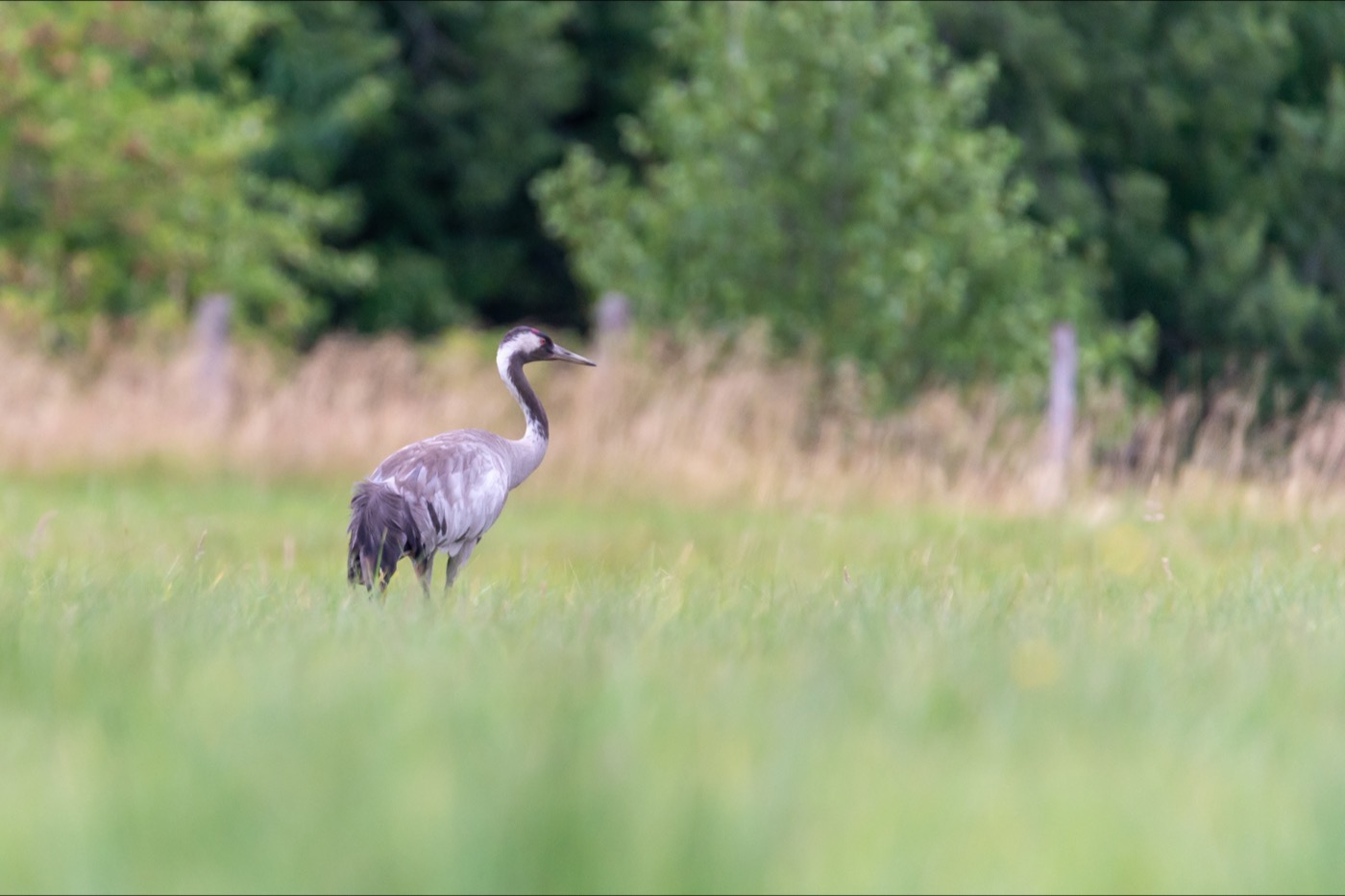
Common crane
At the Pietzmoor near Schneverdingen, the common crane has resettled as a breeding bird and raises its young here. Its red crown patch and trumpeting call give it away from a distance. From the viewpoints along the Bohlenweg, it can be watched foraging in the open moor, joined in spring by the courtship dances of the pairs.
 April to October
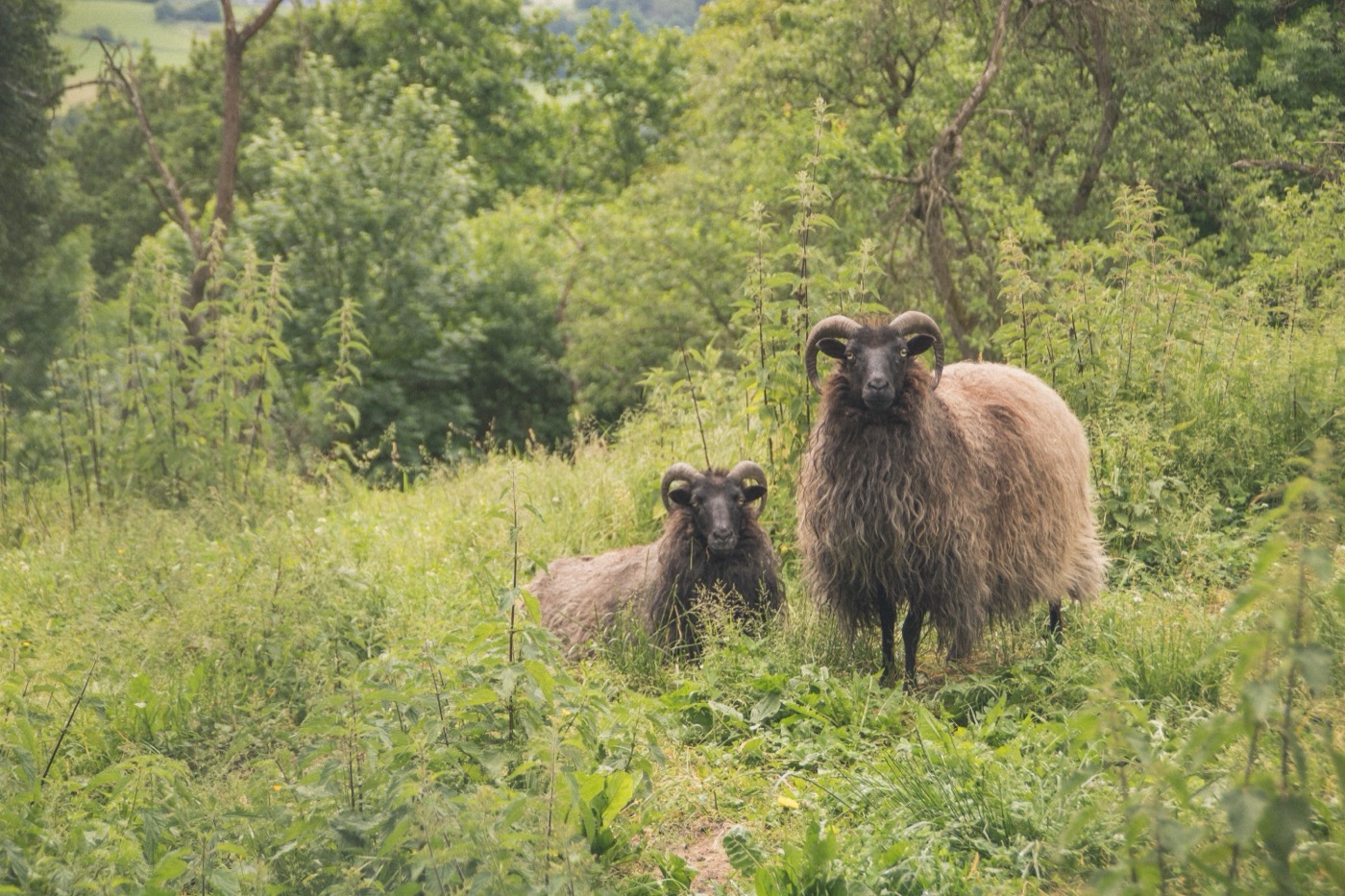
Heidschnucke sheep
Several shepherd flocks totaling more than 9,000 Heidschnucke sheep move through the Lüneburger Heide, their grazing keeping the open ground around Wilsede clear of grass and encroaching shrubs. The grey, horned animals with their coarse winter coat are easy to spot by their stocky build. From mid-May, shepherds drive the flock right through the car-free village of Wilsede Tuesday through Saturday around 5:30 p.m. back to the paddocks, and visitors can watch them from just a few steps away.
 March to April
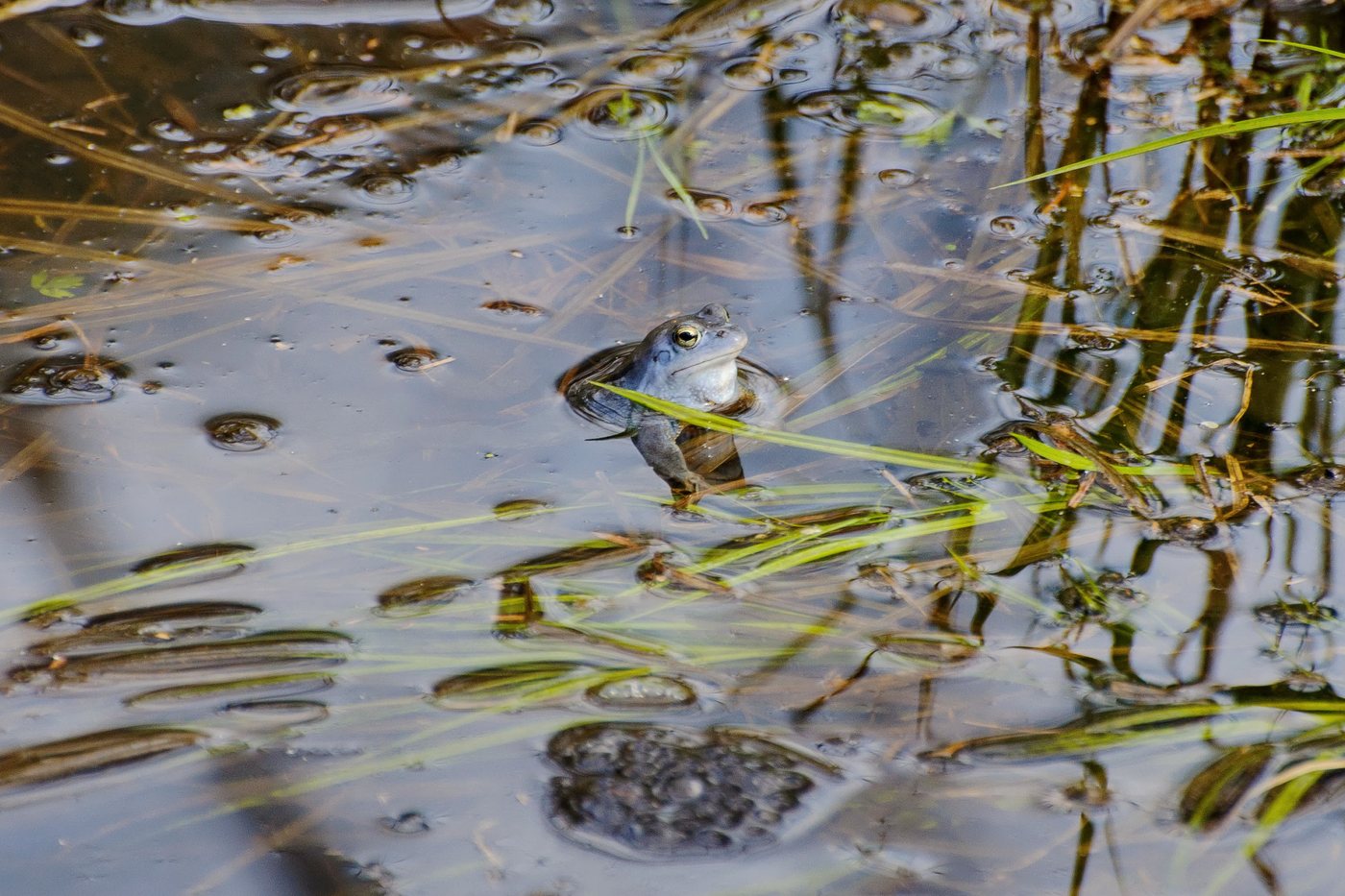
Moor frog
At the Pietzmoor near Schneverdingen, male moor frogs turn an intense blue for a few days during the mating season to attract females. Their peak spawning and calling period falls in the last third of March and the first third of April and depends heavily on the weather. It is best followed on a sunny day from the Bohlensteg boardwalk that runs straight through the raised bog.
 September to October
Red deer
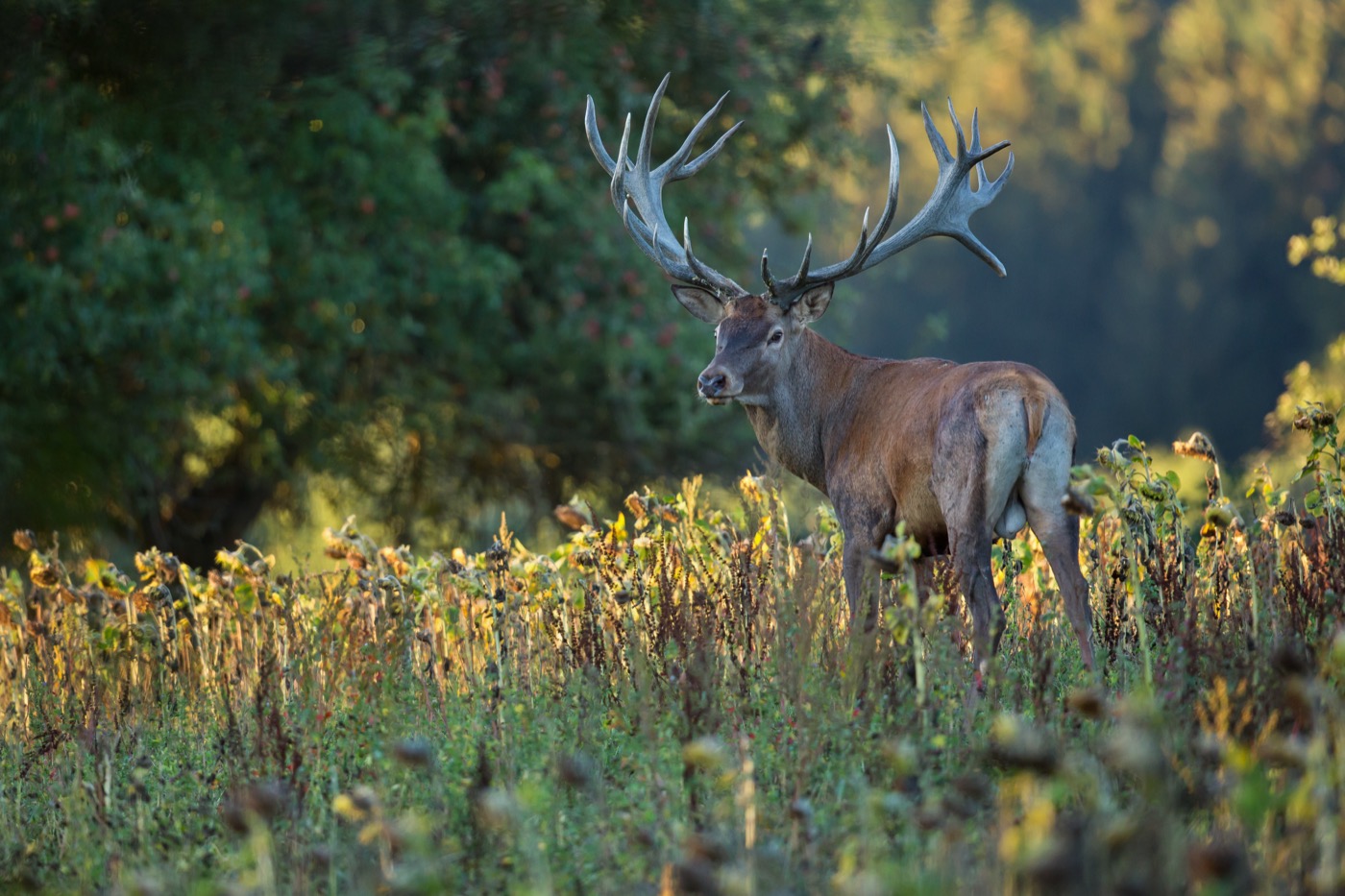
At the Wildpark Lüneburger Heide in Hanstedt-Nindorf, the red deer rut begins in late September and runs into October. The deep roaring of the stags carries far across the grounds as they fight over their harems. The park offers dedicated guided tours during the rut, where the spectacle can be followed from a safe distance.
Pictures: Freepik
What to check before booking
- Can you stand up inside?
- A barrel roof takes height away towards the sides. In the middle you can stand upright in most wagons, at the wall you cannot. How much room is left differs from wagon to wagon.
- Where is the bathroom?
- Some wagons have a shower room on board, others send guests to the sanitary building of the farm or site. Everything in between exists: a basin inside, a shower outside. The walk at night and in the rain is what makes the difference.
- How is it heated?
- Wood stove, electric heating or nothing at all. Without heating the season ends in autumn, with a stove someone has to put wood on. Whether the firewood is provided is stated in the listing.
- Are power and water connected?
- A wagon next to the farmhouse is usually on the mains. One standing alone in a meadow often runs on solar power and a water canister. That decides whether the light burns in the evening and whether devices can be charged.
- Where exactly does it stand?
- In the middle of a meadow, in the farmyard or on a campsite. That decides how quiet the night turns out. And how far you carry the luggage from the car.
Who it suits
Made for
Couples and solo travelers who like it small. On a cycling or walking tour the wagon makes a good stop, because in the evening you simply close the door. Anyone who wants little technology around them on holiday gets on well here.
Less so for
Whoever wants to spread out will sit on top of each other in here. For long stays with a lot of luggage the storage is missing, and the steps at the door mean the wagon is not step free. Where the bathroom is in the sanitary building, every trip at night goes outside.
Where it comes from
The wagon belongs to transhumant shepherding. Shepherds moved with their flocks along fixed droving routes and stayed with the animals day and night. The carts of the seventeenth century were so low that you could only get in on your knees, and only towards the end of the nineteenth century were they built high enough to stand in, with a bunk, a bench and a small table top. Southern German transhumant and herded shepherding has been on the German national inventory of intangible cultural heritage since 2020.
Good to know
The stove needs tending
A small wood stove does not heat itself. Where one is fitted you feed it by hand, and it rarely burns through until morning.
Water does not always come out of the wall
If the wagon stands on its own, the water comes from a canister or from the farm. The host says where you shower.
The morning starts early
The wagons usually stand on a farm or by a pasture, and animals are part of everyday life there. Birds and grazing animals are awake before any alarm clock.
Getting there
- 0 h 45 minHamburg
- 1 h 15 minHannover
- 3 h 30 minBerlin
- 4 h 00 minKöln
- 4 h 15 minFrankfurt am Main
- 7 h 15 minMünchen
Good to know
No fire on the heath
Lower Saxony's forest act bans every fire and all smoking in woodland, moor and heath and in dangerous proximity to them, from 1 March to 31 October. Heathland is named explicitly. Grilling is allowed all year round only at barbecue sites set up by the forest or land holder.
Leash Requirement
Dogs must be kept on a leash year-round in the protected heath areas and nature reserves. In the landscape protection areas of the open countryside, dogs must also be leashed during the breeding and rearing season, from April 1 to July 15.
Stay on the Marked Trails
The Naturschutzgebiet Lüneburger Heide may only be entered on foot, by bicycle, on horseback, or by horse-drawn carriage, and only on the marked trails. In the Pietzmoor, the loop trail crosses the sensitive raised bog on boardwalks.
Car-Free Core Area
Motorized traffic is not permitted in the reserve around Wilsede. Visitors park at the edges of the area, in places like Undeloh, Döhle, Volkwardingen, or Nieder- and Oberhaverbeck, and cover the last few kilometers on foot, by bicycle, or by carriage.
Care During the Breeding Season
Between April 1 and July 15, many ground-nesting birds and sensitive species such as the common crane are breeding and raising young. During this period, a stricter leash requirement applies in the region's landscape protection areas, and visitors should stay on the marked trails.
Swimming in the Heath Lakes
Swimming is possible at designated lakes in the region, such as the Brunausee in Bispingen, the Stichter See in Neuenkirchen, or the Pastor-Bode-Teich in Undeloh. The regional tourism board maintains an overview of the area's swimming spots and outdoor pools.
Protected landscapes
- Nature park
- Lüneburger Heide
Names and boundaries: © OpenStreetMap contributors.
