Camping in the Erzgebirge
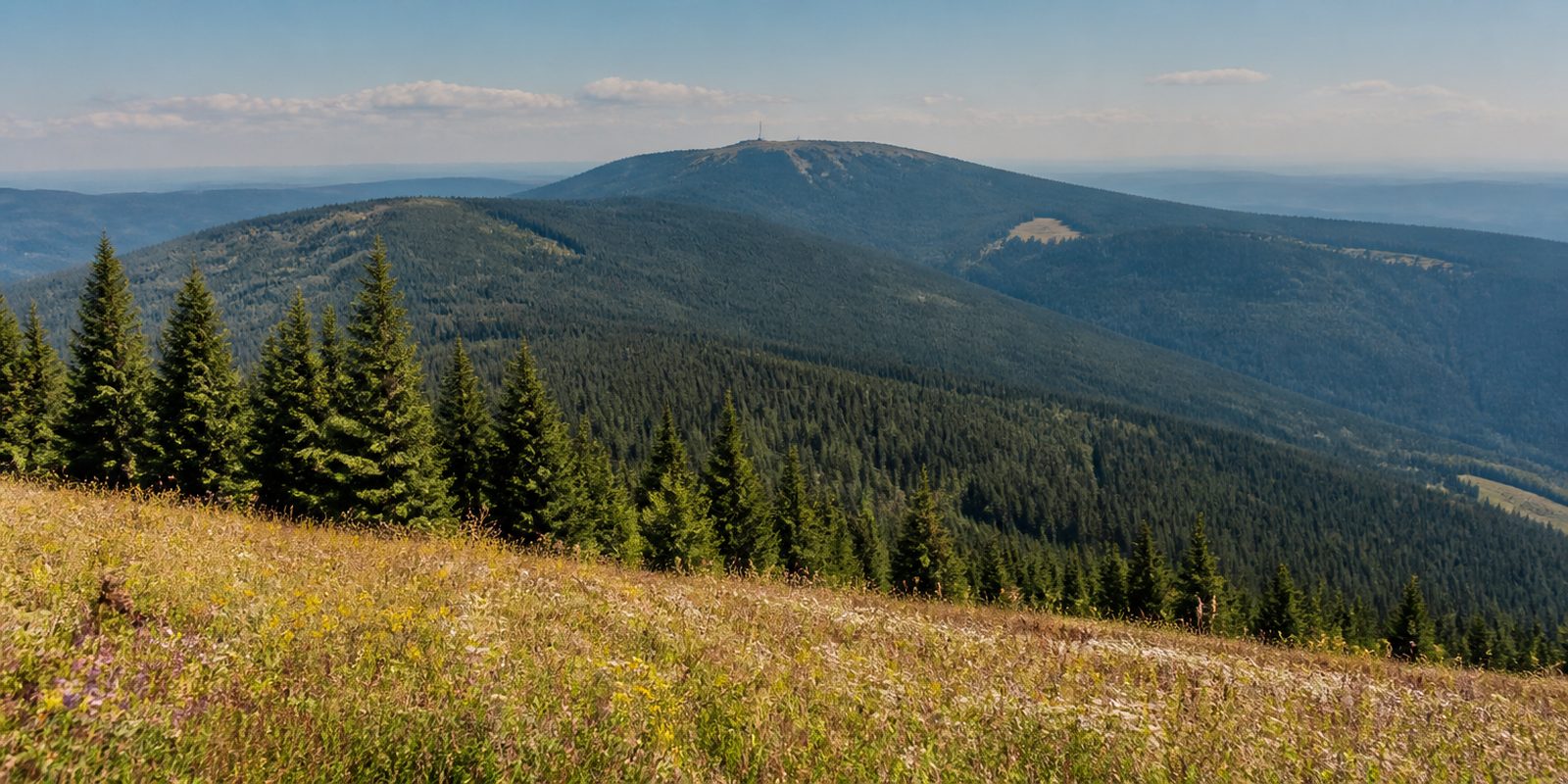
The Erzgebirge, the Ore Mountains, runs as a forested range along the Saxon-Bohemian border and reaches its highest point in Saxony at the Fichtelberg near Kurort Oberwiesenthal, 1,214.88 meters. Since 1168, when the first silver ore was discovered at Christiansdorf near Freiberg, generations of miners have reshaped the landscape with spoil heaps and artificial ponds. In 2019 UNESCO added 22 of these mining landscapes between Freiberg and the Bohemian town of Jáchymov to the World Heritage List as the Montanregion Erzgebirge/Krušnohoří. The Naturpark Erzgebirge/Vogtland protects 1,495 square kilometers of mountain meadows and bogs along the ridge. The landscape changes within a short distance, from the narrow valleys cut by the Zschopau and Mulde rivers to the open highlands around Oberwiesenthal, and in towns like Seiffen and Annaberg-Buchholz the craft traditions that grew out of mining are still practiced today.
The year in this region
September: Black storks depart on migration
From late summer, black storks leave their breeding grounds in the quiet forests of the Erzgebirge and head toward Africa, where they spend the winter. Since the mid-1990s the population in Saxony has stabilized at 40 to 60 breeding pairs, after the species had long been considered absent here. In the Osterzgebirge, wooded areas such as the Gimmlitztal are known refuges for these shy birds.
In the middle of the month the sun rises at 6:42 AM and sets at 7:24 PM. That leaves 12 hours and 41 minutes of daylight.
Water and air: Open-Meteo, measured averages. How busy: share of school holidays 2027 across all sixteen federal states. Nature dates: German Weather Service, phenological observations 2014 to 2026 at 145 stations in the region, typical day.
Tours in this region
Marked tours that fit into a day from a site, and one multi day tour per kind.
- Hiking
Europäischer Fernwanderweg E3, Sachsen
Section Mitte
The Saxon middle section of the E3 begins at Dörfel near Schlettau and ends at Holzhau. Along the way lie Annaberg-Buchholz below the Pöhlberg, Marienberg, Zöblitz and the toymaking village of Seiffen. A blue bar on white marks the route, mostly on forest tracks between spruce stands and mountain meadows. The mining towns come one after another.
104 kmMulti day tour
- Hiking
Fernwanderweg Görlitz – Greiz
Section Glashütte – Frauenstein
Between Glashütte and Frauenstein the trail crosses the eastern Erzgebirge, climbing out of the Müglitztal onto the heights. Glashütte lives from watchmaking, while Frauenstein holds the largest castle ruin in Saxony and a Renaissance palace with the Silbermann museum. A blue dot points the way.
23.5 km
- Cycling
Euregio-Egrensis-Radfernweg
The Saxon section starts at the Göltzschtalbrücke near Netzschkau, the largest brick bridge in the world. From there it uses mostly quiet back roads across the Vogtland, passes the Muldenberg reservoir and climbs by way of Morgenröthe-Rautenkranz to Johanngeorgenstadt. The closer the ridge, the hillier it gets.
117 km
- Mountain biking
Stoneman Miriquidi
Nine summits on both sides of the border, from the Auersberg over the Fichtelberg to the Keilberg on the Czech side. The riding goes over forest roads, short stretches of singletrack and the villages in between, always following the blue bike symbol on yellow. Every summit has a stamp waiting.
116.5 km4400 m ascentMulti day tour
- Mountain biking
Bergstadt-Trail Annaberg-Buchholz
Counterclockwise around Annaberg-Buchholz, taking in the Pöhlberg climb known from the Stoneman Miriquidi. Up top stand the basalt columns that locals call butter churns; down below wait the St. Annenkirche, the market square and the Frohnauer Hammer. Short, but always up or down.
25 km780 m ascentLoop tour
- Mountain biking
Erzgebirgs-Bike-Marathon
Seiffen is the village of nutcrackers and carved wood. Signposted all year, the loop runs over the Wettinhöhe towards Hirschberg, drops into the Seiffener Grund and touches the Bohemian border before climbing again at the Reicheltberg. The finish is the ramp called Alp de Wettin.
25.2 km800 m ascent
- Cross country skiing
Tellerhäuser Skiwanderweg
Tellerhäuser sits above 900 metres, in the middle of one of the largest unbroken forests in Saxony. Groomed for classic style, the track runs from there along the ridge country to Oberwiesenthal, with links towards Boží Dar and Markersbach. Snow stays late here.
13.7 km
Tours: © OpenStreetMap contributors, ODbL. Lengths computed from the mapped course, as of September 12, 2026.
Animals you can meet here
 September to October
Red deer
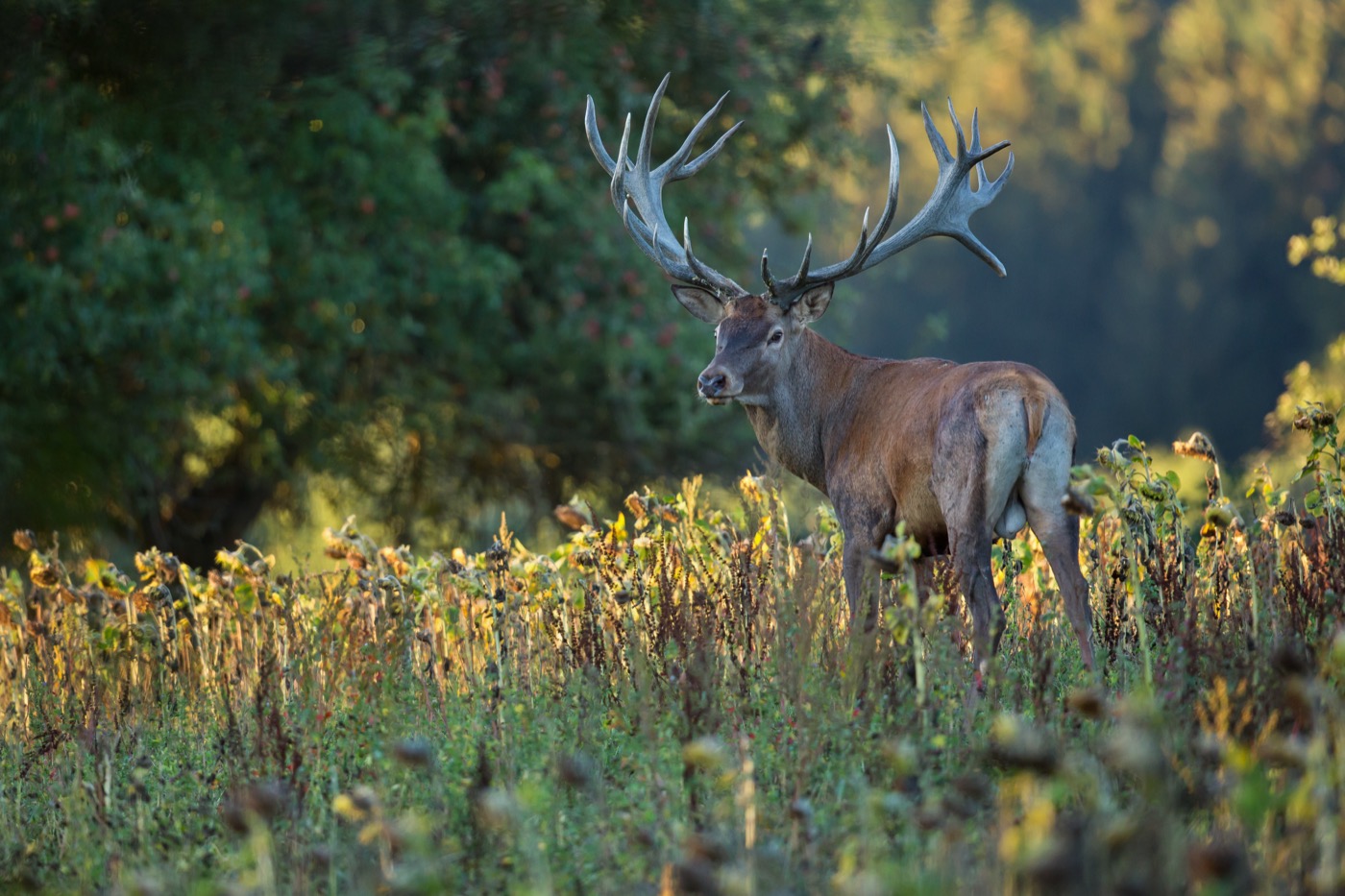
At the Wildgehege enclosure near Obercarsdorf, red deer can be watched up close all year round. In September and October the rut begins: stags roar loudly to mark their territory and keep rivals away. Visitors can also pick up a shed antler here.
 April to August
Black stork
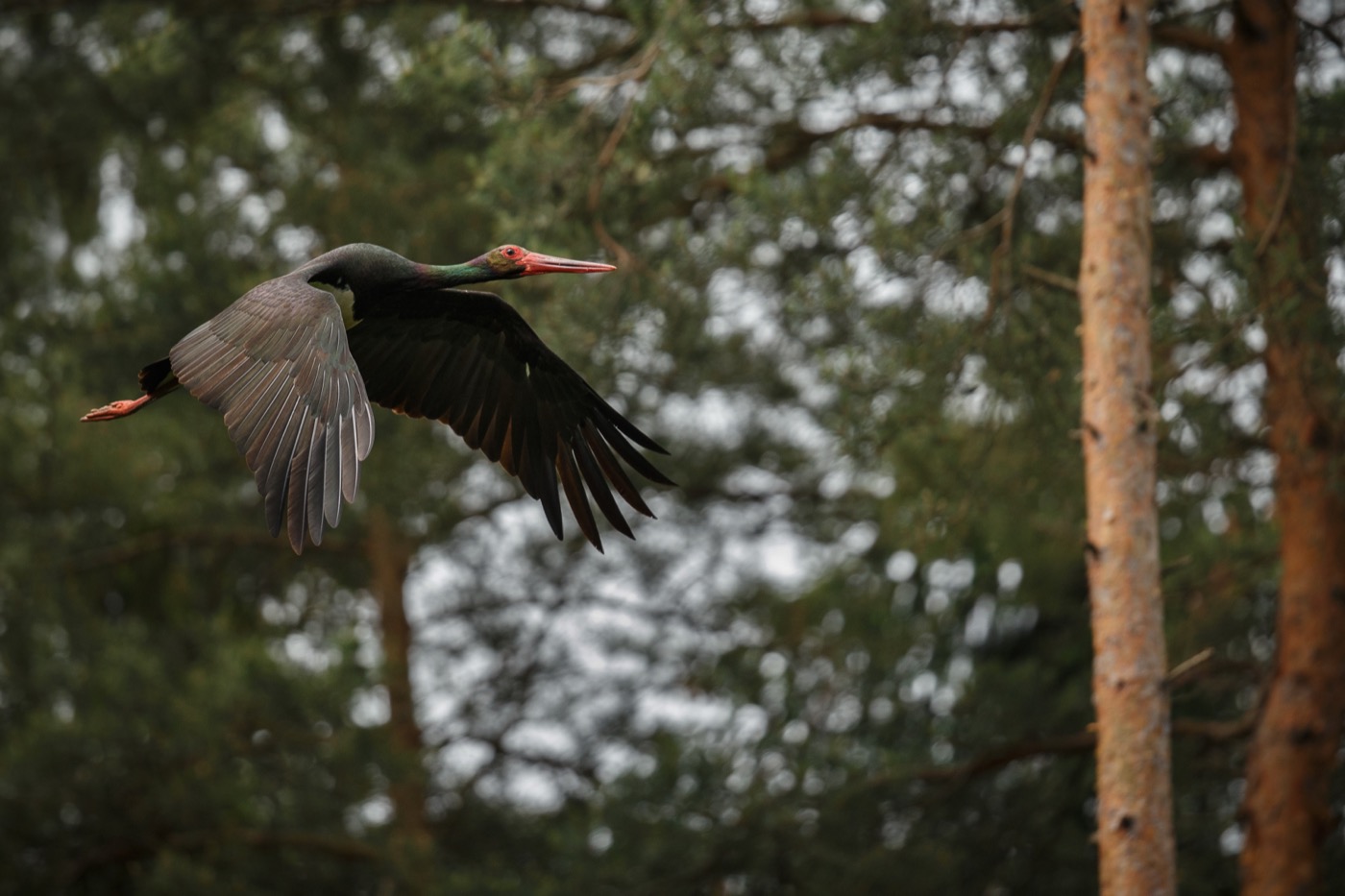
In the quiet forests of the Osterzgebirge, around the Gimmlitztal valley, the black stork nests high in old trees. Its glossy black plumage and bright red beak set it apart from the paler white stork. From April to August it raises its young here, best spotted from the marked trails.
 May to September
Fire salamander
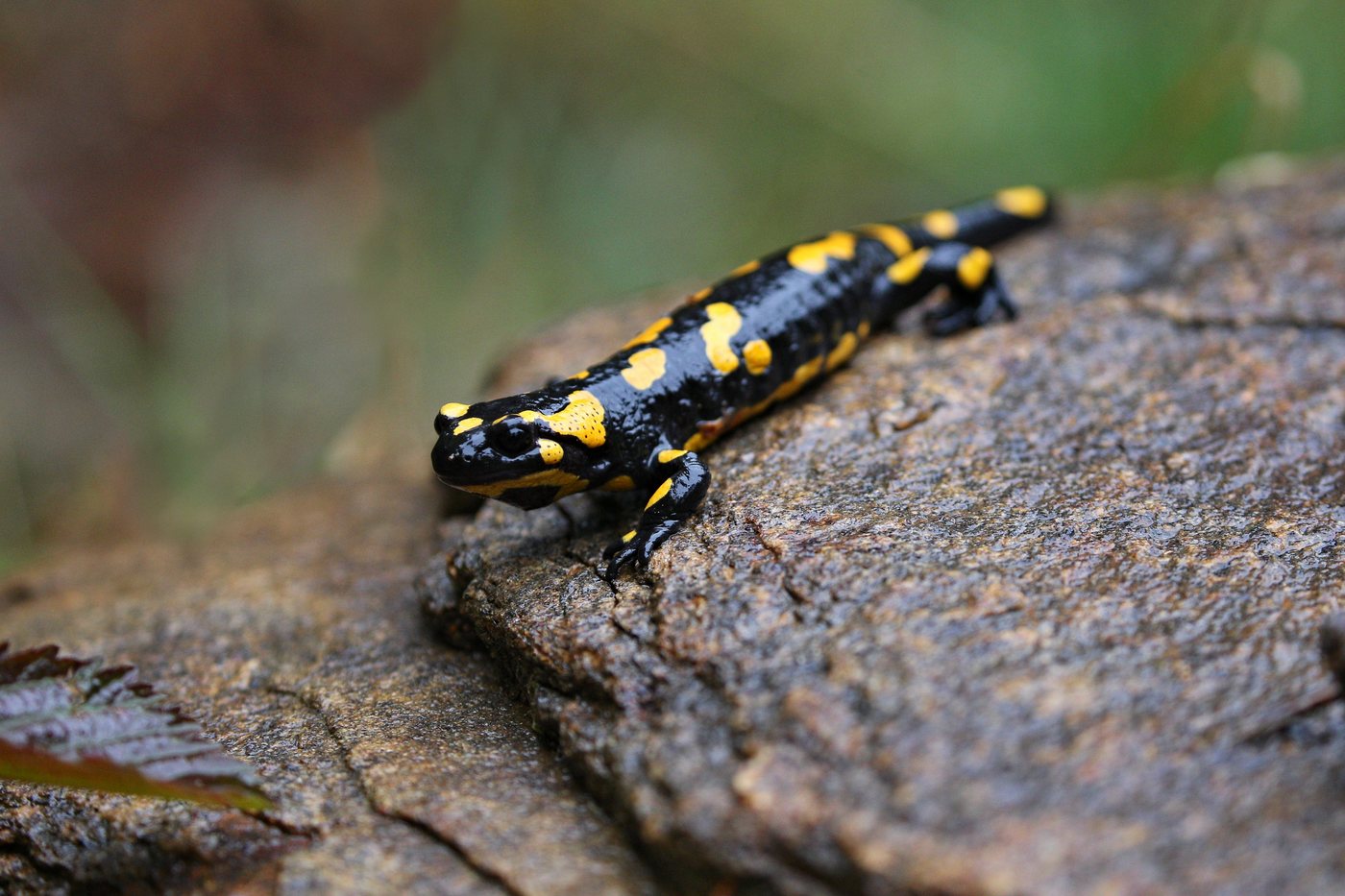
In the shaded stream valleys around Schwarzenberg and Breitenbrunn, the fire salamander lives in old deciduous and mixed forest. Its glossy black skin with bright yellow spots makes it unmistakable. From May to September it is out mostly after rain at dusk, when females deposit their larvae directly into the cool, clear streams.
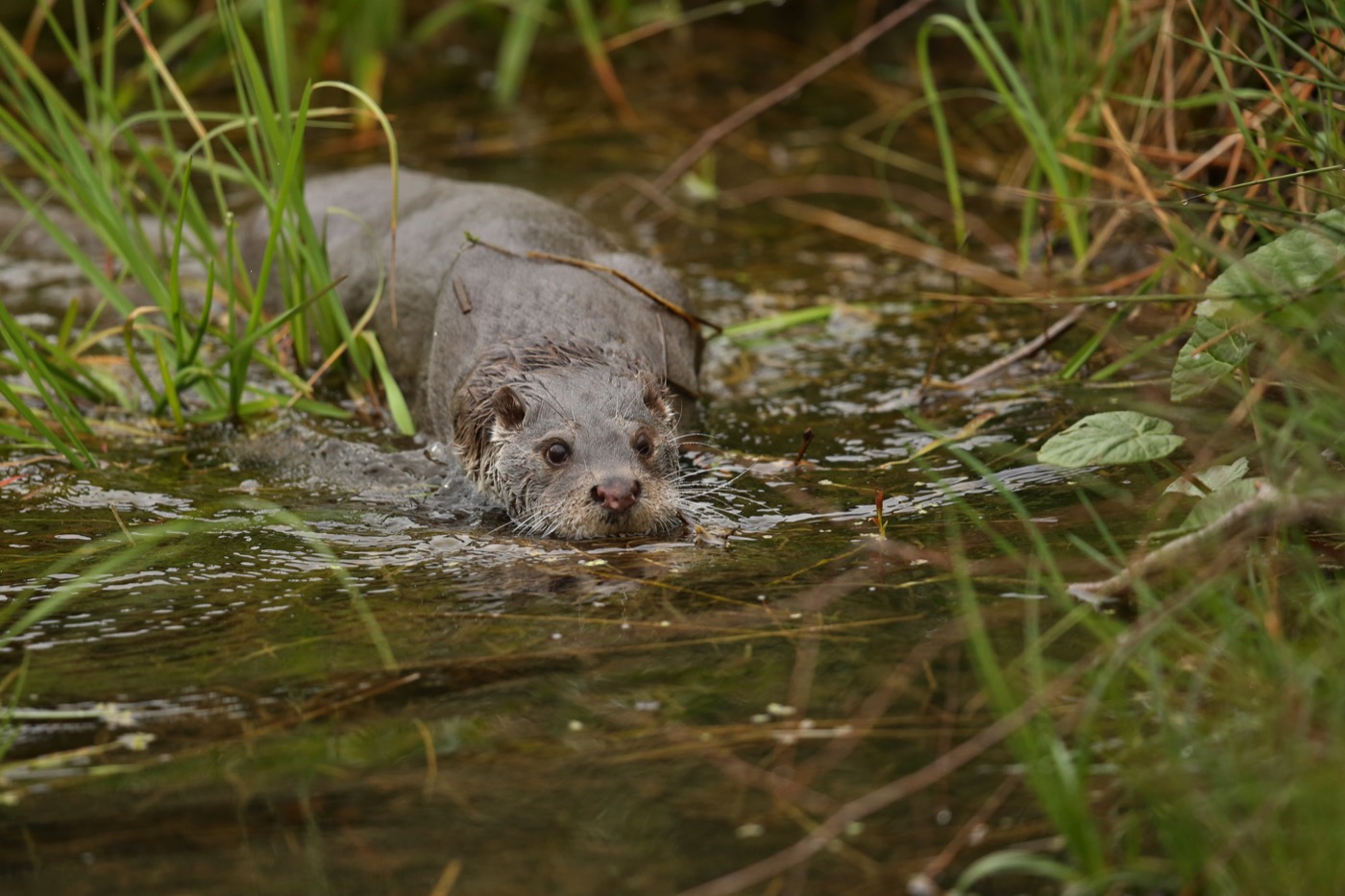 October to March
Otter
Along the Zwickauer Mulde river near Aue, the Eurasian otter makes its home, most active at dusk and after dark. Its thick, dark brown fur with a paler throat and short, powerful webbed legs are typical of it. From October to March, tracks in snow or mud along the bank are often the only sign of its route along the river.
Pictures: Freepik
Getting there
- 1 h 45 minLeipzig
- 3 h 30 minBerlin
- 4 h 15 minMünchen
- 4 h 30 minFrankfurt am Main
- 5 h 30 minHamburg
- 6 h 00 minKöln
Good to know
Fires in the forest need permission
Under section 15 of the Saxon forest act, a fire in the forest or less than 100 meters from it is allowed only at a fire pit built or approved by the forest authority. Anything else needs a permit. In the Erzgebirgskreis the district office issues it. Smoking in the forest is not permitted at any time of year.
Dogs stay off the ski track
One rule is plain on the Kammloipe between Johanngeorgenstadt and Schöneck. Walkers and dogs must not step onto the groomed track anywhere across its width, as the safety notes for the long distance trail put it.
Motorhomes in the Nature Park
Under the Naturparkverordnung Erzgebirge/Vogtland, the nature park's governing regulation, parking motorhomes and caravans or camping outside of designated sites requires a permit. This rule applies across the entire 1,495 square kilometer nature park area between the Vogtland and the Erzgebirge.
Crossing the Border Without Checks
The Czech Republic has been part of the Schengen Area since December 21, 2007, and systematic checks on people at the border with Saxony have ended since then. Cycling routes such as the Euregio-Egrensis-Radfernweg therefore cross the border without a barrier, for example near Johanngeorgenstadt.
Whitewater on the Zwickauer Mulde
The stretch of the Zwickauer Mulde between Blauenthal and Aue is designated as whitewater of grade II to IV and requires matching experience. Calmer sections further downstream, for instance between Zwickau and Glauchau, are better suited to relaxed canoe trips.
Quiet for the Black Stork
The black stork is sensitive to disturbance and nests in quiet, old-growth forests of the Erzgebirge, avoiding any commotion near its nest trees. In known breeding areas such as the forests of the Osterzgebirge, visitors should therefore stay on marked paths.
About this region
The Erzgebirge is a forested mountain range along the Saxon-Bohemian border, with the Fichtelberg as its highest point in Saxony. Here you'll find pitches on working farms, meadow camping and sites at the forest edge.
Sites are busiest in summer, when the mountain meadows are in bloom, quieter in spring during the snowmelt. When a site is open is shown in each listing's calendar.
