Camping in the Eifel
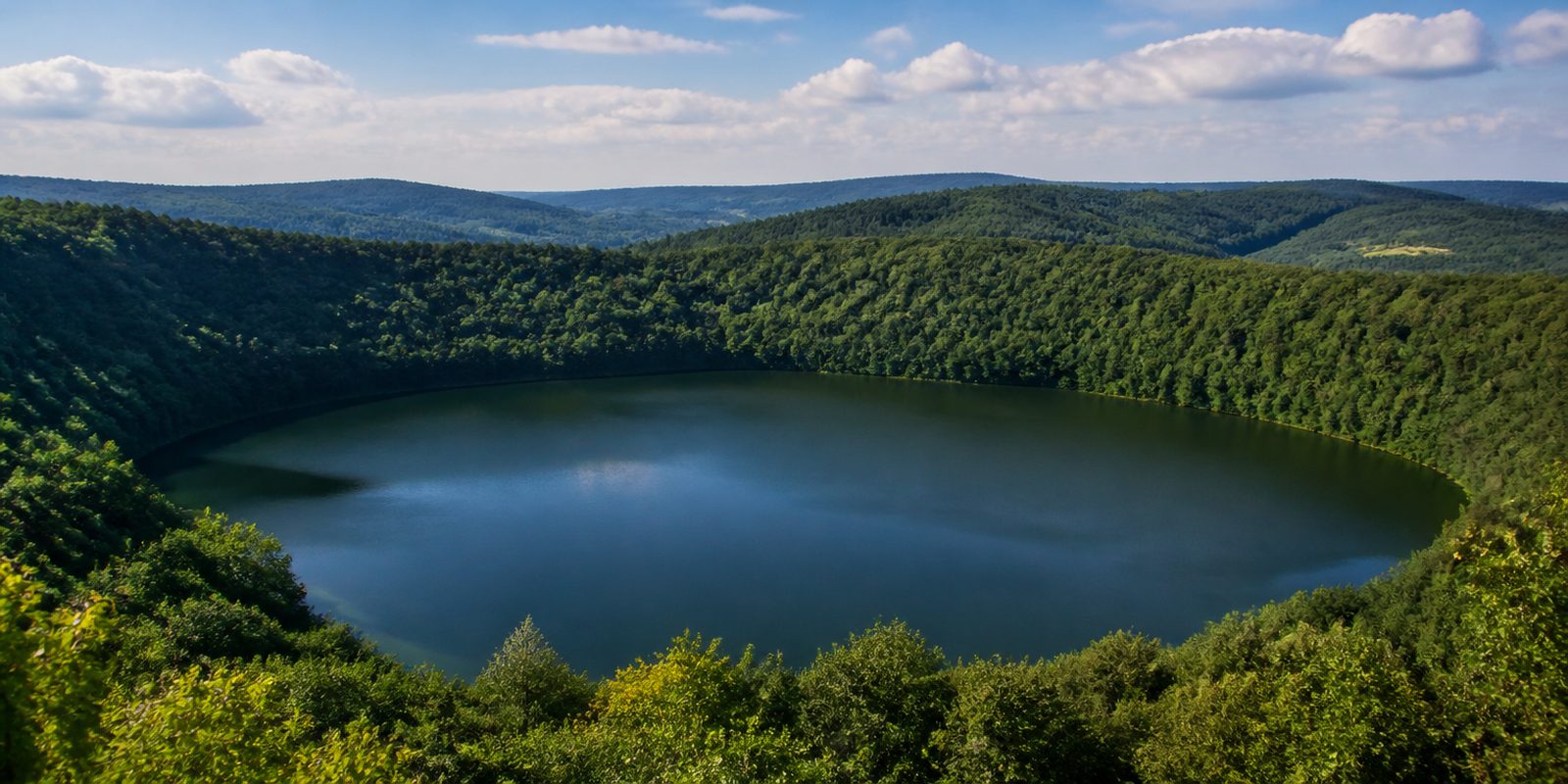
The Eifel is a low mountain range between Aachen, the Rhein, the Mosel and the Belgian border, spread across Nordrhein-Westfalen and Rheinland-Pfalz. Volcanoes shaped it. Maars mark the surface, and between them lie the limestone basins of a Devonian coral sea. What also stands out is the density of protected areas here. Within a small space lie the only national park in Nordrhein-Westfalen, the UNESCO Global Geopark Vulkaneifel and the first Dark Sky Park in Germany recognized by the International Dark Sky Association. The Vulkaneifel has 77 documented maars, eleven of them filled with water today. The youngest formed 10,900 years ago.
84 places and units in this region
Places in this region

The year in this region
September: Red Deer Rutting Season
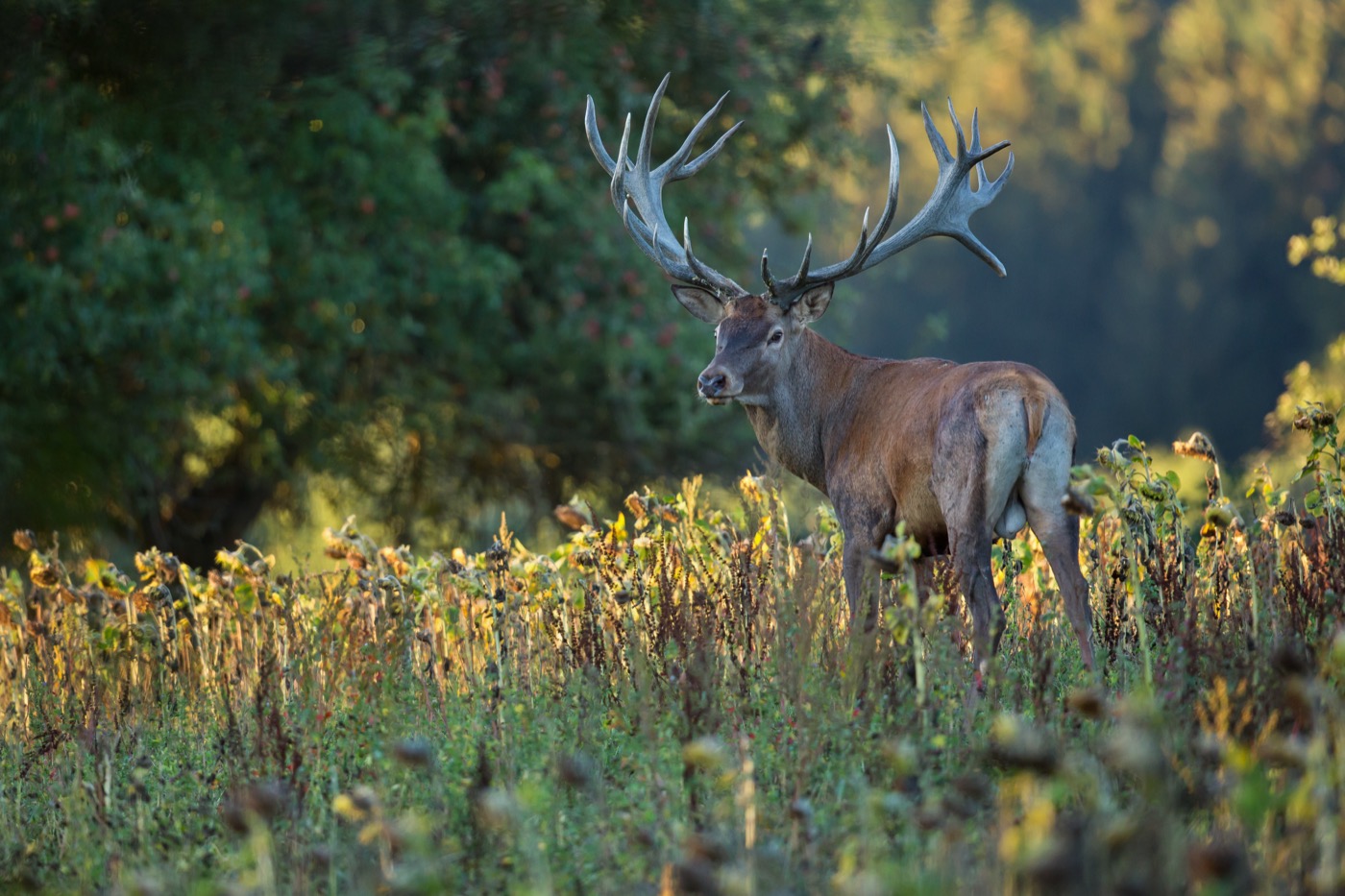
In Central Europe, the rut begins in early September and lasts five to six weeks. About 1,000 red deer live in Nationalpark Eifel; from the Rothirsch-Aussichtsempore, a viewing platform near Dreiborn on the Dreiborner Hochfläche, you can hear the stags bellowing and see the deer. Park rangers staff the platform throughout the entire rutting season.
In the middle of the month the sun rises at 7:08 AM and sets at 7:49 PM. That leaves 12 hours and 41 minutes of daylight.
Water and air: Open-Meteo, measured averages. How busy: share of school holidays 2027 across all sixteen federal states. Nature dates: German Weather Service, phenological observations 2014 to 2026 at 194 stations in the region, typical day.
Tours in this region
Marked tours that fit into a day from a site, and one multi day tour per kind.
- Hiking
Eifelsteig
Straight through every Eifel landscape, from Kornelimünster near Aachen to Trier: moor and heath in the Hohes Venn, the rocky Rur valley with its reservoirs, the limestone Eifel, then the maars and volcanic cones of the Vulkaneifel. At the end it passes through the valleys of the Lieser and the Kyll and along the red sandstone cliffs north of Trier. The ground changes with every landscape.
315.6 kmMulti day tour
- Hiking
Wildnis-Trail
Four days straight across the Eifel national park, from Monschau-Höfen to Hürtgenwald-Zerkall. The route crosses the open Dreiborner Hochfläche, the beech forest of the Kermeter and finally the gnarled oak wood at Hetzingen, with views again and again over the Rursee, the Obersee and the Urftsee. Here forest is allowed to be forest again.
83.9 kmMulti day tour
- Hiking
Narzissenroute
In spring the valley meadows of the Perlenbach and the Fuhrtsbach fill with thousands of wild daffodils, yellow right up to the edge of the wood. The route starts in Monschau-Höfen and follows the streams through the nature reserve, on soft meadow and forest paths. From April on it is at its best.
9.8 kmLoop tour
- Hiking
7-Maare-Weg
Seven maars in one go, setting out from Schalkenmehren: the Schalkenmehrener, the Weinfelder and the Gemündener Maar of the Daun group, then Hitsche, Dürres Maar, Holzmaar and Pulvermaar. Some still hold water, others silted up long ago and show only as round hollows in the forest. The Pulvermaar is the deepest in the Vulkaneifel.
19.1 km
- Hiking
Struffeltroute
Section Eifel
The start is at the filter works of the Dreilägerbach reservoir, then up onto the treeless Struffelt, an open heath at around 450 metres. Boardwalks carry the route across the wet moor, low heather all around, before stream valleys and forest take over again. It is a partner trail of the Eifelsteig.
9.7 kmLoop tour
- Hiking
EifelSpur Toscana der Eifel
South of Blankenheim, between Alendorf and Ripsdorf, lie the limestone grasslands of the Lampertstal, thick with juniper. The dark columns gave the valley its nickname. Orchids flower here in early summer and gentian late in the season, and the Kalvarienberg rises in the middle of it.
14.7 km328 m ascent
- Cycling
Vennbahn
Section Radweg
The route lies on the trackbed of an old coal and iron ore railway and runs from Aachen through Belgium to Troisvierges in Luxembourg. Because it follows the rail line the gradient mostly stays under three per cent, nine tenths is asphalt, and big viaducts such as the one at Reichenstein carry it over the valleys. Moor, hedgerows and pasture in between.
124.9 km
- Cycling
RurUfer-Radweg
From the source at the Signal de Botrange, the highest point in Belgium, to the mouth on the Maas at Roermond. After the Hohes Venn comes the old cloth town of Monschau, then the Rursee with its dam, later Nideggen, Düren and Jülich. The river grows wider all the way.
178 kmMulti day tour
- Cycling
Maare-Mosel-Radweg
From the old station in Daun the route follows disused railway lines by way of Wittlich to Bernkastel-Kues on the Mosel. Four tunnels lie on the way, two of them over 500 metres long, along with a series of viaducts over the Eifel valleys. It is not all downhill: beyond Daun the path climbs to about 480 metres at the Großes Schlitzohr tunnel, and past Gillenfeld it rises again towards Laufeld. After that it rolls down to the Mosel.
59.3 km
Tours: © OpenStreetMap contributors, ODbL. Lengths computed from the mapped course, as of September 12, 2026.
Animals you can meet here
 September to October
Red deer
On the Dreiborner Hochfläche in Eifel National Park stands the wheelchair-accessible Rothirsch-Aussichtsempore near Dreiborn, the most reliable spot for a sighting. The red deer is recognized by its massive antlers and reddish-brown coat, which darkens in autumn. In September and October the stags fight for mates during the rut, their roaring carries across the plateau, and national park rangers are stationed at the platform throughout these weeks.
 April to September
Common wall lizard
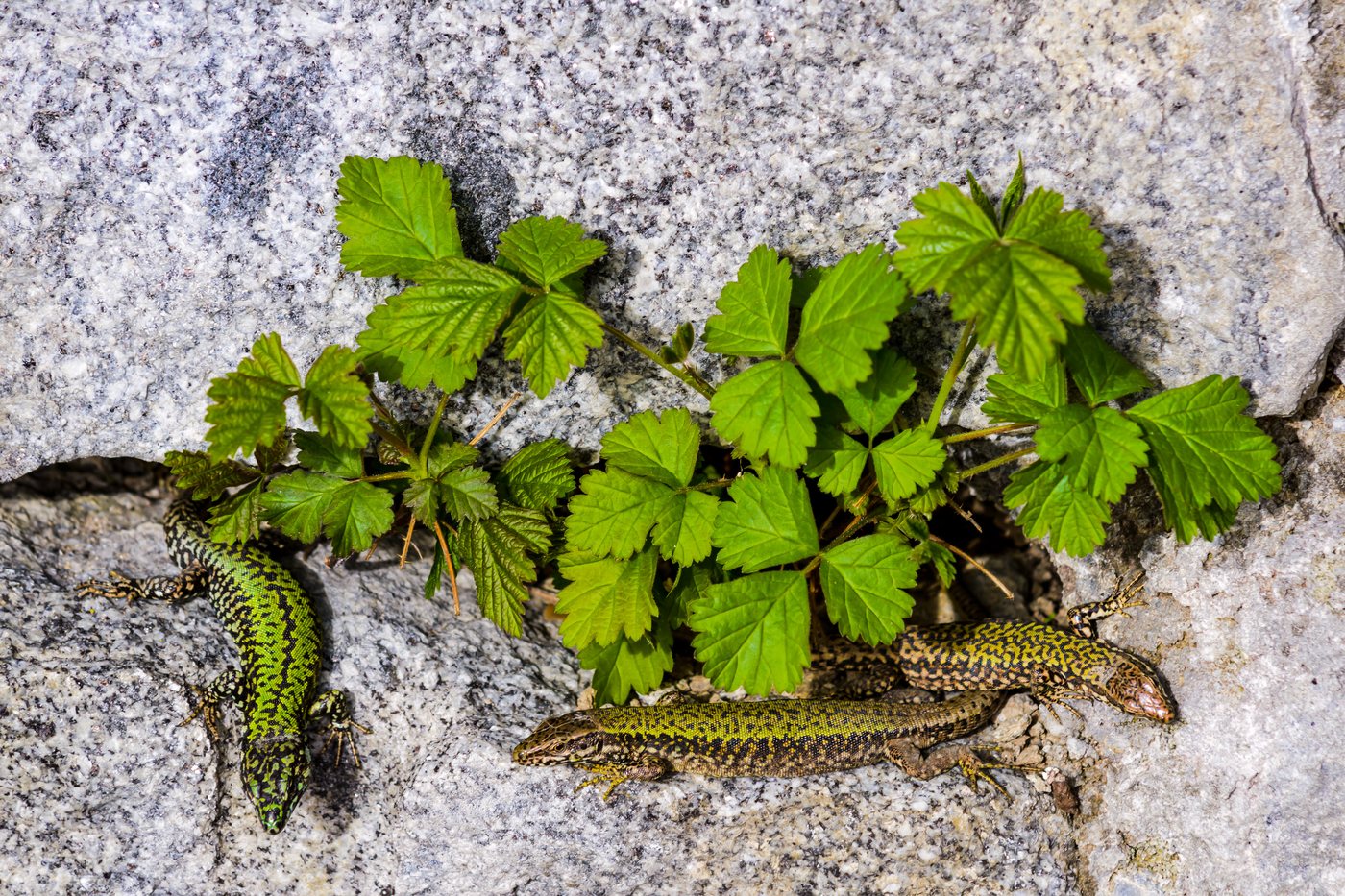
Along the Urft and Rur reservoirs in Eifel National Park, the common wall lizard occupies the rocks and open stone surfaces of the shoreline, with several thousand animals forming the northernmost population of its species in Europe. It is recognized by its slender build and finely patterned, brownish markings. From April to September it sits motionless on sun-warmed stones and vanishes in an instant into cracks and crevices when approached.
 January to December
Eagle owl
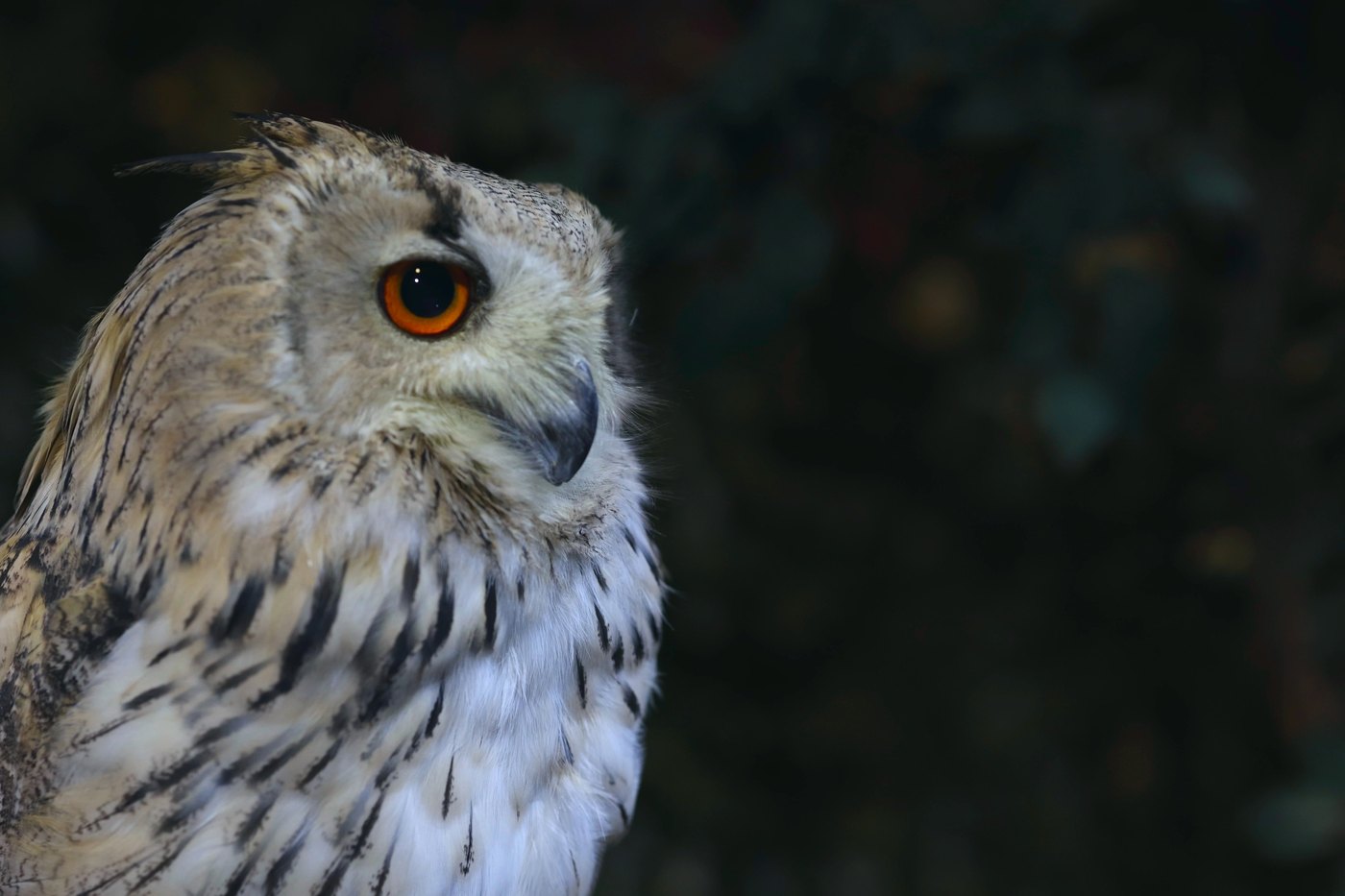
The Eurasian eagle-owl nests in the Gerolsteiner Dolomiten near Gerolstein and on other rock faces and in quarries of the Kalkeifel and Rureifel, Europe's largest owl with orange eyes and prominent ear tufts. Its deep, far-carrying call is heard most often in autumn and winter. Pairs form between October and November, and breeding usually begins the following March.
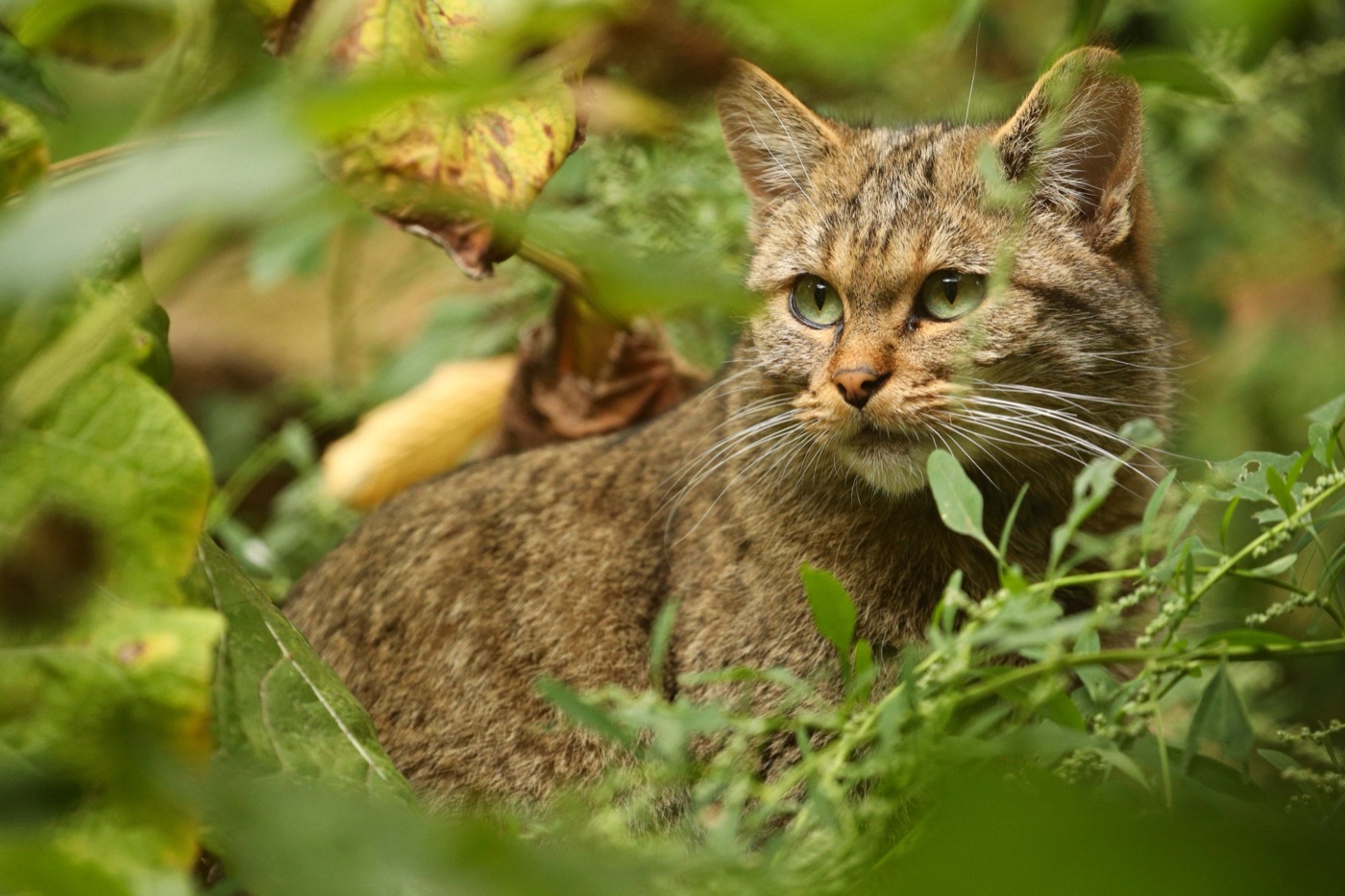 all year
European wildcat
In the Kermeter, the largest contiguous mixed deciduous forest in Eifel National Park, and in the adjoining open land, the European wildcat lives year round, with at least 121 animals confirmed there. It differs from a domestic cat in its bushy tail with broad dark rings and a blunt tip. It stays so elusive that guided tours and tracking in the Kermeter offer better odds than a chance encounter.
Pictures: Freepik
Dark skies
Places certified by DarkSky International.
Nationalpark Eifel
The only dark sky place in the densely settled west. There are guided nights at the Vogelsang observatory, but from the SternenBlicke viewpoints around the national park you also see thousands of stars on a clear night.
Getting there
- 1 h 00 minKoblenz
- 1 h 00 minKöln
- 2 h 15 minFrankfurt am Main
- 5 h 00 minHamburg
- 5 h 45 minMünchen
- 6 h 30 minBerlin
Good to know
Leash Requirement in the National Park
In Nationalpark Eifel, dogs must be kept on a leash on every trail. It is better to leave your dog at home when visiting the Rothirsch-Aussichtsempore near Dreiborn, since the red deer perceive dogs as predators. In the Hohes Venn nature reserve, dogs are allowed only on selected trails and must be leashed; at the Rursee, the Sonnenstrand Eschauel has its own dog beach.
Staying on Trails and Cycling
In Nationalpark Eifel, stay on the marked trails; cycling is allowed only on designated routes. The area in front of the Rothirsch-Aussichtsempore near Dreiborn is off-limits, and visitors should not lean into the viewing window. Violations of the national park rules can be penalized with warnings and fines.
No Open Fires in the National Park
Open fires, grilling, and smoking are not permitted in Nationalpark Eifel. The rule applies across the entire protected area of about 11,000 hectares, including the shores of the Rursee and Urftsee. Take your trash with you, and do not collect anything from the park.
Overnight Stays Outside the National Park
Camping and overnight stays in a vehicle are not allowed in Nationalpark Eifel. RV sites and campgrounds are located in the surrounding towns, in the Nordeifel as well as in the Vulkaneifel and the Ourtal. Eifel Tourismus GmbH and Nordeifel Tourismus GmbH each maintain their own directories of these sites.
Swimming at Designated Spots
Swimming is allowed only at designated spots. At the Rursee, these include the Eiserbachsee near Rurberg, the bay at Woffelsbach, the Sonnenstrand Eschauel, and the Naturerlebnisbad Einruhr; in the Vulkaneifel, there are natural outdoor swimming areas at the Gemündener Maar, the Schalkenmehrener Maar, and the Meerfelder Maar, as well as at the 74-meter-deep Pulvermaar. At the Laacher See, swimming is allowed only at the campground beach, and motorboats are banned there.
Boardwalks and Zones in the Venn
Boardwalks cross the moorland, for example in the 118-hectare Struffelt nature reserve near Roetgen, which sits above 450 meters. The adjoining Hohes Venn is divided into zones: in B zones, walking is allowed on marked trails; C zones require a certified nature guide; D zones are closed to visitors. The starting point is the Naturparkzentrum Botrange.
Protected landscapes
- National park
- Eifel
- Nature park
- Natur- und Geopark VulkaneifelHohes Venn-EifelRheinlandSüdeifel
Names and boundaries: © OpenStreetMap contributors.
About this region
The Eifel is a low mountain range between Aachen, Rhein and Mosel, shaped by volcanoes and maars. Here lies Nordrhein-Westfalen's only national park and Germany's first Sternenpark. Campsites and pitches are found by maars, reservoirs and in river valleys.
Autumn is busiest, with the beech forests turning colour and the red deer rut, while winter away from the cross-country ski trails is quietest. When a site is open is shown in each listing's calendar.
