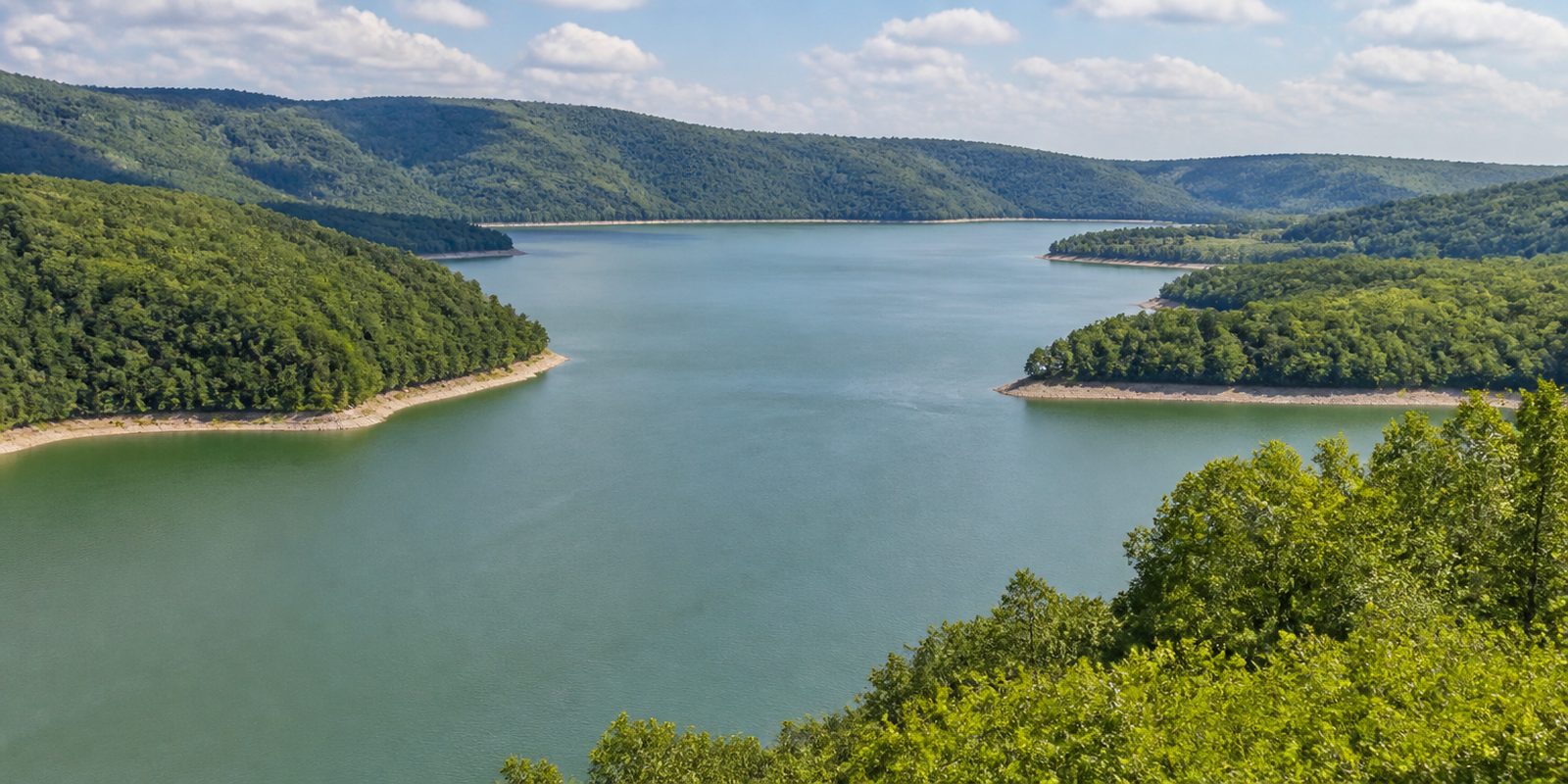
Camping at the Edersee and Kellerwald
The only national park in Hesse stands here. Its old beech forests have been UNESCO World Natural Heritage since 2011. Across 1,467 hectares the forest grows without any use, and no roads or settlements cut through it. More than 1,000 springs and streams belong to it, and the steep slopes carry rocky outcrops and block scree. In between lies the Edersee, 27 kilometers long, whose water level rises and falls to plan every year and in doing so exposes broad shores and the remains of three villages flooded in 1914. Remnants of primeval forest beside a large working reservoir exist nowhere else in Hesse.
12 places and units in this region
Places in this region

The year in this region
September: The Stags Bellow
From September to mid-October is the rutting season for red deer, and the stags' calls carry far through the beech forests. During these weeks the national park runs the tours Where the Stags Bellow, in the morning from 6 a.m. and in the evening from 6 p.m., starting from entrances including Kirchweg in Edertal-Bringhausen, KellerwaldUhr in Frankenau, and Himmelsbreite in Vöhl-Harbshausen. The red deer is considered the flagship species of the northern Hesse forest landscape.
In the middle of the month the sun rises at 6:58 AM and sets at 7:40 PM. That leaves 12 hours and 42 minutes of daylight.
Water and air: Open-Meteo, measured averages. How busy: share of school holidays 2027 across all sixteen federal states. Nature dates: German Weather Service, phenological observations 2014 to 2026 at 28 stations in the region, typical day.
Tours in this region
Marked tours that fit into a day from a site, and one multi day tour per kind.
- Hiking
Urwaldsteig Edersee, Hauptroute
From Schloss Waldeck the trail takes narrow natural paths across the steep slopes around the lake, through the Waldecker Bucht, the Bärental and over the Scheid peninsula. The southern shore holds the national park's beeches, the northern shore dry oak woods, where the Knorreichensteig runs past old gnarled trunks. They call the Hagenstein the Loreley of the Eder.
66.8 kmMulti day tour
- Hiking
Kellerwaldsteig, Hauptroute
Twelve stages from Frankenau, marked with a white K on red, through the Kellerwald and once around the Edersee. The route keeps to stream valleys, old beech forest and long ridges, touching Herzhausen, Waldeck, Bad Zwesten and Densberg. Beech decides almost everything here.
161.5 km5945 m ascentMulti day tour
- Hiking
Ederseeweg
The route sets out from the Bergpark Wilhelmshöhe in Kassel, crosses the Habichtswald by way of Schauenburg-Elgershausen to Niedenstein, then continues over Bad Emstal and Naumburg into the Waldecker Land. It reaches the Edersee through Selbach and the Reiherbach valley and ends at the water in Nieder-Werbe. Forest covers most of the way.
45.4 km
- Cycling
Edersee-Radrundweg
Mostly asphalt with gravelled forest tracks in between, always between water and woodland: Harbshausen, Asel, Bringhausen, Rehbach, the dam, Waldeck, Nieder-Werbe and Herzhausen sit along the ring. From the Asel bay up to Basdorf the route gains real height, while the southern side between the dam and Herzhausen stays almost level. Past the climbing park it hugs the shore.
50.8 km
- Cycling
Ederradweg
From Erndtebrück in the Rothaargebirge to Baunatal-Guntershausen, some 170 kilometres downhill. The route follows the Eder to its confluence with the Fulda at Edermünde-Grifte and keeps mostly to quiet cycle and farm tracks beside the meandering river. Frankenberg, the Edersee and Fritzlar lie along the way.
172.8 kmMulti day tour
- Cycling
Ederseebahn-Radweg
Old railway trackbed, so hardly any gradient. The path follows the former Wabern to Korbach line, from Korbach-Süd by way of Meineringhausen, Sachsenhausen, Netze and Waldeck to the former Buhlen station near Affoldern, through two tunnels and over several viaducts. The viaduct at Selbach is 28 metres high and 193 metres long.
26.1 km
Tours: © OpenStreetMap contributors, ODbL. Lengths computed from the mapped course, as of September 12, 2026.
Animals you can meet here
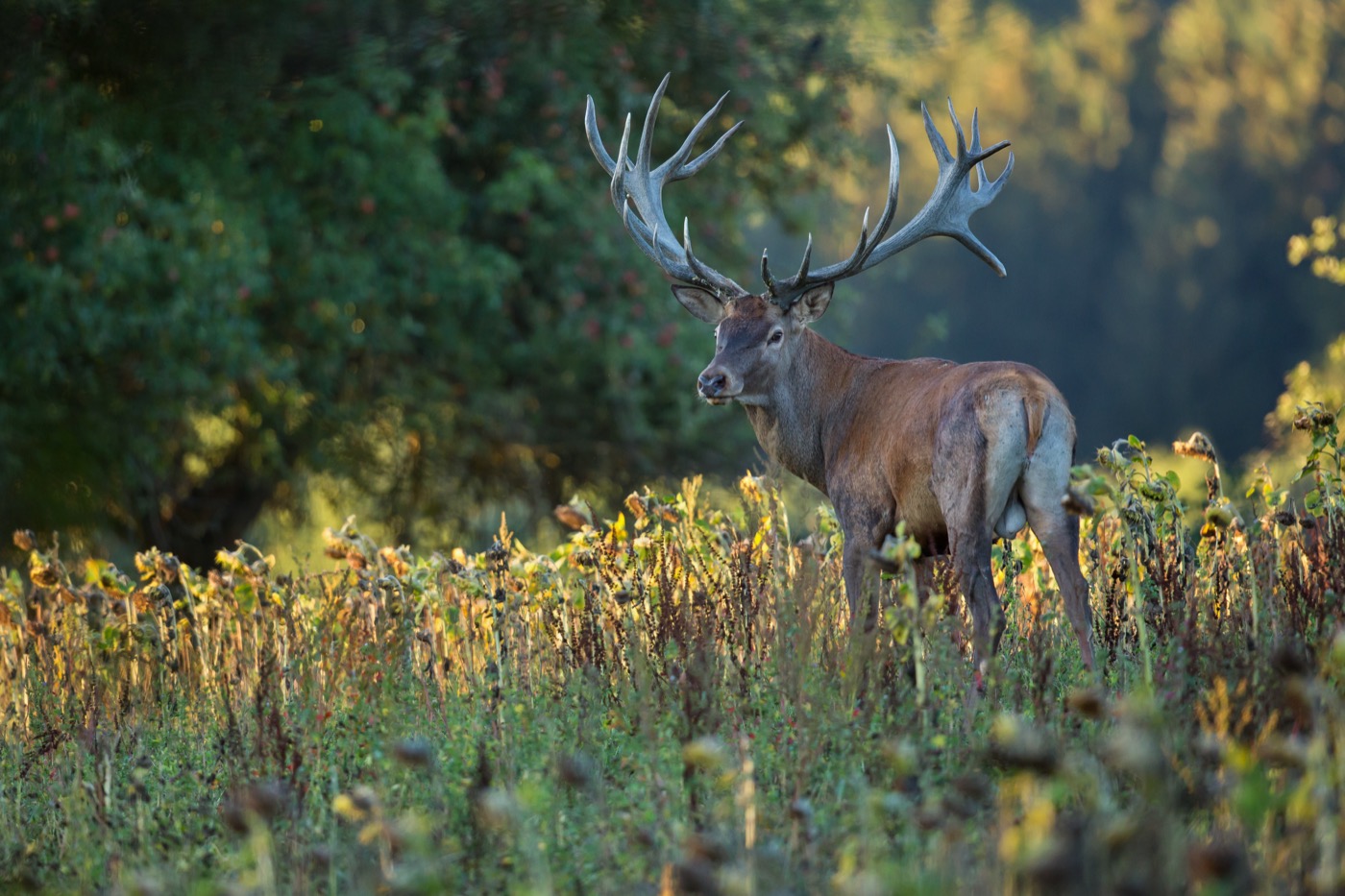 September to October
Red deer
In the national park, the red deer lives free in the beech forests, and from September to mid October the stags roar on the steep slopes above the Edersee. A roaring stag stands with lowered head and raised mane in the undergrowth, its deep, rolling call carrying far through the forest. Guided rutting tours set out in the morning and evening from the national park entrances Kirchweg in Edertal-Bringhausen, KellerwaldUhr in Frankenau and Himmelsbreite in Vöhl-Harbshausen.
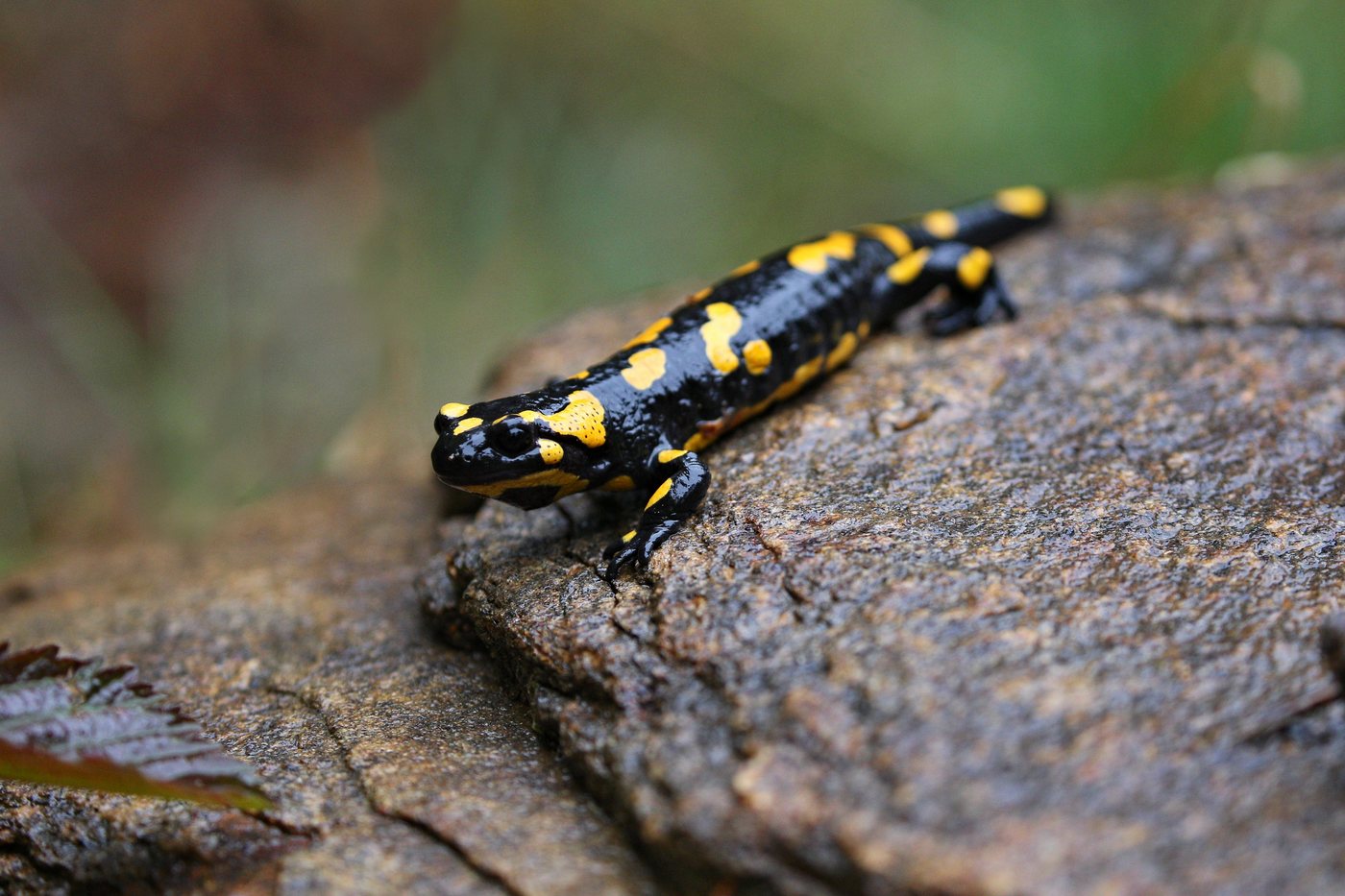 April to May
Fire salamander
The fire salamander lives almost everywhere in the national park, above all along the oxygen-rich streams, in the damp beech forests and among the boulder fields. Black with bold yellow spots, it is easy to recognise, and after rain it comes out from under stones and deadwood in April and May. Rangers lead tours dedicated to it in these two months, starting at the national park entrance Trifthütte in Edertal-Kleinern.
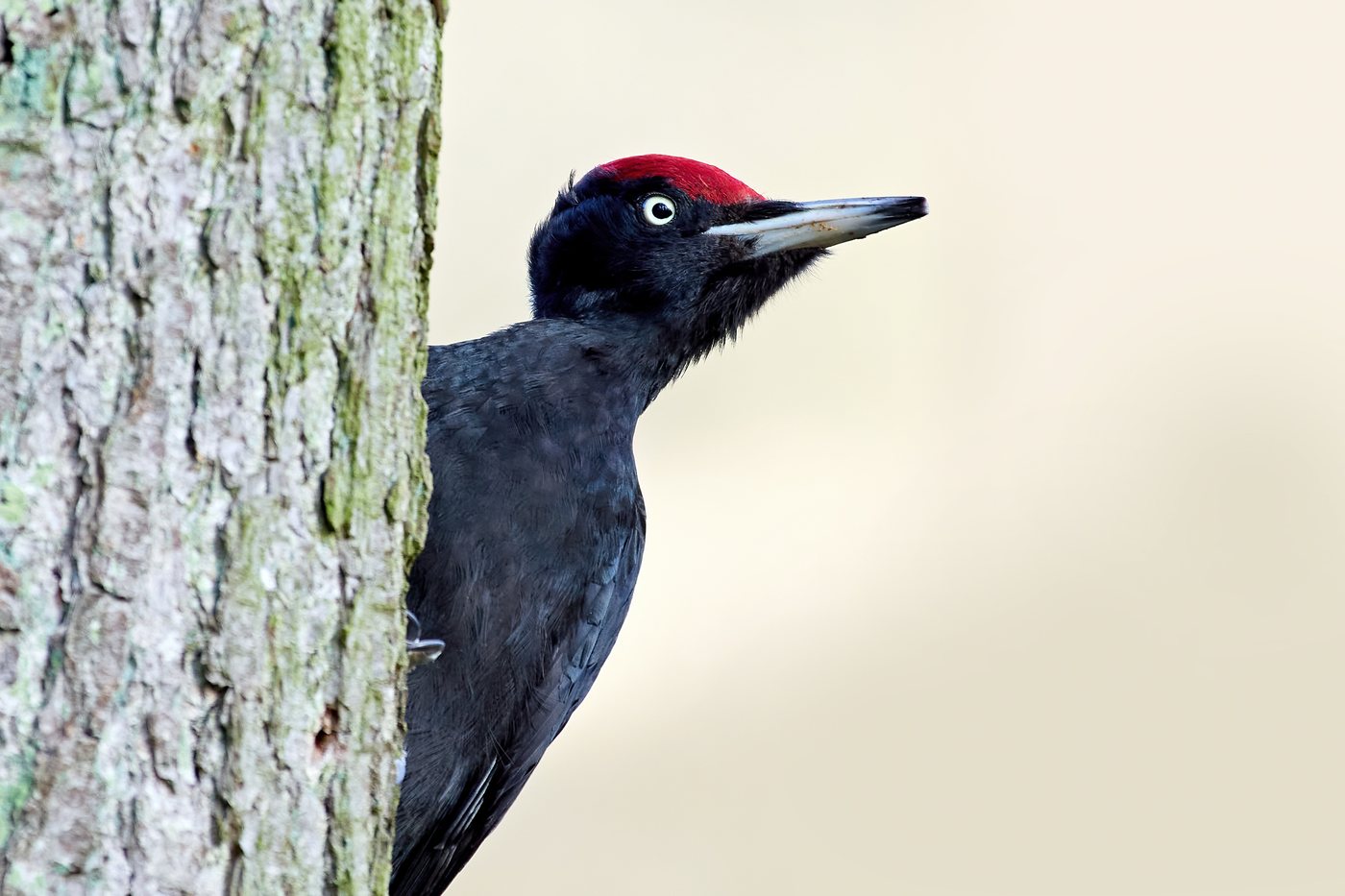 all year
Black woodpecker
The black woodpecker lives year round in the old beech and oak stands of the national park, where the trees are over 80 years old. Entirely black with a red cap and a loud, ringing call, it stands out from every other woodpecker. It chisels its large, oval cavities into thick old beeches and lays its eggs there in April or May.
 all year
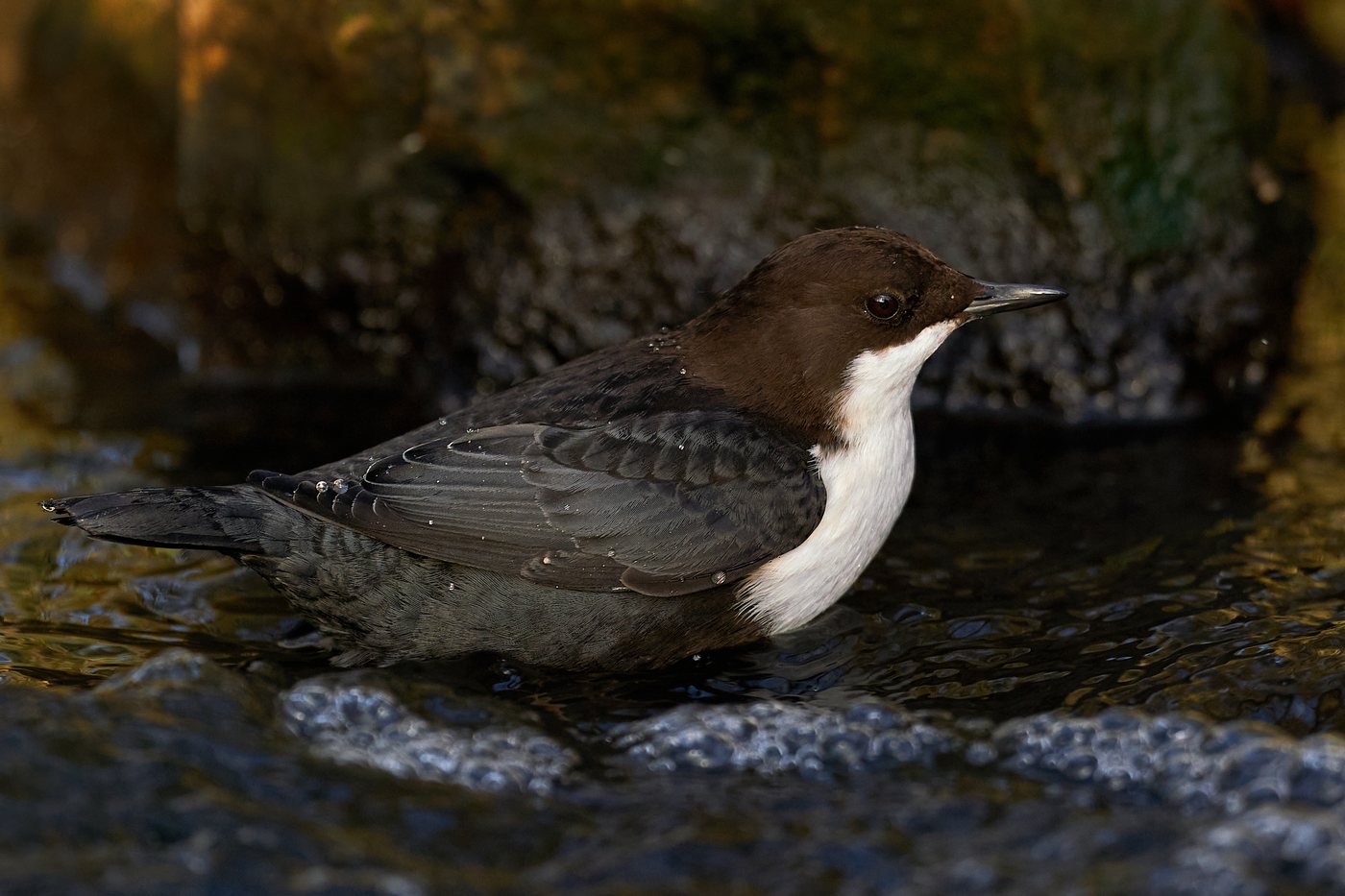
White-throated dipper
The white-throated dipper lives year round on the near-natural, fast-flowing streams of the national park, of which there are over 1,000 here. Stocky, with dark plumage and a white breast, it perches on stones in midstream and bobs its body constantly. As the only native songbird that dives, it walks along the streambed for several metres against the current, and can be seen on the same stretch of stream all year.
Pictures: Freepik
Getting there
- 2 h 00 minKassel
- 3 h 00 minFrankfurt am Main
- 3 h 45 minKöln
- 5 h 00 minHamburg
- 5 h 45 minBerlin
- 6 h 15 minMünchen
Good to know
Dogs on a Leash
Dogs are welcome in the national park, but must be kept on a leash. At the Edersee, the Scheid peninsula has a designated dog beach with a sunbathing lawn and considerably less traffic than the Waldeck-West and Rehbach lake beaches.
Stay on the Trails
In the national park, visitors must stay on the designated trails at all times. The narrow paths are reserved for hikers; cycling and horseback riding are only allowed on the marked bike trail network. Stacking stone cairns is prohibited because it destroys habitats.
No Open Fires, but Trekking Sites
Smoking and open fires are prohibited in the forest year-round. Anyone hiking for several days can book one of the nature park's ten trekking sites online, along the Lichtenfelser Panoramaweg and the northern and southern loops of the Kellerwaldsteig; the exact location is then sent by email. The season runs from April 1 to October 31; fires are not allowed there either, but gas stoves on solid ground are.
No Combustion Engines on the Edersee
The Edersee is governed by the rules of the Talsperrenverordnung, the reservoir regulation, and combustion engines are not allowed. Visitors get around by sail, oar, paddle, surfboard, or electric boat, across the lake's 27-kilometer (17-mile) length between the Sperrmauer, the dam, and Herzhausen. No boating is allowed after sunset, and anchoring overnight is not permitted.
The Old Structures Need a Low Water Level
The remains of the flooded villages only become visible as the water level falls, and each site has its own threshold. The four-arched Aseler Brücke, the Asel Bridge, appears above 235.10 meters above sea level, the Bringhausen cemetery above 231.75 meters, the Bericher cemetery above 231.00 meters, and the model of the Sperrmauer above 221.05 meters. Edersee Touristic publishes the current water level on its website.
Overnight Stays Only at Designated Sites
Free camping is not permitted in the national park; wilderness camping is only available through the ranger-led WildnisNächte, the wilderness nights. Vehicles are parked at the lots by the national park entrances. Campgrounds and RV sites are available throughout the region for motorhomes and tents, listed together by Edersee Touristic.
Protected landscapes
- National park
- Kellerwald-Edersee
Names and boundaries: © OpenStreetMap contributors.
About this region
The Edersee lies in northwestern Hesse on the edge of the Kellerwald, home to Hesse's only national park and its ancient beech forests, a UNESCO World Heritage Site. Campsites and pitches for motorhomes and tents line the 27-kilometre lake.
July to October draw the most visitors, with flower meadows, heather and the deer rut, while things quiet down from November as the water level drops. When a site is open is shown in each listing's calendar.
