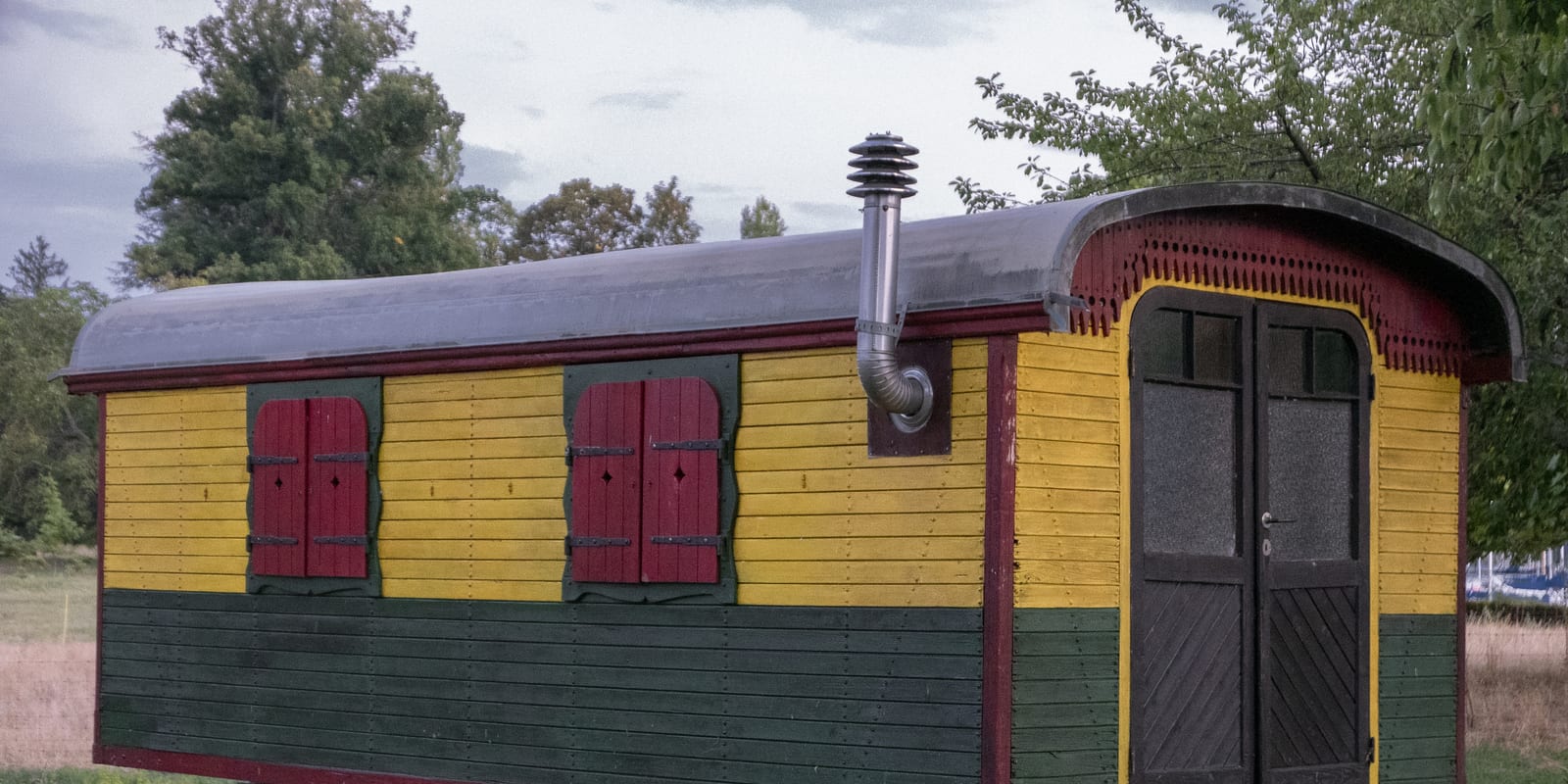
Rent a circus wagon
A circus wagon is a wooden wagon on wheels that artistes and showpeople once lived in. It is usually built longer and wider than a shepherd's wagon, because the whole daily life of a travelling family had to fit inside. The windows mostly sit along the long side, and a set of steps stands in front of the door. Inside it is one room, with the sleeping place often partitioned off at one end. Brightly painted it often is, but not always. As holiday accommodation it stands still, on a farm, at the edge of a field or on a campsite.
What to check before booking
- An original wagon or a new build?
- Both are let as circus wagons. A restored old wagon brings its patina and often little insulation, a new build in the old style is tight and warm. Anyone arriving in the cold season asks about the year it was built.
- Is there a bathroom on board?
- New wagons usually have a shower room, old ones rarely do. Then the sanitary building of the site or a bathroom in the main house belongs to the booking. How far that walk is does not always appear in the text.
- Is it heated, and until which season?
- Wood stove, gas heating, electricity, a connection to the main house or nothing at all. That decides whether the wagon is still let in November. With a stove, settle beforehand who puts wood on and where it comes from.
- Does it stand alone or in a row?
- Some farms put several wagons side by side, others place a single one out by a field. How much you hear from the neighbours depends on how the walls are built. So it is worth looking at how much space is left between the wagons.
- Is there a kitchen?
- Hob, sink, fridge: everything is possible, nothing is a given. Where no kitchen is built in, there is sometimes a shared kitchen or a barbecue place, and sometimes neither.
Who it suits
Made for
Couples and families with small children who find a room too ordinary. The wagon has its own door to the outside. Anyone interested in old vehicles gets the craft as well when the wagon is a restored one.
Less so for
A circus wagon is cut small, and only some have a door to the sleeping place. Anyone who needs a room to themselves in the evening should ask about the layout beforehand or take a holiday flat. The steps at the door rule out a wheelchair or a walking frame, and there is no space for two weeks of luggage.
Where it comes from
The wagon is older than the circus under canvas. Around 1810 travelling circus companies in France began to live in their large transport wagons as well as haul with them. The Romanichal in Britain took up the form from about 1850 and gave it the painted decoration it is known for. In Germany the tent circus only appeared towards the end of the nineteenth century, and the wagon became the home that artistes and showpeople took from place to place.
Good to know
The floor sits higher
The wagon stands on wheels, so above the ground. A few steps lead to the door, and suitcases have to be lifted up.
It does not travel any more
As holiday accommodation the wagon stays where it is. The host says where your own vehicle parks, and that is not always right beside it.
Dogs by arrangement
The wagon is one room with a door straight outside. Whether a dog may come is the host's decision, and farms with livestock have rules of their own.
