Camping in the Bavarian Forest
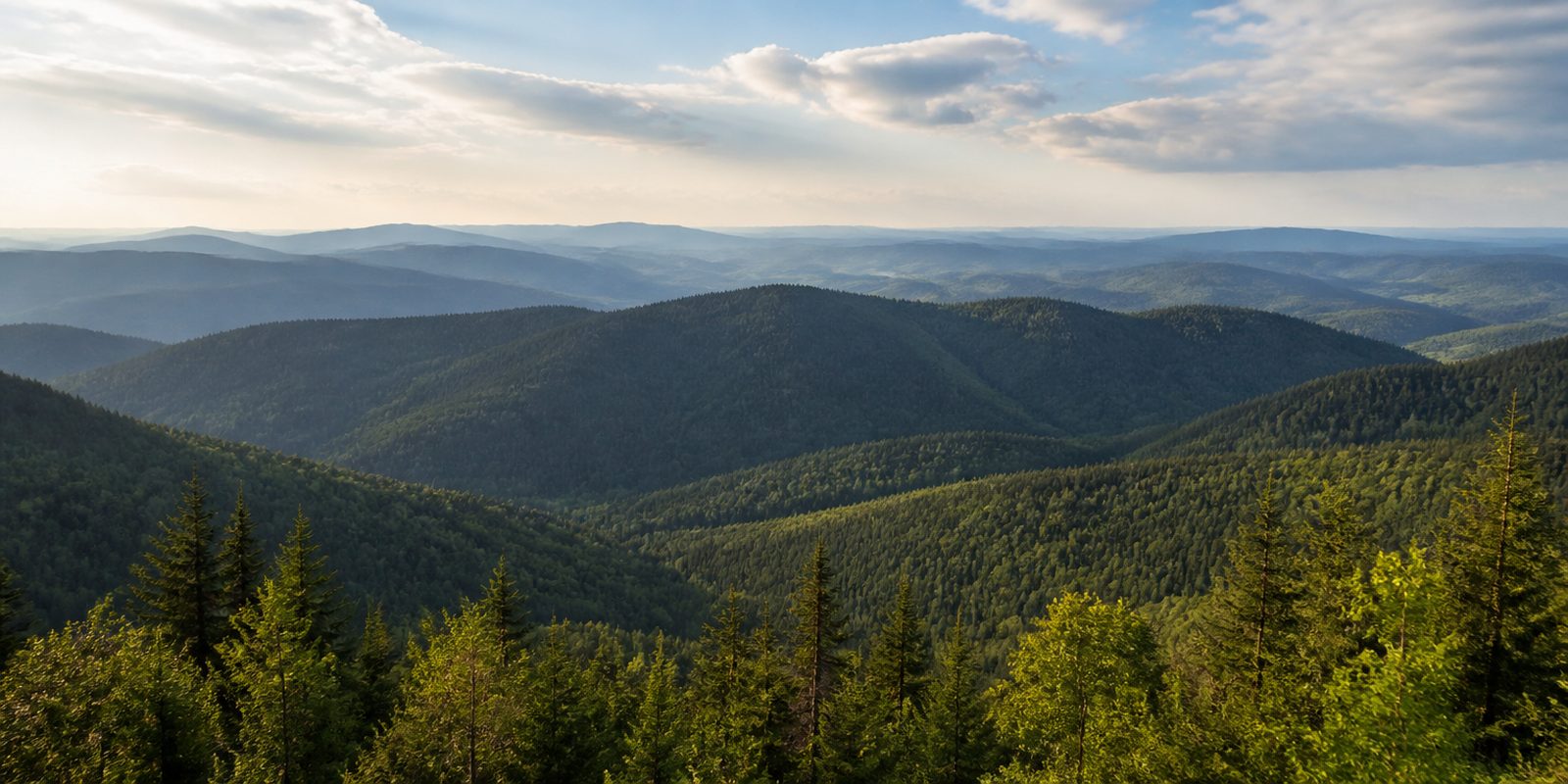
Here the forest simply does not stop. The Bayerische Wald is wooded throughout, an upland range on the Czech border that together with the adjoining Nationalpark Šumava forms the largest continuous protected forest in Central Europe, around 900 square kilometres. The Nationalpark Bayerischer Wald was founded in 1970, the first in Germany. At 24,945 hectares it is still the largest forest national park in the country. On a good three quarters of that area the forest is left to itself. The high ground runs around Arber, Rachel and Lusen. Up there, open Schachten and boggy Filze lie between mountain spruce forests, habitats hardly found outside the Alps. Since May 2025 the night sky above the nature park and the national park has also been recognised as a Sternenpark, a dark sky park.
21 places and units in this region
Places in this region

1 pitch type / 3 rental objects
KNAUS Campingpark Lackenhäuser
Camping Resort Bayerwald
Ferienhof Schiermeier
Camping Hohenwarth
The year in this region
November: Return to Year-Round Trail Rules
On November 15, the extended trail freedom ends, and only the marked trail network applies again in the core zone. The same date closes the two camper and tent sites at Scheuereck and at the Falkenstein National Park Center, both open since April 1. Haus zur Wildnis and Hans-Eisenmann-Haus close for the season from November 10 and 11 respectively until December 25, while the Falkenstein open-air animal enclosure remains freely accessible.
In the middle of the month the sun rises at 7:17 AM and sets at 4:28 PM. That leaves 9 hours and 12 minutes of daylight.
Water and air: Open-Meteo, measured averages. How busy: share of school holidays 2027 across all sixteen federal states. Nature dates: German Weather Service, phenological observations 2014 to 2026 at 131 stations in the region, typical day.
Tours in this region
Marked tours that fit into a day from a site, and one multi day tour per kind.
- Hiking
Goldsteig N17
Section Rachel - Lusen
From the Rachel, at 1453 metres the second highest mountain in the Bayerischer Wald, the way passes the Rachelkapelle and the Rachelsee across to the Lusen. The final climb takes the Himmelsleiter, a staircase of granite blocks, and ends in the block field on the summit. Standing deadwood and young forest grow close together.
14 km
- Hiking
Pandurensteig
Along old paths right across the Bayerischer Wald, from Waldmünchen by way of Cham, Viechtach and Regen to Passau. A good stretch runs beside the Pfahl, a quartz reef that rises out of the forest like a white wall. At the end the Ilz joins in.
176.6 kmMulti day tour
1 site along the tour: KNAUS Campingpark Viechtach
- Hiking
Gunthersteig
The trail takes up the route of the hermit Gunther, from Kloster Niederaltaich on the Danube by way of Rinchnach and Zwiesel to Dobrá Voda in Bohemia. It starts in the orchards of the Lallinger Winkel and then goes into beech and spruce forest. Guntherstein and Frauenbrünnl lie on the way.
71.2 kmMulti day tour
- Hiking
Baierweg
An old trade road between the Danube and Bohemia, laid out by the counts of Bogen and still marked with their blue lozenge on white. From Straubing the route runs by way of Kollnburg, Kötzting and Neukirchen beim Heiligen Blut to Furth im Wald. The lozenge turns up on trees and house walls.
112.5 kmMulti day tour
1 site along the tour: KNAUS Campingpark Viechtach
- Cycling
Regental-Radweg
The Regen leads the route from the border at Bayerisch Eisenstein down to Regensburg. Between the town of Regen and Miltach it swings over the hills, elsewhere it keeps to the valley, and near Cham it crosses the wide meadows of the Regentalaue. At the end the Regen flows into the Danube.
169.6 kmMulti day tour
1 site along the tour: KNAUS Campingpark Viechtach
- Mountain biking
Trans Bayerwald Nordroute
Section 4
The fourth stage of the northern route runs from Mitterfirmiansreut to Spiegelau, on forest tracks and quiet roads along the national park. The Freilichtmuseum Finsterau and the Nationalparkzentrum Lusen, with its animal enclosure and treetop walk, lie on the way. Technically it stays calm, but the climbing is constant.
55.4 km
- Cross country skiing
Bayerwaldloipe
One continuous track links the cross-country areas between Lohberg below the Osser and Neureichenau below the Dreisessel. It is skied in one direction only. By way of Zwiesel, Sankt Oswald and Mauth it runs through forest, crosses the Große Ohe and climbs above 1100 metres near Bischofsreut.
11.1 km
Tours: © OpenStreetMap contributors, ODbL. Lengths calculated from the mapped course, as of September 12, 2026.
Nearby
Animals you can meet here
 September to October
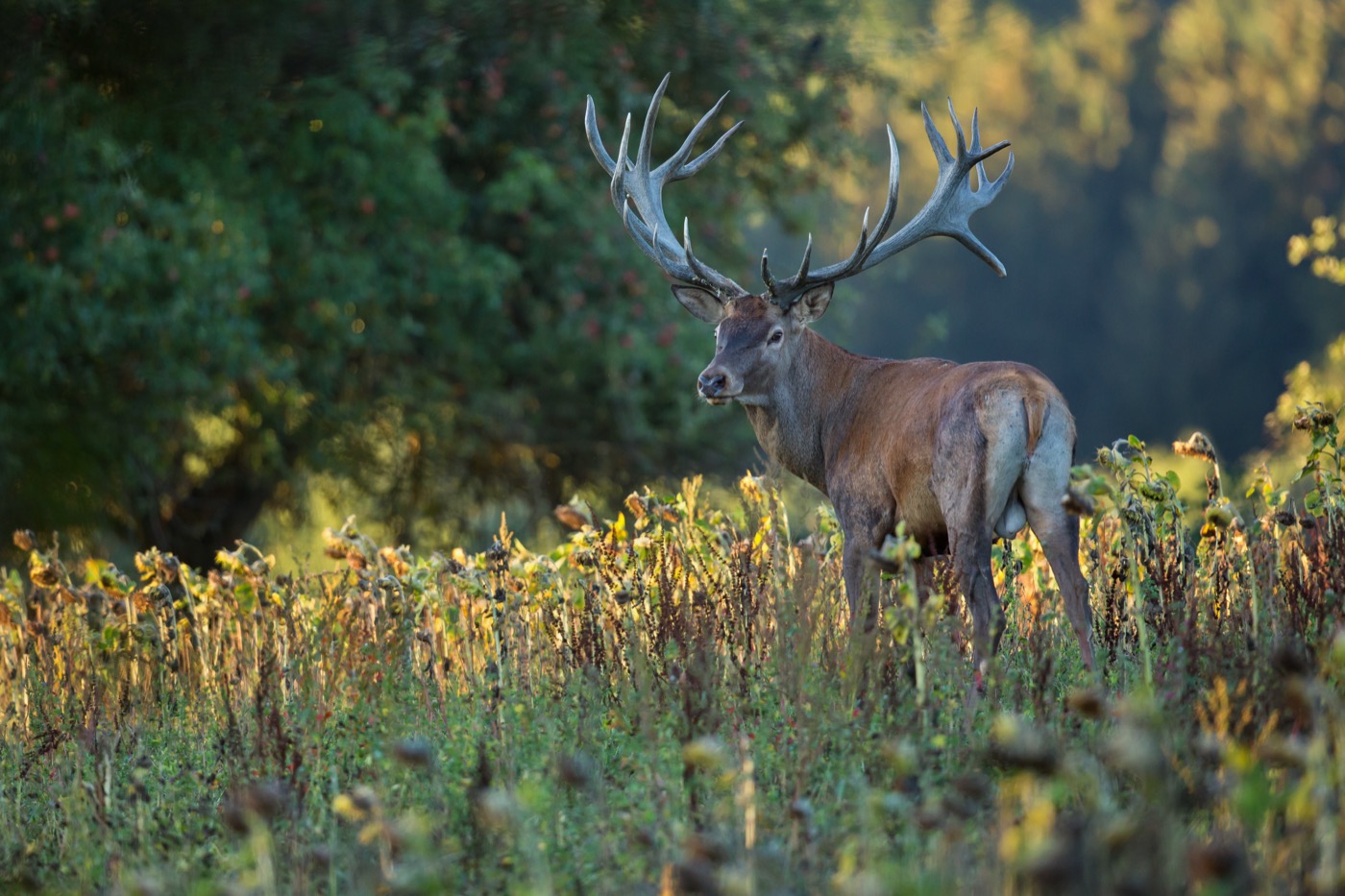
Red deer
In the nine-hectare Hirschgehege Scheuereck near Lindberg, red deer pass close to the year-round accessible viewing platform, and the same holds for the more than 200-hectare wildlife enclosure at the Nationalparkzentrum Lusen near Neuschönau. Free-ranging animals also move through the forests around Rachel, Lusen, and Großer Falkenstein. The rut begins in mid-September: the stags carry their full antlers, and their roaring carries far as they compete for the hinds.
 all year
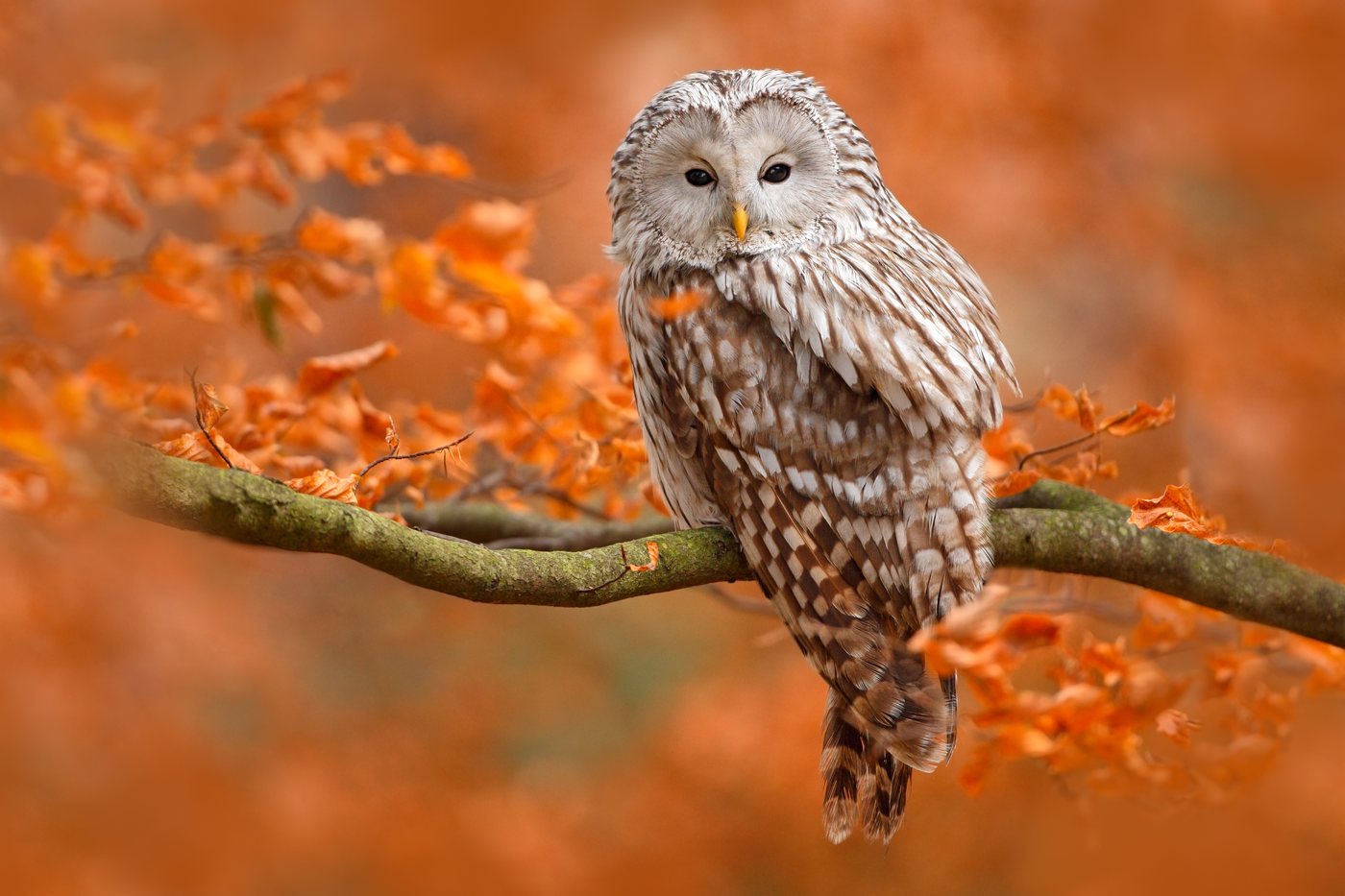
Ural owl
The Ural owl holds its territories in the old, deadwood-rich beech and fir forests around Mittelsteighütte, Rachelsee, and Höllbachgspreng on the Falkenstein. Its long, finely barred tail and dark eyes set it apart from other large owls, and it has no ear tufts at all. It nests in broken-off tree stumps or in nest boxes put up for it, deep inside the dense mountain forest.
 all year
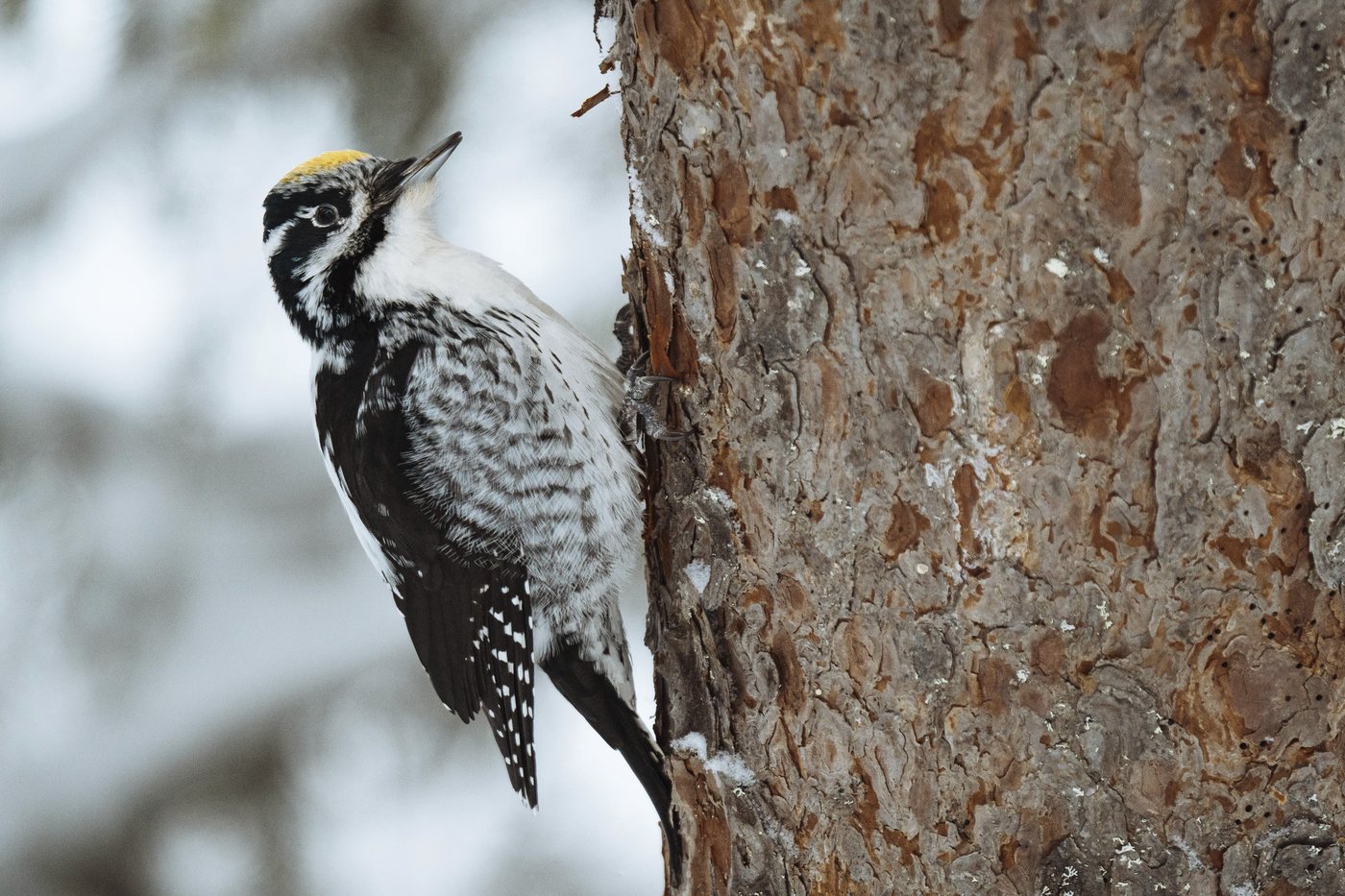
Eurasian three-toed woodpecker
In the mountain spruce forests above roughly 1,200 meters and on the deadwood-rich ground around Lusen, Rachel, and Großer Falkenstein, the Bayerischer Wald ranks among the three best places to see this bird in Germany, according to NABU. Its black-and-white barred back and the male's yellow cap set it apart from other woodpeckers, and it carries no red at all. It strips the bark from dead spruces in characteristic rings to reach bark beetle larvae underneath.
 April to October
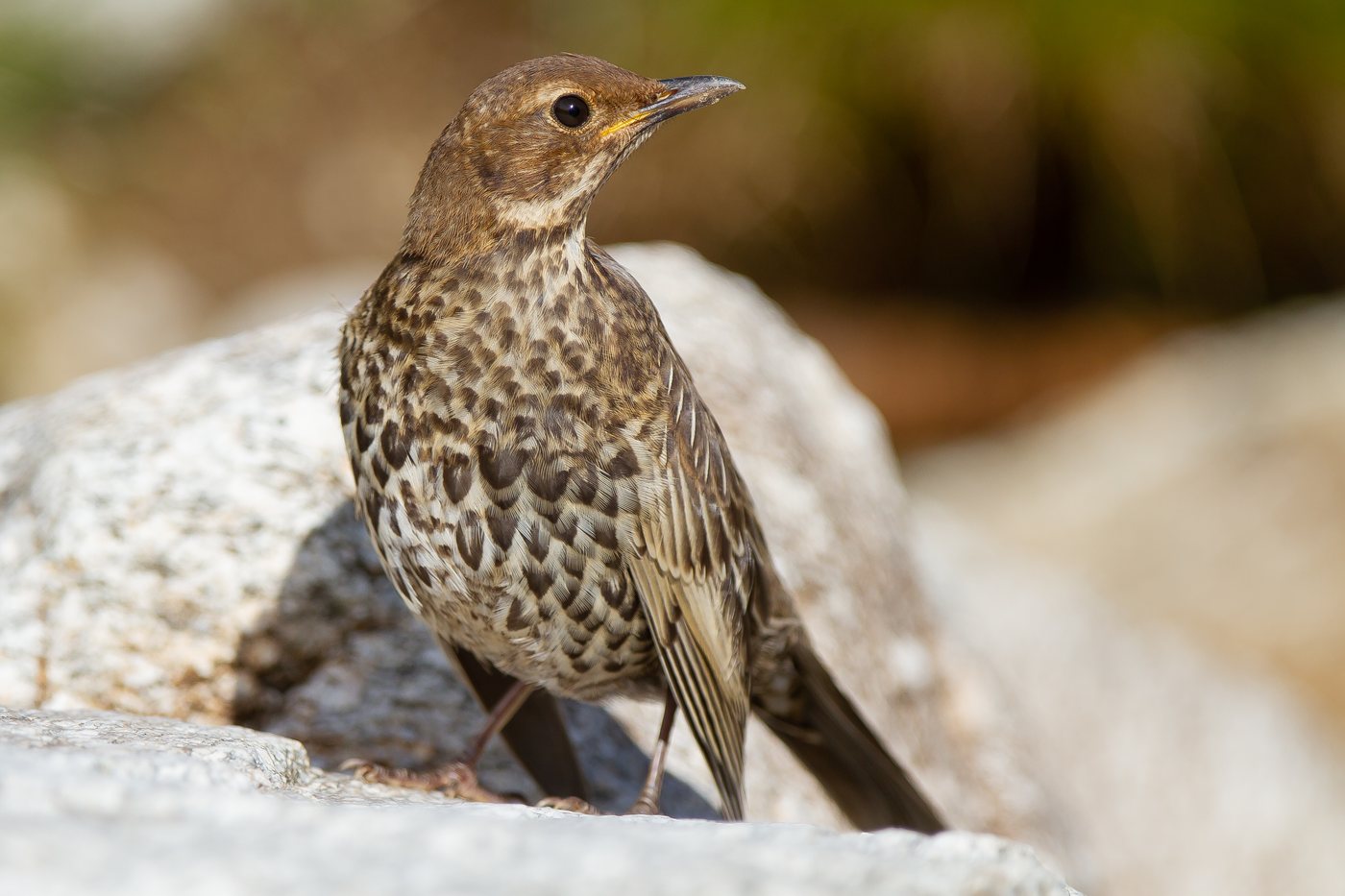
Ring ouzel
In the high country around Großer Arber, Rachel, and Lusen, the ring ouzel breeds along open mountain spruce forest, boulder fields, and the Schachten clearings, one of very few low-mountain-range sites outside the Alps for the alpestris subspecies. A white crescent on its breast sets the male apart from a blackbird and gives the bird its name. From April to October it can be seen here, moving between the open ground and stands of trees on the Schachten in search of food.
Pictures: Freepik
Dark skies
Places certified by DarkSky International.
Sternenpark Bayerischer Wald
Certified in 2025, one of the youngest in the country. High up in the Bavarian Forest the sky is at its clearest in winter, when cold dry air sits over the ridges.
Getting there
- 1 h 00 minRegensburg
- 1 h 45 minMünchen
- 4 h 00 minFrankfurt am Main
- 5 h 45 minKöln
- 6 h 00 minBerlin
- 7 h 45 minHamburg
Travel times calculated with OSRM, map data © OpenStreetMap contributors.
Good to know
Trail Rules in the Core Zone
More than half of the national park is open to walk freely year-round. On about 45 percent, mainly in the high elevations and moors, trail rules apply. There, from July 15 to November 15, all other trails and paths may also be used; outside that period, only the marked hiking, cycling, and cross-country ski trails are allowed. In winter, leaving the marked trails in the core zone is prohibited, and signs mark the zones on site.
Dogs Must Be Leashed
Dogs are allowed in the national park but must be kept on a leash. Off-limits to dogs are the open-air animal enclosure at the Lusen National Park Center, the Scheuereck deer enclosure, and the Grenzsteig trail, as well as the Baumwipfelpfad tree-top walkway, Hans-Eisenmann-Haus, and the Waldgeschichtliches Museum, the forest history museum. Dog stations with waste bins are located at both national park centers and in Spiegelau; bring your own bags.
No Open Fire in the Protected Area
Smoking and open fire are banned in the national park, as are drones and feeding animals. Grilling is allowed only at the designated play and grill areas, for which the administration issued new rules in May 2026. The ban on fire, smoking, and open flame also applies at the Scheuereck campsite.
Overnight Stays at Only Two Sites
Wild camping and overnight stays anywhere in the national park are prohibited. There are two official sites, each open from April 1 to November 15 and limited to a maximum of two nights: Scheuereck, with four camper van and four tent spaces, free of charge, and the main car park at the Falkenstein National Park Center, with five camper van spaces at 8 euros a night. Parking is allowed only at signposted car parks, with a fee of at most 5 euros a day.
Swimming and Boating Are Regulated
Swimming is not allowed in the national park, including at Rachelsee and in the mountain streams. Canoeing and kayaking on the Schwarzer Regen river are reserved for private individuals and are governed by a regulation of the Regen district dated May 2, 2011, as amended April 25, 2023. The district publishes day by day whether the river is currently open to boating, and separate rules apply to the Bärnloch and Nagerlbrücke sections.
GUTi and Waldbahn Instead of a Car
Overnight guests in 40 participating municipalities automatically receive the GUTi guest ticket at check-in, which makes bus and train travel free from the day of arrival to the day of departure, including on the Czech side. The Waldbahn train serves four lines with Zwiesel as its hub, the Igelbus shuttles connect the hiking trailheads around Lusen and Rachel, and the Falkensteinbus serves destinations in the north. Express bus lines 100 and 200/201 also run from Passau.
Protected landscapes
- National park
- Bayerischer Wald
- Nature park
- Bayerischer WaldOberer Bayerischer Wald
Names and boundaries: © OpenStreetMap contributors.
About this region
The Bavarian Forest is a wooded low mountain range on the border with the Czech Republic, home to Germany's oldest national park. Campsites and pitches lie along forest edges and trails around Arber, Rachel and Lusen.
The season runs from April to mid November, busiest in high summer once extra trails open on 15 July. When a site is open is shown in each listing's calendar.
Common questions
When is the best time to visit the Bavarian Forest?
Summer is liveliest: extra hiking trails open from mid July, and August brings dark sky nights under the Sternenpark. For a quieter trip, come in spring for the alpine snowbell in bloom or in autumn for the deer rut from mid September.
Can I bring my dog?
Yes, dogs are welcome in the national park but must stay on a leash. A few areas are closed to dogs, including the Nationalparkzentrum Lusen enclosure, the Scheuereck deer enclosure, the Grenzsteig trail, the treetop walkway and the Hans-Eisenmann-Haus.
Can I get there and around without a car?
Yes, the Waldbahn train runs four lines through the hub at Zwiesel, and Igelbus shuttles reach the trailheads around Lusen and Rachel. Guests staying in one of 40 participating municipalities get the GUTi ticket at check-in for free travel on buses and trains.
