Alpine Huts in the Allgäu
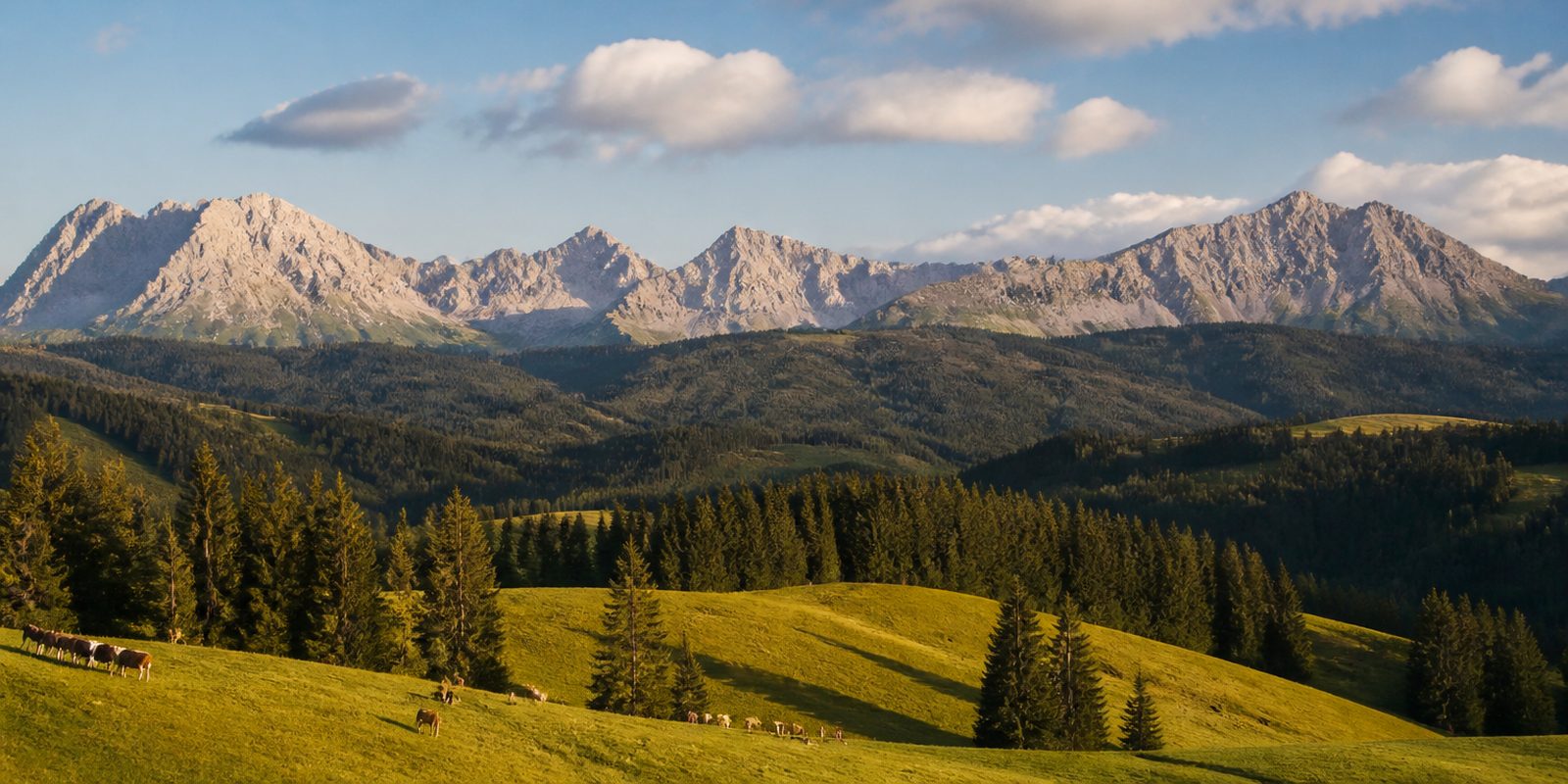
In the Allgäu the Alm is called Alpe, and many huts carry the word in their name. Most of them stand in the southern Allgäu, in the valleys around Oberstdorf, Bad Hindelang and Oberstaufen, where the ground gave too little to the plough and grass carried the economy instead. Whether cheese is made next door depends on the kind of Alpe: on a Sennalpe the milk is worked up there, on a Galtalpe only young cattle graze. In September the Viehscheid brings the herds back down to the valley, a custom recorded here since 1794.
The year in this region
September: Viehscheid in about thirty villages
From early September to early October, the herds return to the valley for the Viehscheid, the traditional drive down from the mountain pastures, celebrated in about 30 villages between the Bodensee and the royal castles. In Bad Hindelang, the date is fixed every year on September 11, with around 1,000 young cattle. In Oberstaufen in 2026, more than 1,400 animals came down from 19 mountain pasture farms, led by wreathed lead cows.
In the middle of the month the sun rises at 6:56 AM and sets at 7:33 PM. That leaves 12 hours and 38 minutes of daylight.
Water and air: Open-Meteo, measured averages. How busy: share of school holidays 2027 across all sixteen federal states. Nature dates: German Weather Service, phenological observations 2014 to 2026 at 89 stations in the region, typical day.
Tours in this region
Marked tours that fit into a day from a site, and one multi day tour per kind.
- Hiking
Wandertrilogie Allgäu
Three routes at three altitudes, linked by connecting paths called ladders: hills and moors low down, lakes and waterfalls in the middle, the ridges of the Allgäuer Alpen and the Nagelfluhkette above. You can change floors along the way. The ground ranges from soft meadow track to scree above the treeline.
449.1 kmMulti day tour
- Hiking
Wiesengänger-Route
Gentle hills, wide meadows and peat soils set the tone here, with baroque monasteries and medieval towns such as Wangen and Isny in between. Near Bad Wurzach the route reaches the Wurzacher Ried, one of the largest intact raised bogs in central Europe. The Alps stay on the horizon throughout.
320.3 kmMulti day tour
- Hiking
Himmelsstürmer-Route
Section 21
From Bad Hindelang the stage climbs past the Schleierfall to the Iselerplatzhütte, then takes the old smugglers' path to the border and down to Schattwald in the Tannheimer Tal. Higher up, dwarf pine, scree slopes and mountain pasture alternate. Several streams are crossed on the way.
7.4 km
- Hiking
Lechweg
From the Formarinsee at around 1800 metres the trail follows the Lech to the Lechfall near Füssen, nearly a thousand metres lower. The river stays wild almost the whole way. Near Holzgau lie the Höhenbachtalschlucht gorge and a suspension bridge of more than two hundred metres.
124.4 kmMulti day tour
- Cycling
Radrunde Allgäu
Mostly asphalt, and the traffic stays light. Around 3200 metres of climbing are spread over the whole ride, which links Memmingen, Bad Wörishofen and Füssen with the Tannheimer Tal and its high point at just under 1150 metres. The Alpseen lakes and the Wurzacher Ried lie along the way.
479.9 km2165 m ascentMulti day tour
Tours: © OpenStreetMap contributors, ODbL. Lengths computed from the mapped course, as of September 12, 2026.
Animals you can meet here
 all year
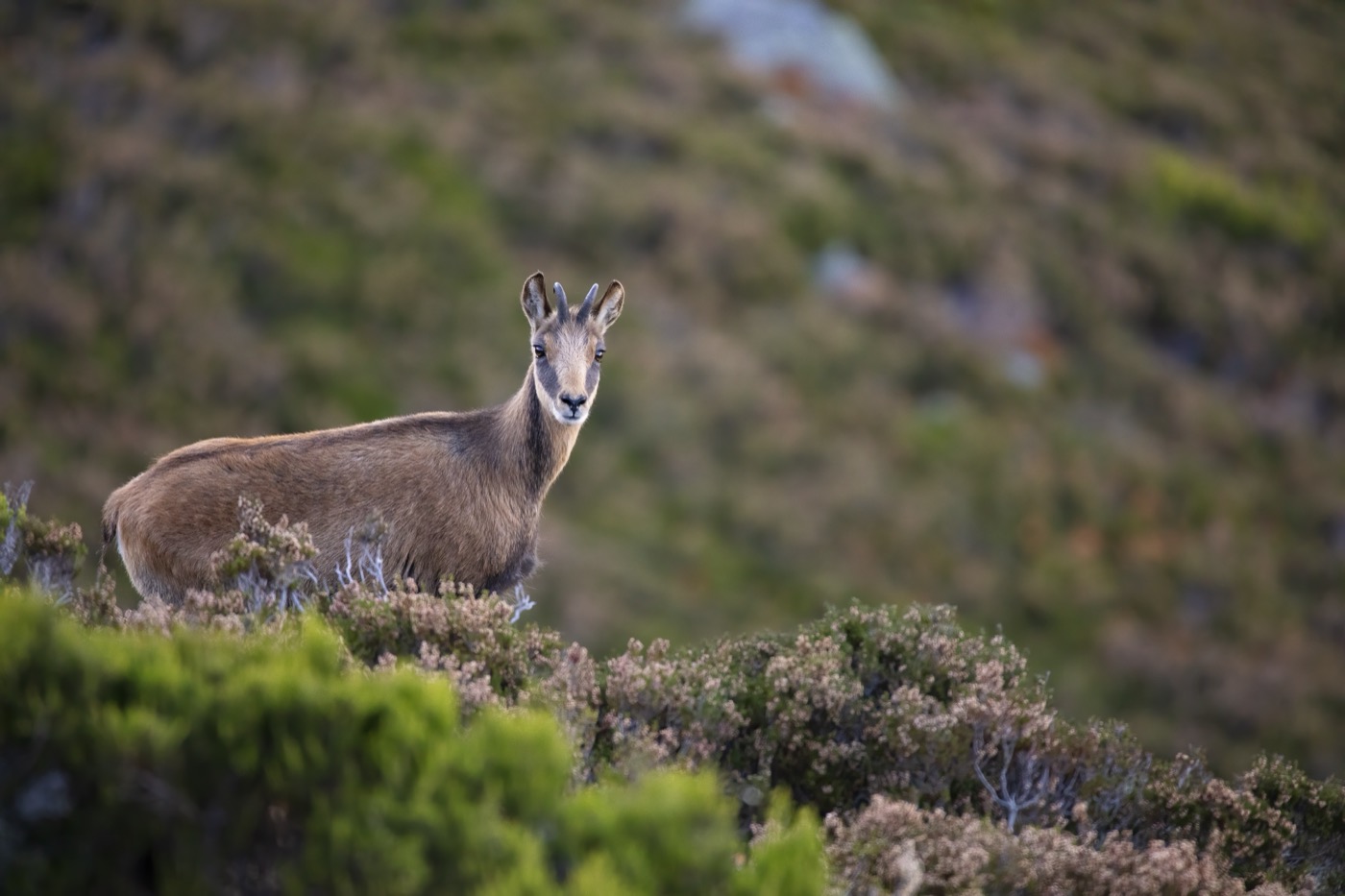
Chamois
On the steep slopes and rocky outcrops near the tree line in the Allgäuer Hochalpen, the chamois often stands motionless among dwarf pines and scree, its dark brown coat standing out clearly against the pale rock. Without a mountain hike of your own, you can watch it from the observation station at the Riedbergpass near Obermaiselstein, about ten minutes away by bus from Obermaiselstein. In winter it moves down to sunnier, snow-free slopes.
 April to September
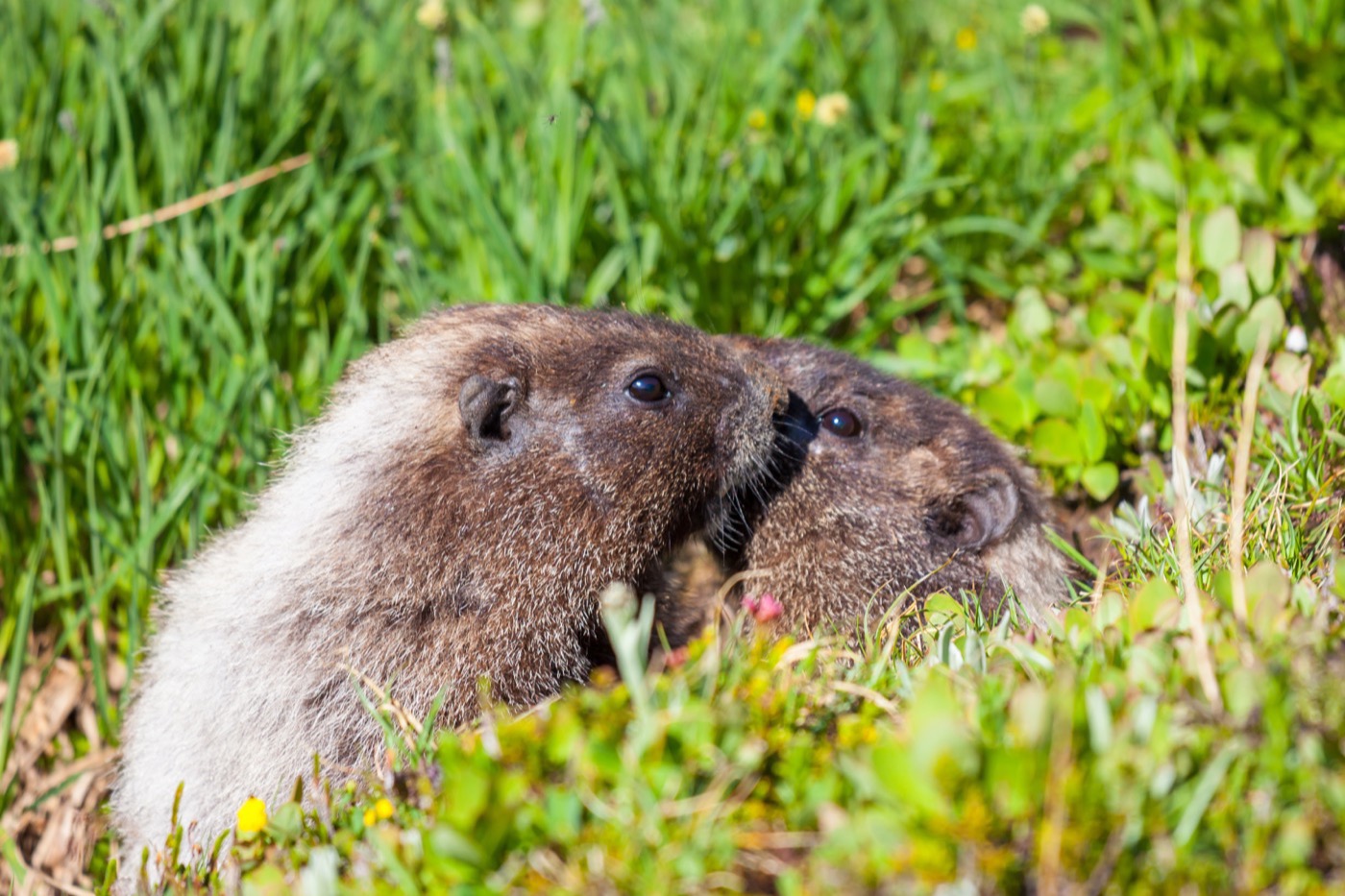
Alpine marmot
In the high country around Oberstdorf, the alpine marmot lives on open rock and grass slopes on the warm south-facing sides of the Allgäuer Hochalpen, mostly above the tree line between 900 and 2,500 metres. It is recognizable by its thick grey-brown fur and short bushy tail. From April to September it is out on the meadows by day, digging at its burrow, before going into hibernation at the end of September.
 all year
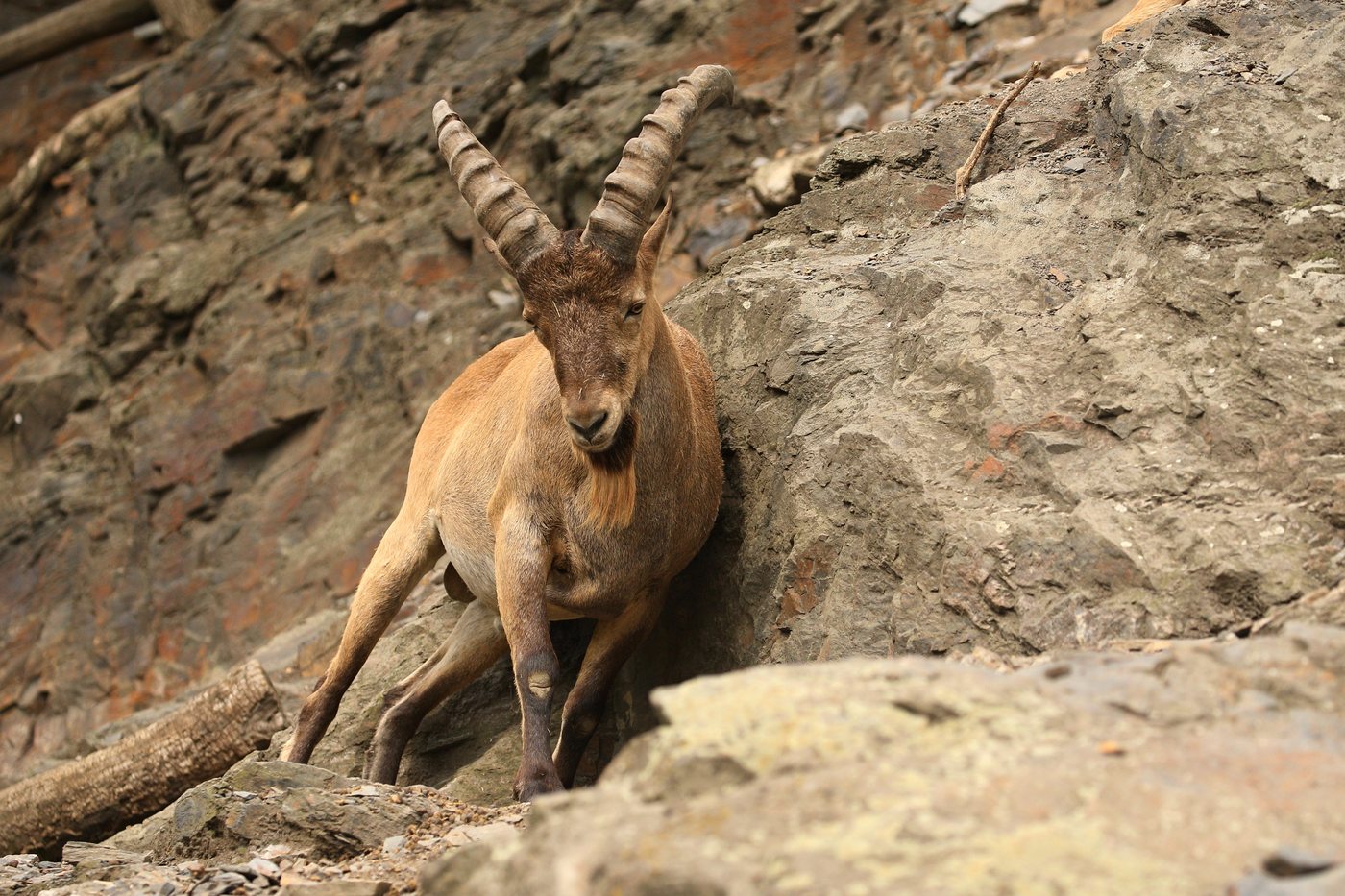
Alpine ibex
Above roughly 2,200 metres, the alpine ibex lives on steep meadows and rocky ridges in the Allgäuer Hochalpen; the best chances of a sighting are on the Nebelhorn and in the Oytal and Rappenalptal valleys near Oberstdorf. The males' massive, backward-curving horns are visible from a distance. Many animals can be watched at close range, and in winter they move to sunny, steep slopes at mid elevations.
 all year
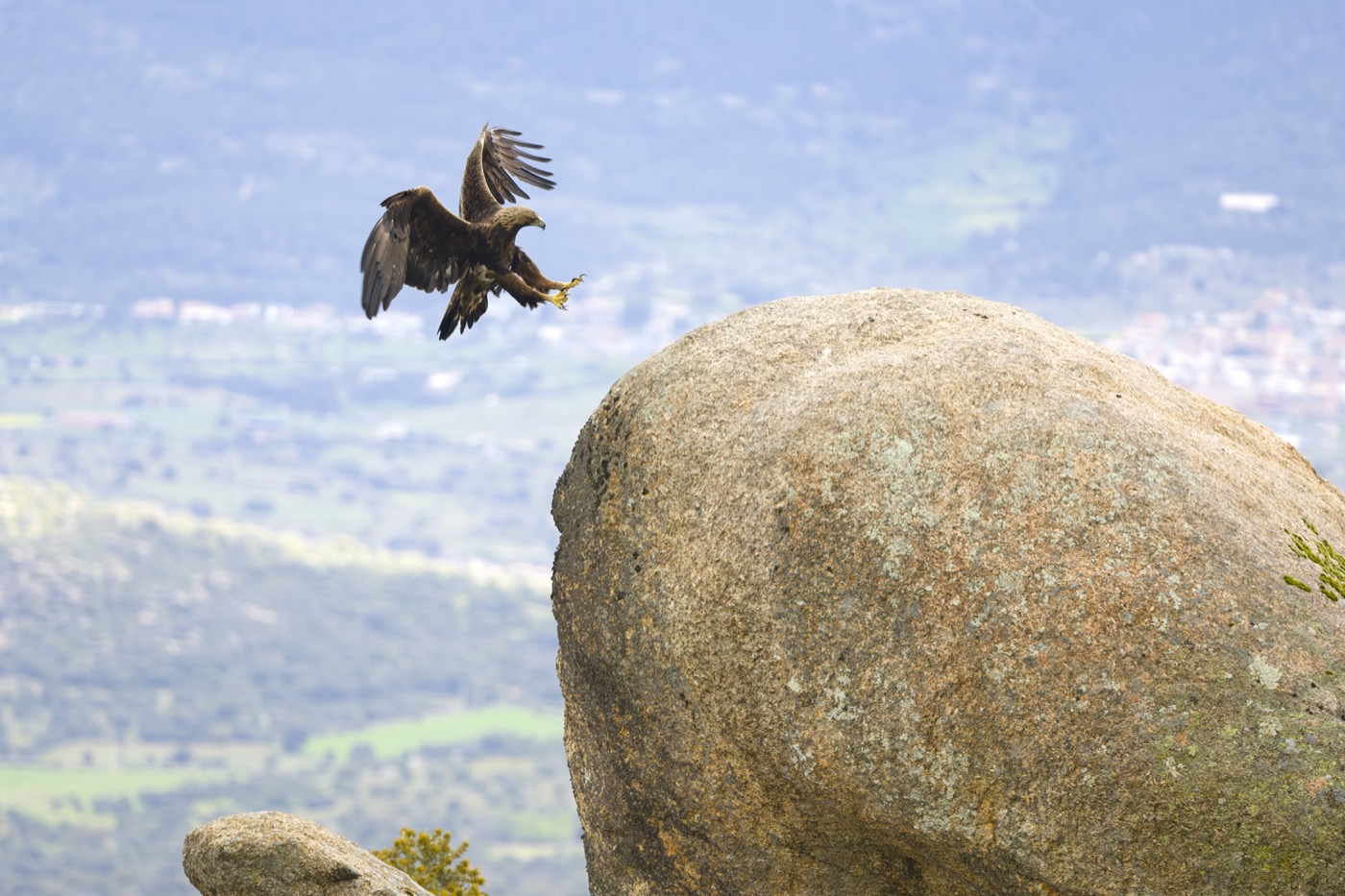
Golden eagle
The golden eagle circles above the ridges and grassy peaks of the Allgäuer Hochalpen, breeding regularly in the roughly 25,000-hectare bird sanctuary, the most bird-rich alpine area in Bavaria. With a wingspan of about two metres and broad wings held in a shallow V while soaring, it is recognizable from far off. In Bad Hindelang, guided hikes lead into its territory.
Pictures: Freepik
What to check before booking
- How far does the car get?
- Some alpine huts have a drive right to the door, for others the last stretch goes up on foot. There is often a barrier on the way, and a key that belongs to it. Some hosts bring the luggage up themselves.
- Is the hut reachable in winter?
- Many alps are open from early summer into autumn only, because nobody clears the track. Where winter lets are offered, the last part often goes by sledge, ski or snowshoe. The description says so when it applies.
- Where does the electricity come from?
- There are huts on the grid, huts with solar panels and huts with no connection at all. A solar system carries lights and chargers, rarely a hairdryer or a kettle. On some huts the wood range heats the water as well.
- Where does the water come from?
- Many alpine huts are fed by their own spring rather than a main from the valley. The water comes cold out of the mountain, usually from a tapped spring above the hut. How the supply is arranged at each hut is stated in the description.
- How is it heated, and who brings the wood?
- On many alpine huts the wood stove in the parlour is the only source of warmth. Some hosts leave the wood ready, with others you buy it or fetch it from the shed. Even in summer the nights up there turn cold.
- How far is the nearest shop?
- You almost always cook for yourself. The nearest shop is down in the valley, and the way there is part of the planning. Shop before you drive up, not after.
Who it suits
Made for
People who want quiet and can take what quiet also means, which is being on your own. Families and small groups get a whole house instead of a room, and that changes an evening. Anyone who likes cooking has the kitchen to themselves.
Less so for
Anyone who wants company in the evening is better off down in the valley. The way to a hut is rarely level, and few of them are step free. And if you have to be online reliably, ask about reception first, because many alps sit out of signal.
Where it comes from
Alpine pasture farming is about four thousand years old in the Alps. On the Dachstein the association ANISA uncovered the remains of huts from the middle and late Bronze Age; charcoal from a fire pit dates one of them to 1360 to 1170 BC. Alps first appear in writing in the eighth century, when the Notitia Arnonis assigns two of them to the church of Salzburg. The alpine pasture season, the summer between the drive up and the drive down, is listed by UNESCO as intangible cultural heritage on a Swiss nomination.
Good to know
Getting there is part of it
A private alpine or forest road with a barrier often leads up to the pasture. How far the car gets and where the key waits is worth settling before you set off.
Cattle around the house
On a working alp cattle graze right up to the hut. Dogs belong on a short lead there, and gates stay shut so the animals stay where they are.
Lighting the stove is part of the day
Where a wood stove or a range stands, it gets used morning and evening. If you have never done it, have the host show you the few steps when you arrive.
The water comes out of the mountain
Many huts hang on their own spring rather than a main from the valley. Going easy on water is not a gesture up there, it is the normal way to live.
Getting there
- 1 h 30 minAugsburg
- 1 h 45 minMünchen
- 4 h 00 minFrankfurt am Main
- 5 h 45 minKöln
- 7 h 15 minBerlin
- 7 h 45 minHamburg
Good to know
Leash rules in the nature reserve, keep distance from grazing cattle
In the Allgäuer Hochalpen nature reserve, dogs must be kept on a leash. Outside nature reserves, Bavaria has no general leash requirement in the open countryside. Even with a dog on a leash, it is best to give pastures a wide berth, since cows with calves will defend them. Dog waste should be picked up everywhere, including on the mountain, because the parasite Neospora caninum can be passed on to cattle.
Stay on marked trails, drones not allowed in the reserve
In the Allgäuer Hochalpen nature reserve, which covers about 20,724 hectares, visitors must stay on marked trails. Drone flights and loud noise are prohibited, and plants and animals must be left where they are. Outside the reserve, drones must keep a minimum distance of 100 meters from animals. In the Wald-Wild-Schongebiete, the forest and wildlife refuge zones of the Oberallgäu, ski touring, snowshoeing and winter hiking are not permitted in winter.
Open fire requires a permit
Campfires are banned in the Allgäuer Hochalpen nature reserve. Under Article 17 of the Bavarian Forest Act, a permit is also required to operate an open fireplace, or to light an unattended fire, in the forest or within 100 meters of it. Smoking in the forest is prohibited from March 1 to October 31.
Camping and bivouacking banned in the reserve
Camping and bivouacking are not allowed in the Allgäuer Hochalpen nature reserve. Designated sites are available for overnight stays, including two campgrounds at the Niedersonthofener See. About 61 percent of the municipal area of Bad Hindelang lies within the reserve, so the rule covers most of the town's land.
Gorges have a season, tickets and opening hours
The gorges are developed sites with walkways and bridges, not open, freely accessible nature. The Breitachklamm near Oberstdorf is open daily from 9 a.m. to 5 p.m., with the ticket booth closing at 4:45 p.m.; tickets are also available online. From late December to March, torchlit night walks through the gorge take place, weather permitting, and the gorge closes temporarily during snowmelt and in late autumn. The Starzlachklamm between Sonthofen and Burgberg is scheduled to be open from April 1 to mid-November in 2026, with dogs allowed only on a leash.
Swimming at the lake, no boats in the high mountains
The Großer Alpsee has several swimming spots with a shallow entry, changing rooms and restrooms at the large lawn, and rentals for pedal boats and stand-up paddleboards. Sailing, surfing and kitesurfing all work well there because of the valley's east-west orientation. Boating, on the other hand, is not allowed in the Allgäuer Hochalpen nature reserve.
Protected landscapes
- Nature park
- NagelfluhketteTiroler Lech
Names and boundaries: © OpenStreetMap contributors.
